Game-Based Learning Thrives in Indian Education
In India's dynamic educational landscape, a quiet revolution is underway. Recent headlines from 'The New Indian Express' proclaiming 'Game-based learning gains ground across classrooms, platforms' highlight a significant shift. This isn't just a trend; it's a recognition that children learn best when they are engaged, challenged, and, most importantly, playing. For Indian parents and educators, this signifies a powerful move away from rote learning towards methods that truly unlock a child's potential.
Game-based learning is thriving in Indian classrooms because it leverages children's natural inclination to play, transforming abstract concepts into engaging, interactive experiences. This approach enhances critical thinking, problem-solving, and collaboration, addressing the modern educational need for holistic development beyond rote memorization, which is increasingly vital for Indian students navigating a competitive world.
Game-based learning is an educational methodology that integrates structured gameplay, often with defined rules, goals, and feedback, into the learning process. This matters because it fosters deeper understanding, intrinsic motivation, and skill application in a fun, low-pressure environment. Indian parents can actively support this by choosing age-appropriate educational games and creating a playful learning space at home.
Why Game-Based Learning Resonates in Indian Classrooms
Across India, from the bustling cities like Bengaluru to the quieter towns, educators are noticing a remarkable difference. Traditional methods, while foundational, often fall short in inspiring genuine curiosity. This is where game-based learning steps in. It transforms mundane lessons into exciting quests, where every 'level' conquered means a concept mastered, and every 'challenge' overcome builds resilience.
Research consistently shows that when children are actively involved, their retention rates soar. NCERT's pedagogical guidelines, which advocate for experiential learning, strongly align with this approach. Imagine a 6-year-old Rohan in Delhi, not just memorizing multiplication tables, but mastering them by playing a strategic board game with his classmates. The joy of winning, or the determination to try again after a 'failure,' makes the learning stick.
Benefits of Game-Based Learning Beyond Grades
The appeal of game-based learning extends far beyond academic scores, addressing a critical need to alleviate academic pressure in India. It cultivates crucial 21st-century skills: critical thinking, complex problem-solving, creativity, and collaboration. When children play educational games for kids, they learn to strategize, adapt, and work together, skills that are invaluable whether they're navigating school projects or future careers.
Moreover, game-based learning fosters intrinsic motivation. Instead of external rewards like grades, the joy of discovery and mastery becomes the driving force. Child development experts agree that this internal motivation leads to a lifelong love of learning, a stark contrast to the burnout often seen with purely performance-driven education. This approach respects the child's pace and style, making learning accessible and enjoyable for every unique learner.
The Montessori Connection: Learning Through Play, India's Way
Long before 'game-based learning' became a buzzword, the spirit of this methodology was deeply embedded in both traditional Indian practices and the Montessori philosophy. Think of the age-old Indian games played in joint families – pallanguzhi or chowka bara – which intrinsically teach counting, strategy, and patience. These are ancestral forms of learning through play India has cherished for generations.
Maria Montessori's profound insight into child development led her to create self-correcting materials that are, in essence, ingenious Montessori games. The Pink Tower, for instance, isn't just blocks; it's a tactile game that teaches grading by size and builds fine motor skills. Children repeat the activity not because they're told to, but because they are intrinsically driven to master it. This aligns perfectly with the GBL principle of immediate feedback and self-correction, enabling children to learn from their 'mistakes' independently and joyfully.
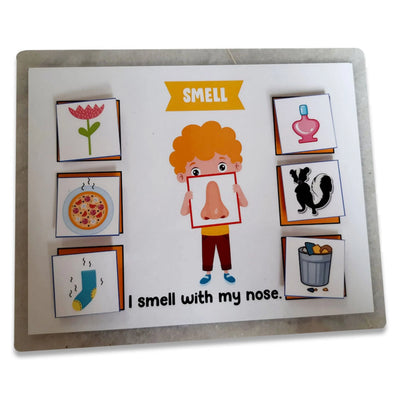
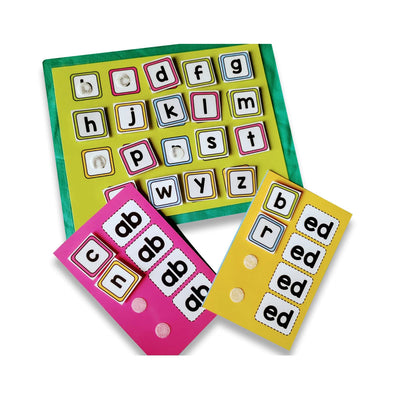
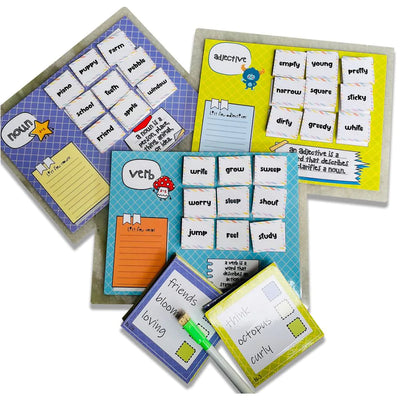
At SkilloToys, our curated Montessori materials and educational games are designed with this philosophy in mind. They provide purposeful play that supports cognitive development, problem-solving, and sensory exploration, reflecting the very core of what modern game-based learning aims to achieve. These materials are not just toys; they are tools for self-discovery and structured learning, preparing children like 4-year-old Aisha in Chennai for classroom games for learning without even realizing it.
Bringing Educational Games for Kids Home
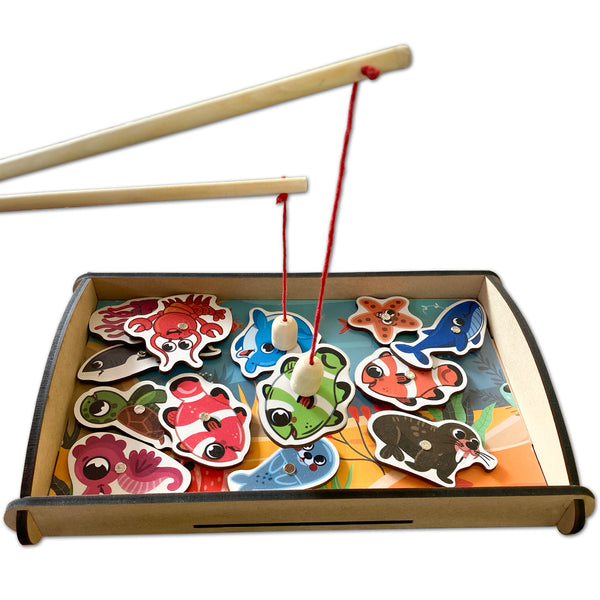
Parents often wonder how they can replicate the benefits of classroom games for learning in a home environment, especially when juggling busy schedules. The answer lies in mindful choices and active participation. Investing in well-designed educational games for kids is a powerful step. Consider wooden puzzles that enhance spatial reasoning and fine motor skills, or engaging activity kits that introduce scientific concepts through hands-on exploration. Puzzles, for example, are fantastic for developing problem-solving and concentration, offering a tangible challenge that children love to conquer.
Grandparents, who often have a natural knack for playful teaching, can be wonderful allies in this journey. Encouraging them to teach traditional counting games or simple riddle-solving during their time with the children fosters a unique blend of cultural connection and cognitive development. These informal game-based interactions strengthen family bonds while subtly reinforcing learning, making it a joyful, shared experience rather than a chore.
For parents looking to support this playful approach, SkilloToys offers a range of high-quality, age-appropriate Montessori-inspired learning materials. From activity kits that encourage scientific inquiry to logic games that build critical thinking, these resources provide children with opportunities to learn and grow through purposeful play, echoing the success of game-based learning in schools. Choose materials that invite exploration and allow children to discover solutions independently, just as Dr. Montessori envisioned.
The growing acceptance of game-based learning in Indian education is a testament to its effectiveness and its alignment with how children naturally acquire knowledge. By embracing this approach, both in schools and at home, we can nurture a generation of curious, confident, and capable learners who are prepared to navigate the complexities of the world, all while cherishing the simple joy of play.