Homeschooling Schedule India: A Daily Plan for Parents
Creating an effective homeschooling schedule India involves designing a flexible yet structured daily routine that integrates academic learning with practical life skills, respects the child's developmental pace, and accommodates the unique rhythm of Indian family life. This approach ensures a holistic educational experience, allowing parents to cultivate an engaging and productive learning environment that aligns with Montessori principles of order and independence.
A homeschooling schedule is a structured framework that outlines daily learning activities, breaks, and other engagements for children educated at home. This matters because it provides routine, promotes discipline, and ensures comprehensive coverage of subjects, empowering Indian parents to manage their educational responsibilities effectively and reduce daily stress.
Embracing the Rise of Homeschooling in India
The landscape of education in India is evolving, with a noticeable surge in families choosing to homeschool their children. Recent reports, such as 'The Rise Of Homeschooling In India' by thecore.in and 'Out of choice, out of classrooms' in The New Indian Express, highlight this growing trend. Parents are increasingly opting for homeschooling to provide a personalized learning journey, reduce academic pressure, and integrate cultural values more deeply into their children's education.
This shift allows families to move beyond conventional classroom structures, tailoring education to individual learning styles and family dynamics. Whether it’s accommodating a child's unique pace or ensuring quality education amidst diverse family commitments, homeschooling offers a compelling alternative for many Indian households.
Laying the Foundation: Montessori Principles for Your Daily Homeschool Plan India
Child development experts agree that a well-ordered environment fosters concentration and independent learning. Maria Montessori, a pioneer in educational philosophy, emphasized the importance of a 'prepared environment' and 'freedom within limits' for optimal child development. These principles are incredibly relevant when creating your daily homeschool plan India.
Incorporating Montessori's insights means prioritizing predictable routines, creating accessible learning spaces, and offering materials that encourage self-directed exploration. For instance, providing a designated workspace with age-appropriate Montessori materials empowers children to choose their activities and develop a sense of ownership over their learning journey.
Crafting Your Daily Homeschooling Schedule India: A Step-by-Step Guide
Assess Your Family's Rhythm and Child's Age
Every Indian family has its unique rhythm, influenced by joint family structures, work schedules, and cultural practices. Before designing your homeschooling routine India, observe your child's natural energy peaks and troughs. Toddlers (18-36 months) thrive on short, focused activity bursts, while older children can handle longer blocks of concentrated work.
Consider early morning pujas, afternoon siestas, or grandparent interaction times when planning your day. A schedule that works for one family in Bengaluru might not suit another in Chennai, so personalize it to your household's unique pulse and your child's developmental stage.
Integrate Core Subjects and Practical Life Skills
An effective homeschooling day India goes beyond textbooks, weaving in essential practical life skills alongside academics. Dedicate specific blocks for subjects like language arts, mathematics, and environmental studies (EVS). However, also schedule time for daily chores, cooking, gardening, or managing household tasks.
Montessori education emphasizes these 'practical life' activities, as they build concentration, coordination, and independence. Utilizing Montessori practical life materials or engaging in real-world tasks like setting the dinner table can be as educational as any lesson. This integrated approach ensures children learn responsibility alongside academics.
Schedule Movement, Play, and Rest
Research shows that children thrive on a balance of structured learning and free play. Ensure your daily homeschool plan India includes ample time for physical activity, whether it's outdoor play in a local park, yoga, or simple indoor games. Movement is vital for cognitive development and releasing pent-up energy.
Also, incorporate quiet time or a nap for younger children, and moments of reflective rest for older ones. This allows their brains to process new information and prevents burnout, leading to a more productive and enjoyable learning experience for everyone.
Account for Indian Cultural Context and Festivals
India's vibrant cultural calendar and strong family ties mean that a rigid homeschooling schedule simply won't work. Your homeschooling schedule India must be flexible enough to accommodate festivals like Diwali, Holi, Eid, or spontaneous family visits. These are not distractions but valuable learning opportunities for cultural immersion and community building.
Instead of viewing these as interruptions, integrate them into your learning. Research the history of a festival, cook traditional foods, or create related art projects. This approach makes learning relevant and celebrates India's rich heritage, enriching your child's educational journey.
Build in Flexibility and Review Regularly
While a structured homeschooling schedule India is beneficial, it must not be rigid. Be prepared for unexpected events, spontaneous learning opportunities, or simply days when your child needs a different pace. The beauty of homeschooling lies in its adaptability.
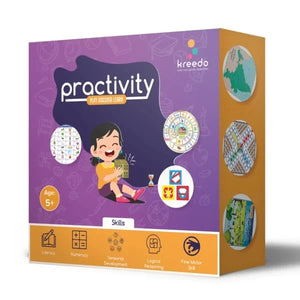
Regularly review your schedule – perhaps weekly or monthly – to see what's working and what needs adjustment. Are certain subjects dragging? Does your child need more outdoor time? Consider using engaging activity kits to introduce variety and keep learning fresh and exciting, especially when routines feel stale.
Effective Homeschooling Day India: Sample Routine Inspiration
While every family's routine will be unique, here’s a sample structure for an effective homeschooling day India, offering a starting point for your planning. Remember, this is a template to inspire, not a blueprint to follow rigidly.
Morning (8:00 AM - 12:00 PM):
- 8:00 AM - 9:00 AM: Breakfast, personal care, morning chores, family connection (e.g., reading together, simple puja).
- 9:00 AM - 10:30 AM: Focused academic block (e.g., Mathematics using Montessori math materials, language arts).
- 10:30 AM - 11:00 AM: Snack and outdoor play/movement break.
- 11:00 AM - 12:00 PM: Second academic block (e.g., EVS, history, geography, or practical life skills).
Afternoon (12:00 PM - 4:00 PM):
- 12:00 PM - 1:00 PM: Lunch preparation (involving children), lunch, clean-up.
- 1:00 PM - 2:00 PM: Quiet time, reading, puzzles, or independent play.
- 2:00 PM - 3:00 PM: Creative arts, music, crafts, or activity kit exploration.
- 3:00 PM - 4:00 PM: Outdoor time, community engagement, or skill-based learning (e.g., coding, an instrument).
This flexible structure allows for deep learning while honouring family time.
Time Management Homeschooling India: Tips for Parents
Effective time management homeschooling India is crucial for parents, especially when balancing educational responsibilities with household duties and personal commitments. Studies indicate that well-managed time reduces parental stress and increases learning efficiency.
Consider batching similar tasks, such as lesson planning or material preparation, to specific times. Involve your children in age-appropriate household chores; this teaches responsibility and frees up some of your time. Set clear boundaries between 'school time' and 'family time' to maintain focus. Finally, remember to schedule 'me-time' for yourself; a refreshed parent is a better educator and caregiver.
- An effective homeschooling schedule in India is flexible, integrated, and respectful of a child's natural rhythms and family values.
- Montessori principles, such as a prepared environment and freedom within limits, are foundational for creating an orderly and stimulating homeschool routine.
- Incorporating practical life skills alongside core academics provides a holistic education and builds independence in children.
- Cultural relevance is paramount; schedules must accommodate Indian festivals and family commitments, using them as learning opportunities.
- Regular review and adaptation of the daily homeschool plan are essential for its sustainability and effectiveness, preventing burnout for both child and parent.
- Research consistently demonstrates that children thrive in structured yet flexible learning environments that balance academic rigor with play and rest.
How rigid should a homeschooling schedule in India be?
A homeschooling schedule in India should be flexible, not rigid. While structure provides routine and predictability, it must allow for spontaneous learning, cultural events, and the child's individual pace. Regularly review and adjust your schedule to ensure it remains effective and sustainable for your family.
What is the ideal length for a homeschooling day in India?
The ideal length for a homeschooling day in India varies significantly with a child's age and concentration span. For younger children (3-6 years), 2-3 hours of focused learning, interspersed with play, is often sufficient. Older children (7+ years) might engage in 4-5 hours of academic work, broken into blocks, alongside practical activities and free time.
How can I incorporate Indian festivals into my homeschooling routine?
Incorporate Indian festivals by using them as rich learning experiences within your homeschooling routine. Dedicate time to research the festival's history and significance, engage in related art and craft activities, or cook traditional foods together. This approach enriches cultural understanding and makes learning relevant.
Is it necessary to follow a traditional school timetable for homeschooling in India?
No, it is not necessary to follow a traditional school timetable for homeschooling in India. One of the primary benefits of homeschooling is the freedom to customize the learning schedule to fit your child's unique needs and your family's lifestyle. Focus on deep, engaged learning rather than replicating school hours.
How can Montessori principles enhance my homeschooling schedule?
Montessori principles enhance your homeschooling schedule by emphasizing a prepared, child-friendly environment and self-directed learning. Incorporate dedicated learning spaces, offer engaging, age-appropriate materials, and allow children choice within limits. This fosters independence, concentration, and a genuine love for learning.
What if my child resists the homeschooling schedule?
If your child resists the homeschooling schedule, it's a clear sign that adjustments are needed. Involve your child in the planning process to foster ownership, ensure there's enough free play and movement, and be open to changing the routine. Rigidity often leads to resistance, so prioritize flexibility and observe what works best.