DIY Potato Stamp Game: Montessori Math Fun at Home
Remember those rainy afternoons spent creating art with whatever you could find around the house? That same spirit of ingenuity is perfect for bringing Montessori learning right into your Indian home. We often think of Montessori materials as needing to be 'bought', but many core concepts can be explored beautifully with everyday items. Today, we're going to dive into creating a DIY potato stamp game, a fantastic way to introduce early math concepts to your little one. It's an engaging, hands-on activity that’s both fun and educational, perfect for toddlers and preschoolers.
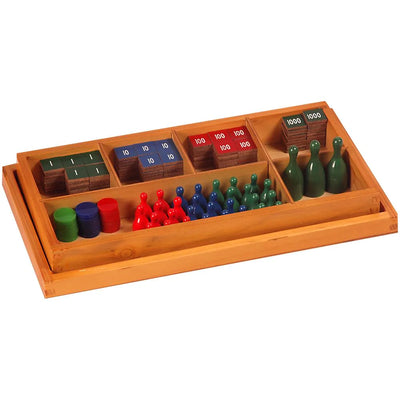
The Montessori Stamp Game is traditionally a material used to teach children place value, addition, subtraction, multiplication, and division in a concrete way. It uses small, coloured stamps representing units, tens, hundreds, and thousands. This works because it allows children to physically manipulate quantities, making abstract mathematical concepts tangible and understandable. Parents can adapt this idea at home by creating their own stamps with readily available materials, providing a similar hands-on experience for early number recognition and simple counting.
Why a DIY Potato Stamp Game is Perfect for Indian Homes
In the vibrant landscape of an Indian joint family or the cozy space of an apartment, finding engaging, budget-friendly activities is key. A DIY potato stamp game fits perfectly. Potatoes are a kitchen staple, and a little paint transforms them into powerful learning tools. This activity promotes fine motor skills, hand-eye coordination, and concentration – vital for child development in India. It encourages independent exploration, a cornerstone of Montessori, without specialized equipment. Plus, it's a wonderful way to involve family in shared creative and educational moments.
Gathering Your Desi Materials
Getting started with your homemade stamp game is simple. You'll need:
- A few medium-sized potatoes (from your sabzi basket!)
- Non-toxic, child-safe paints in at least four different colours.
- Sheets of paper or chart paper.
- A small, sharp knife (adult use only!).
- A tray or newspaper to protect your workspace.
- Wet wipes or a cloth for quick clean-ups (essential in any Indian home!).
Crafting Your Montessori Math Stamps
Now for the fun part – creating your stamps! This is an adult-led task for safety, but your child can observe.
- Prepare the Potatoes: Cut each potato in half. Using uniform halves and assigning colours is simpler for this DIY version.
- Carve the Shapes: For units, leave one potato half as a simple circle. For tens, you might cut a rectangle. For hundreds, a square, and for thousands, a larger circle or triangle. The key is distinct shapes, or simply assign different colours to represent place values.
- Assigning Colours: In Montessori, green represents units, blue for tens, red for hundreds, and green again for thousands. For our DIY, let's assign: Green for Units (1s), Blue for Tens (10s), Red for Hundreds (100s), Yellow for Thousands (1000s). This visual distinction helps children understand the 'powers' of numbers.
- Drying: Pat the cut potato surfaces dry with a paper towel to help paint adhere better.
Playing with Your Potato Stamp Game: Early Math Activities
Once stamps are ready, invite your child to play! Lay out paper and paints on a protected surface.
- Introduction to Units: Start with just the 'units' (green) stamp. Encourage counting: 'One stamp, two stamps...' You can write numerals next to their stamps. This builds early number recognition and counting, crucial for Montessori mathematics materials.
- Introducing Tens and Hundreds: Once comfortable with units, introduce 'tens' (blue) stamps. Explain one blue stamp is like ten green stamps. Physically demonstrate this equivalence. Do the same for 'hundreds' (red) and 'thousands' (yellow). This concrete representation helps children grasp place value, foundational for child development in India.
- Simple 'Sums': For older children (4-6 years), introduce simple addition. For example, 'Can you show me 2 green stamps and 1 blue stamp?' Then ask, 'How much is that altogether?' This hands-on approach makes arithmetic an engaging game.
Tips for a Successful DIY Montessori Session
To make the most of your potato stamp game experience:
- Keep it Simple: Don't introduce all four place values at once. Start with units, then gradually add more as interest grows.
- Follow the Child: Observe engagement. If they prefer stamping patterns, that's fine! The process of creating and exploring is valuable.
- Focus on the Process: Montessori emphasizes hands-on process. Don't worry about perfect lines or neat counting. The sensory experience is enriching.
- Involve in Clean-up: Make cleaning part of the activity. This teaches responsibility and respect for materials.
- Patience is Key: Learning takes time and repetition. Celebrate small achievements and enjoy shared moments.
Key Takeaways for Montessori at Home India
- The DIY potato stamp game offers a budget-friendly, hands-on approach to introducing early Montessori math concepts in Indian homes.
- This activity helps children aged 3-6 years grasp number recognition, counting, and foundational place value concepts concretely.
- Utilizing common household items like potatoes and paints aligns with the Montessori principle of using accessible, real-world materials.
- Engaging in DIY projects like this supports fine motor skill development, concentration, and encourages independent learning.
- Montessori learning activities can be effectively adapted for child development in India using creativity and readily available resources.
Frequently Asked Questions about DIY Montessori Activities
What age is appropriate for the DIY potato stamp game?
This game is generally suitable for children aged 3-6 years. Toddlers can enjoy sensory stamping, while older preschoolers begin to grasp mathematical concepts like units, tens, and hundreds.
How does this activity support Montessori principles?
It supports Montessori by offering a hands-on, concrete way to learn abstract concepts like numbers and place value. It encourages independent exploration, concentration, and fine motor skills, aligning with Dr. Maria Montessori's philosophy of learning through doing.
Can I use other vegetables for stamps?
Absolutely! While potatoes are excellent, experiment with other vegetables like carrots, bell peppers, or apples. Just ensure they are safe and easy for little hands to hold.
How can I make the math concepts clearer for my child?
Always start with concrete examples. Use verbal cues like "one green stamp is one" and "one blue stamp is ten ones." Physically show the equivalence and use distinct colours for each place value. Repetition and observing your child's understanding are key.
Bringing Montessori into your home doesn't require a special classroom; it simply needs creativity, observation, and love. This DIY potato stamp game is a testament to how simple materials can create profound learning experiences. For more expertly designed Montessori method learning materials that complement your home activities, visit us at SkilloToys.com – your trusted partner in your child's developmental journey.