Pretend Play Builds Mathematical Thinking in Children
Imagine your little one meticulously arranging tiny vessels in their play kitchen, carefully distributing pretend ladoos to their dolls, or setting up a 'dukaan' to sell imaginary vegetables. It looks like simple, delightful fun, doesn't it? What if we told you that behind these innocent scenes, your child is actually building robust mathematical thinking skills? It's true! Engaging in pretend play directly builds mathematical thinking in children, laying crucial groundwork for future academic success.
So, what exactly is this powerful connection between imaginative play and early math skills? Pretend play is any activity where children use their imagination to create scenarios, roles, and objects. This seemingly simple act is a rich environment for developing cognitive abilities. When children engage in imaginative play, they are constantly interacting with mathematical concepts without even realizing it. They are counting, sorting, classifying, measuring, and even problem-solving – all fundamental elements of mathematics.
The Hidden Math in Everyday Pretend Play
Think about a typical Indian household. Perhaps your child is pretending to be a grandparent telling stories, or a vendor at a local 'mandi'. In these scenarios, math is everywhere. When they play 'ghar-ghar' (house-house) and set the table, they might count plates for each family member (one-to-one correspondence). When they pretend to cook, they're often 'measuring' ingredients or 'sorting' spices. These everyday interactions are incredibly powerful Montessori learning activities for young minds.
For instance, a child playing 'chef' might decide to make three chapatis and five puris. They are not only distinguishing between two items but also managing quantities. This hands-on, self-directed exploration helps children internalize concepts far more effectively than rote learning. It transforms abstract numbers into tangible experiences.
More Than Just Fun: Montessori and Mathematical Concepts
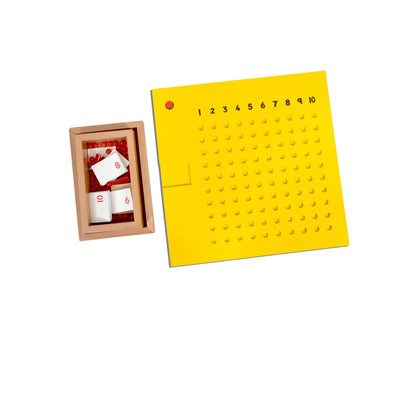
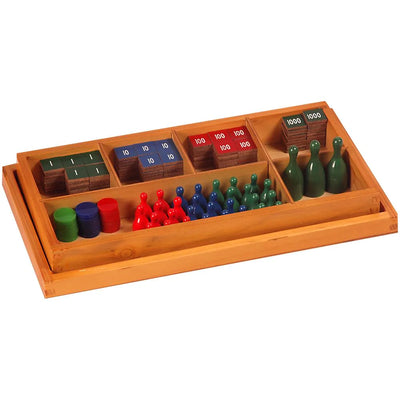
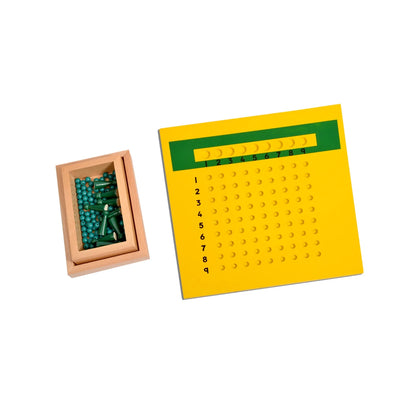
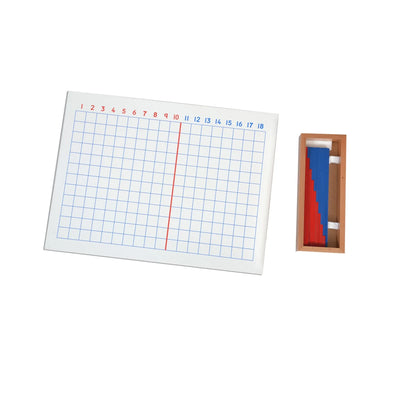
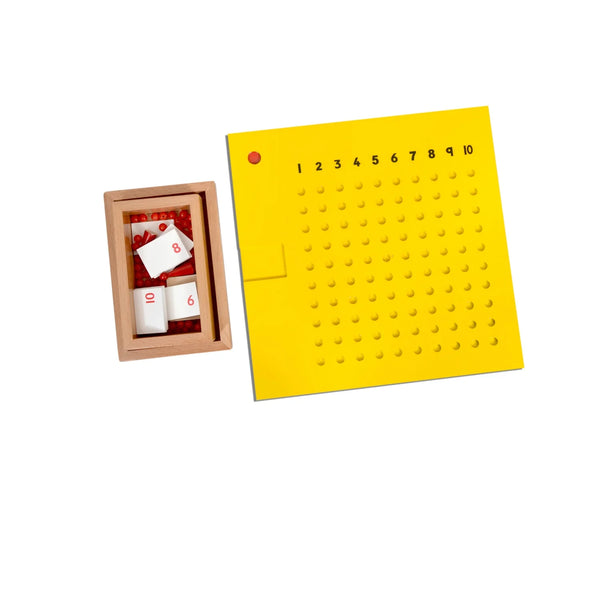
Maria Montessori herself observed the deep connection between concrete experiences and the development of abstract thought. Her philosophy emphasizes learning through doing, and pretend play perfectly aligns with this. When a child sorts different coloured blocks in their play, they are practicing classification, a skill reinforced by Montessori materials like the Montessori Mathematics Materials designed for grading and ordering.
Consider the Number Rods, which visually represent quantity. In pretend play, a child might line up toy cars from smallest to largest, mirroring the concept of seriation. This practical engagement helps children construct their own understanding of mathematical relationships, a cornerstone of genuine comprehension. These activities, often disguised as play, contribute significantly to child development in India, preparing children for complex problem-solving.
Fostering Early Math Through Imagination at Home
Encouraging math-focused pretend play doesn't require elaborate setups or expensive toys. In many Indian homes, even small apartments can become rich learning environments. Use everyday items – bowls, spoons, bangles, even colourful scarves – as props. A simple tablecloth can become a picnic blanket, inviting counting of imaginary guests and snacks.
For example, if your child pretends to be a postman delivering letters, they are counting houses and associating quantities. If they are 'building' a temple with cushions, they are engaging in spatial reasoning and understanding balance. These experiences build foundational math skills such as estimation, pattern recognition, and logical sequencing. Parents practising Montessori at home India can easily integrate these natural opportunities.
Simple Activities for Big Brain Boosts
To deepen the mathematical learning in pretend play, gently introduce challenges. Ask questions like, "How many more guests are coming?" or "If we share these four biscuits among two teddy bears, how many does each get?" This encourages problem-solving and critical thinking. Playing "restaurant" involves taking orders (quantities), "shopping" involves counting money (number recognition and value), and "building" involves spatial awareness.
Even simple activity kits focusing on practical life skills can be integrated into pretend play, providing structure while maintaining the imaginative element. For toddlers and preschoolers, these seemingly simple games are powerful educational toys for toddlers, nurturing their cognitive growth holistically.
Why This Matters for Your Child's Development
The beauty of learning math through pretend play is its natural, joyful nature. There's no pressure, just exploration. This positive association with numbers and problem-solving is invaluable, creating a confident and curious learner. It helps children develop a robust sense of numeracy, spatial awareness, and logical reasoning, which are not only crucial for mathematics but for overall life skills.
Maria Montessori always believed in the child's innate capacity for learning, and pretend play unlocks this potential beautifully. By embracing and facilitating imaginative scenarios, we provide our children with the tools to build strong cognitive foundations, preparing them for a future where adaptability and critical thinking are paramount.
At SkilloToys.com, we understand the profound impact of purposeful play. Explore our range of Montessori method learning materials and educational toys that complement and enrich your child's natural journey of discovery and mathematical growth.