Pretend Play & Math: Building Mathematical Thinking in Children
Imagine your little one in your cozy Bengaluru apartment, meticulously arranging small vessels on the floor, pretending to run a roadside chai stall. Or perhaps your grandchild, during a family gathering, is busy 'cooking' a grand feast for everyone, using plastic fruits and vegetables. These delightful moments of make-believe aren't just adorable; they're deeply significant. Did you know that this seemingly simple act of pretend play directly builds mathematical thinking in children, laying crucial groundwork for their future understanding of numbers and logic? It's true! In the world of a child, a make-believe scenario is a rich classroom.
So, what exactly is pretend play? At its heart, pretend play, also known as imaginative or dramatic play, is when children act out scenarios and roles, using objects symbolically to represent something else. A simple block might become a phone, a dupatta transforms into a cape, or a group of pebbles turns into a family of tiny animals. Maria Montessori herself recognised play as 'the child's work,' a vital mechanism through which children explore, understand, and interact with the world around them, developing a wide array of cognitive and social skills.
The Surprising Math in Everyday Pretend Play
From playing 'ghar-ghar' to 'doctor-doctor,' children are constantly engaging in activities that, unknowingly to them, sharpen their mathematical minds. These are not formal lessons, but organic explorations of concepts that will later become textbook problems. It's how children in Indian homes, whether in a sprawling joint family or a compact city apartment, naturally encounter foundational math.
Counting, Quantity, and One-to-One Correspondence
Think about a child setting up a pretend grocery shop, meticulously counting out 'rupees' (perhaps pebbles or buttons) for each item, or ensuring every 'customer' (doll or sibling) gets one imaginary ladoo. This is concrete practice in counting, understanding quantities, and grasping one-to-one correspondence – essential pre-math skills. They learn that numbers represent actual amounts, not just abstract symbols.
Sorting, Classifying, and Patterning
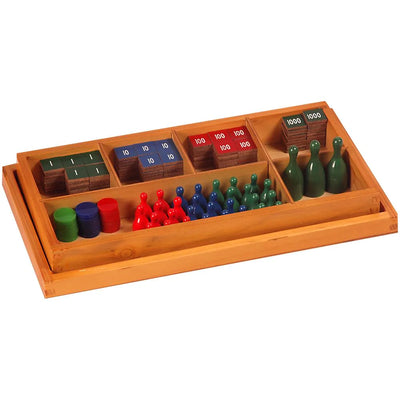
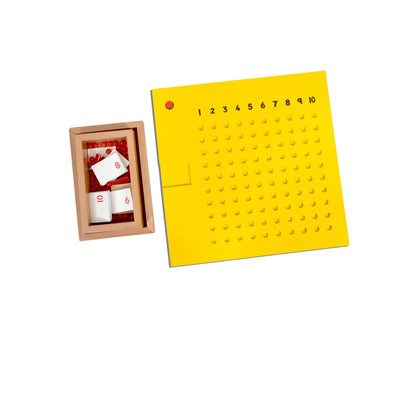
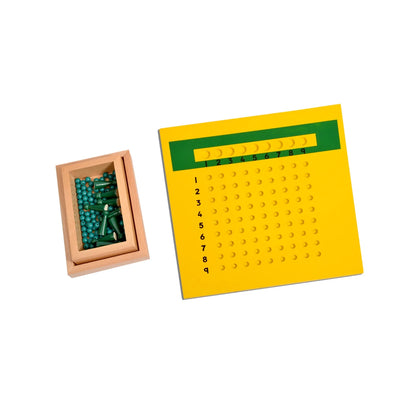
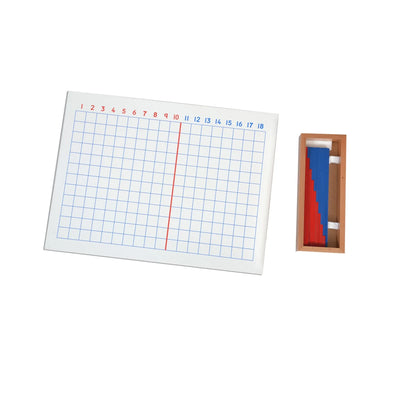
Whether it's grouping their toy animals by size or colour, arranging building blocks from smallest to largest, or even 'decorating' for a pretend Diwali with patterns of leaves and flowers, children are sorting and classifying. These activities build a strong sense of order and logical reasoning. They also learn to identify and create patterns, a fundamental element of mathematical thought and problem-solving, much like those found in Montessori mathematics materials.
Measurement and Comparison
Pretend cooking is a fantastic example. "We need a big spoon of salt and a small pinch of haldi," a child might declare, using descriptive language that reflects concepts of measurement and comparison. Building a fort requires judging sizes, understanding spatial relationships ("This blanket is longer, it will cover the gap"), and even simple geometry. They are learning about relative size, weight, and volume through direct, hands-on experience, often using everyday objects from an Indian kitchen.
Problem-Solving and Logical Reasoning
Pretend play is a constant stream of miniature challenges. "Oh no, the baby doll is sick! What do we need to do?" This requires planning, sequential thinking, and finding solutions. "We don't have enough plates for all the guests at our pretend wedding!" prompts the child to find more, or divide the existing ones, engaging in early problem-solving and distribution – all mathematical processes. This works because children are actively creating scenarios and finding solutions within them. Parents can provide open-ended activity kits that encourage such creative problem-solving.
Spatial Awareness and Geometry
Building with blocks, arranging miniature furniture in a dollhouse, or even navigating a pretend obstacle course – these all involve spatial awareness. Children learn about shapes, positions (over, under, beside), and how objects fit together in space. This foundational understanding of geometry, often developed through play with simple, natural materials like those found in Indian homes, is vital for later mathematical success.
Fostering Mathematical Thinking Through Play at Home
For parents in India keen on nurturing their child's holistic development, integrating purposeful play is simple. Provide open-ended materials: fabric scraps, empty boxes, natural elements from your garden or park, and simple kitchen utensils. These are often more effective than highly specific toys, allowing for greater imagination and mathematical exploration.
Engage with your child's play by asking open-ended questions: "How many plates do we need for everyone?", "Which one is bigger?", "Can we make a pattern with these flowers for our rangoli?" This encourages them to articulate their mathematical thinking. Remember, it's about following their lead and gently expanding their play, not directing it.
Montessori at home India doesn't require a dedicated classroom; it thrives in everyday moments. By valuing and supporting pretend play, we provide children with a joyful, self-directed path to developing robust mathematical thinking, preparing them not just for school, but for a lifetime of logical reasoning and problem-solving.
At SkilloToys.com, we understand the power of play. Our range of Montessori learning materials and toys are designed to inspire imaginative play and foster cognitive development, ensuring your child's playful learning journey is both enriching and fun.