Affordable Motor Skill Development: Montessori at Home Budget Solutions
Achieving affordable motor skill development for children is a top priority for Indian parents, especially with the growing concern over high preschool activity costs. Montessori principles offer a smart, budget-friendly approach to nurture crucial physical development right within the comfort of home, ensuring every child can thrive without significant financial strain.
Motor skill development refers to the progression of a child's ability to use their muscles for movement and coordination. This matters because well-developed motor skills are foundational for academic readiness, independence in daily tasks, and overall confidence. Indian parents can actively support this by providing age-appropriate activities and a stimulating environment.
The discourse around parental spending on early childhood education has intensified recently, with articles like 'Spending ₹1 lakh on preschool activities? Smart ways to plan and save for skill classes - The Economic Times' highlighting the financial pressures families face. Many Indian parents, whether in joint families or nuclear setups, are constantly seeking effective yet economical ways to bridge the 'school-readiness gap' mentioned in 'The padhai pivot: Closing the school-readiness gap for Viksit Bharat 2047 - Ideas for India'. This guide offers practical Montessori-inspired solutions that empower parents to foster essential motor skills without breaking the bank.
Understanding the True Cost of Skill Classes for Kids Budget in India
Parents across India are increasingly investing in a plethora of skill classes, from phonics to abacus, ballet to coding, often starting at very young ages. Statistics suggest that families in major Indian cities are spending upwards of ₹50,000 to ₹1,00,000 annually on various extracurriculars and skill-building classes for preschool-aged children, leading to significant financial strain. This expenditure is driven by a genuine desire to provide the best opportunities for their children, coupled with societal pressures and the competitive academic environment.
However, this substantial investment does not always guarantee foundational skill development. Many expensive classes offer highly structured, adult-led activities that may not fully align with a child's natural pace of learning and exploration. Child development experts agree that while exposure is beneficial, genuine skill acquisition, especially for motor skills, often flourishes in environments that encourage self-directed play and repetition.
Montessori at Home: A Value-for-Money Approach to Development
The Montessori philosophy, founded by Dr. Maria Montessori, champions self-directed activity, hands-on learning, and collaborative play within a 'prepared environment'. This approach naturally lends itself to Montessori at home savings by empowering parents to create a rich developmental space using everyday items and thoughtfully chosen materials. The focus shifts from passive consumption of lessons to active, engaged learning, offering exceptional value for money kids activities.
For instance, practical life activities are central to Montessori and are inherently budget-friendly. Simple tasks like pouring water, sweeping with a child-sized broom, buttoning clothes, or folding laundry are not just chores; they are powerful exercises in fine and gross motor skill development, concentration, and independence. Research indicates that children who regularly engage in practical life activities demonstrate greater self-reliance and coordination. These activities can be integrated into daily family routines, especially in a bustling Indian household where children often observe and participate alongside elders.
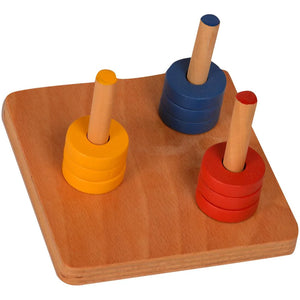
Simple activities like sorting colourful buttons, stringing beads, or engaging with puzzles not only refine finger dexterity but also boost concentration. SkilloToys offers a range of fine motor skill development toys designed to captivate young minds with purposeful challenges.
Creative DIY Motor Skill Activities Using Everyday Household Items
Parents often overlook the treasure trove of developmental opportunities available right within their homes. Embracing DIY motor skill activities is perhaps the most effective strategy for an educational toys budget. Look around your kitchen and home for inspiration:
- Kitchen Explorers: Let your child help with simple kitchen tasks. Sorting lentils or rice by colour, transferring water with a small spoon or dropper, kneading atta for rotis – these are excellent for fine motor skills and hand-eye coordination.
- Fabric Fun: Tearing old newspapers or fabric strips into smaller pieces, then scrunching them into balls, is a fantastic way to build hand strength. Learning to button up a kurta or zip a jacket provides real-life motor challenges.
- Outdoor Adventures (at home): Encourage climbing on safe furniture (with supervision), crawling under chairs, or balancing along a tape line on the floor for gross motor development. Playing with a ball, even a soft cloth one, helps with coordination and spatial awareness.
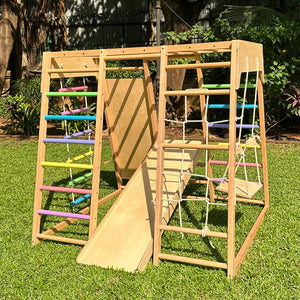
Studies from the National Centre for Early Childhood Development highlight the effectiveness of play-based learning for motor skill development, confirming that these simple, everyday activities are as impactful, if not more, than expensive specialized equipment. For gross motor development, consider creating a simple obstacle course in your living room with cushions and blankets, or encouraging outdoor play like hopscotch and climbing. Explore SkilloToys' selection of gross motor skill toys that encourage active, full-body movement.
Investing Smartly: How to Save on Skill Classes with Quality Educational Toys
While DIY activities are invaluable, certain high-quality educational toys can significantly supplement a child's development and help save on skill classes in the long run. The key is to choose open-ended, multi-purpose Montessori materials that grow with your child and offer enduring educational value.
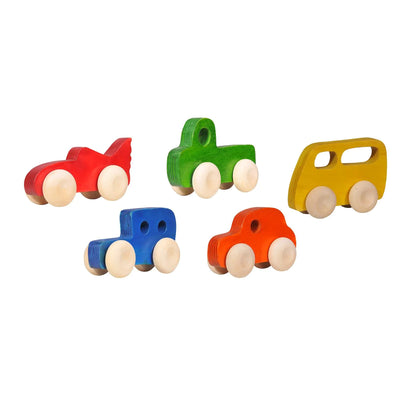
For instance, a set of building blocks, a lacing toy, or a wooden stacking game can offer years of learning, developing spatial reasoning, problem-solving, and both fine and gross motor skills. Unlike single-use plastic toys that quickly lose their appeal, well-designed Montessori toys like the Pink Tower or Sandpaper Letters, though an initial investment, provide a scaffold for continuous learning and skill refinement.
When purchasing, consider durability, safety, and the potential for multiple uses. SkilloToys, as Bengaluru's leading Montessori store, meticulously curates its collection to ensure each item aligns with Montessori principles of purposeful play and lasting educational impact. Investing in these quality items means fewer impulsive purchases of fleeting trends, ultimately saving money while fostering genuine development. Ultimately, the goal is to create a nurturing environment that encourages self-discovery and holistic growth. SkilloToys stands as Bengaluru's leading Montessori store, providing a wide array of Montessori learning materials and toys that align with these principles, ensuring quality and value.
- Montessori principles provide an effective and economical framework for motor skill development.
- DIY activities using common household items are powerful tools for building both fine and gross motor skills.
- Investing in open-ended, multi-purpose Montessori educational toys offers long-term value over single-use alternatives.
- Early motor skill development is crucial for cognitive and social readiness, influencing future academic success.
- Parents in India can mitigate high preschool activity costs by adopting a structured, home-based learning approach.
- Integrating children into daily household tasks significantly contributes to their motor skill development and independence.
How can I develop fine motor skills at home cheaply?
Fine motor skills can be developed affordably at home by engaging children in activities like sorting rice or lentils, threading beads made from paper, or tearing paper into shapes. These everyday tasks enhance hand-eye coordination and finger strength effectively without requiring expensive materials.
What are budget-friendly gross motor activities for toddlers?
Budget-friendly gross motor activities for toddlers include simple outdoor play like running, jumping, and climbing on safe, natural structures. Indoors, create obstacle courses with pillows and blankets or play "follow the leader" to encourage balance and coordination.
Are Montessori toys truly worth the investment for budget-conscious parents?
Montessori toys offer significant long-term value for budget-conscious parents because they are designed for durability, open-ended play, and multi-skill development. Their focus on self-correction and sequential learning means they remain engaging and educational for longer periods, reducing the need for constant new purchases.
How does Montessori at home save money on skill classes?
Montessori at home saves money on skill classes by integrating learning into daily routines and using readily available materials or thoughtfully chosen educational toys. This approach allows parents to provide a rich developmental environment that often surpasses the benefits of expensive, structured external classes, especially for foundational skills.
What age is best to start motor skill development activities?
Motor skill development activities can begin from infancy, with simple movements and sensory exploration. Experts recommend introducing structured activities as early as 18-24 months, focusing on age-appropriate challenges that build both fine and gross motor control in a playful manner.