Affordable Motor Skill Development: Planning & Saving Guide for Indian Parents
Achieving affordable motor skill development for your child in India doesn't have to mean compromising on quality or breaking the bank. With thoughtful planning and smart choices, parents can effectively nurture their child's physical growth and cognitive abilities right from their homes in Bengaluru and across India.
The increasing cost of preschool activities and skill classes is a significant concern for many Indian families. As highlighted by a recent Economic Times article, some parents are spending upwards of ₹1 lakh on such activities. This guide provides practical strategies for budgeting and making intelligent investments in your child's developmental journey.
What is Motor Skill Development?
Motor skill development is the process where children gain control over their body movements, encompassing both large (gross) and small (fine) actions. This matters because it's foundational for cognitive growth, independence, and academic readiness. Indian parents can actively support this through engaging activities and smart resource allocation.
Understanding the Landscape: Preschool Skill Classes Cost India
The urban Indian landscape increasingly offers a plethora of extracurricular activities and skill classes for preschoolers, from swimming and gymnastics to phonics and coding. While these can be beneficial, the cumulative preschool skill classes cost India can quickly become prohibitive for many families, including those in Bengaluru's bustling localities.
Research shows that early childhood experiences significantly impact lifelong learning and well-being. However, high costs do not automatically equate to higher quality or better outcomes. Parents must discern between 'must-have' developmental opportunities and 'nice-to-have' extras, especially with the 'padhai pivot' pushing for school readiness for Viksit Bharat 2047.
Smart Budgeting for Child Development India: Prioritising Impact
Effective budgeting for child development India means prioritising activities and resources that offer the most significant developmental impact. This involves looking beyond branded classes and towards sustainable, engaging methods that can be integrated into daily family life. Child development experts agree that consistent, loving engagement is more valuable than sporadic, expensive classes.
Consider your family's unique dynamics. In joint families, grandparents often play a crucial role in engaging children through traditional games that naturally foster motor skills. This cultural capital is invaluable and free.
Montessori Toys Value: A Long-Term Investment
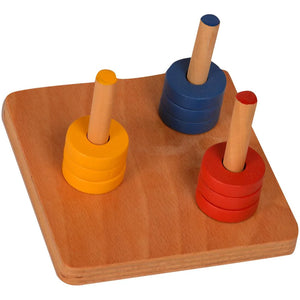
Investing in high-quality, durable educational toys, particularly those rooted in the Montessori philosophy, offers exceptional Montessori toys value. Unlike fleeting plastic toys, Montessori materials are designed to be self-correcting and target specific developmental milestones, offering repeated engagement and extended utility. For instance, a fine motor skill set like a Pink Tower or cylinder blocks grows with the child, offering different learning possibilities at various ages.
Maria Montessori's method emphasizes hands-on learning through purposeful activity. A single Montessori material can support multiple areas of development, making it a cost-effective choice. For example, materials like the Sandpaper Letters develop both fine motor control and early literacy skills, a testament to their integrated value.
Save on Skill Classes with Home-Based Learning
Parents can significantly save on skill classes by embracing a home-based learning approach. Many activities traditionally offered in classes can be replicated or adapted at home using readily available materials. This empowers parents and allows for flexible scheduling around family routines, be it during festivals or quiet evenings.
Studies indicate that children with well-developed motor skills at preschool age often demonstrate better literacy and numeracy skills by the time they enter primary school. This highlights that play-based learning deserves equal footing with nutrition in child development, as India Today emphasizes.
DIY Motor Skill Activities at Home: Empowering Parents
Engaging in DIY motor skill activities at home is perhaps the most accessible and often the most enjoyable way to support your child's development. These activities require minimal investment and can be tailored to your child's age and interests. For toddlers (18-36 months), simple tasks like pouring water from one cup to another, stacking lightweight objects, or helping with kitchen chores like kneading dough develop fine motor control and coordination.
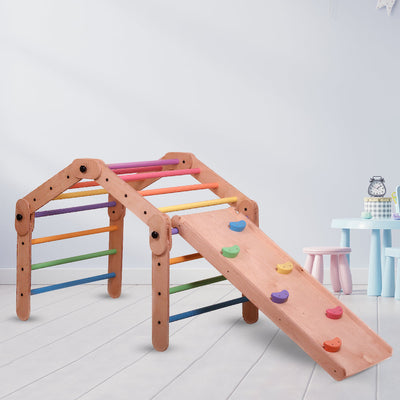
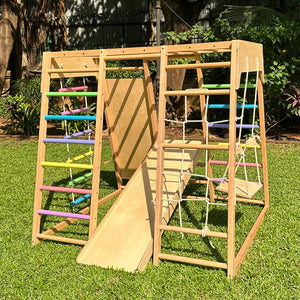
For gross motor development, encourage active play outdoors – running, jumping, climbing on safe structures, or even dancing to favourite Indian tunes. Indoor activities could include creating an obstacle course with cushions, blankets, and pillows. Providing opportunities for free, unstructured play is critical for physical and cognitive growth, offering a natural pathway for children to explore their physical capabilities.
Leveraging Community and Resources
Beyond home, look for affordable community resources. Many local parks, community centres, or libraries in Bengaluru and other cities offer free or low-cost activities that promote physical development. Engaging with other parents through playdates also creates a stimulating environment for children to interact and learn from each other.
Online resources, like SkilloToys.com's blog, offer a wealth of ideas for age-appropriate motor skill activities that can be done with minimal cost. Remember, the goal is consistent engagement and creating an environment rich with opportunities for movement and exploration. Quality trumps quantity when it comes to early childhood development.
Key Takeaways
- Achieving affordable motor skill development in India is entirely possible through strategic planning and smart investments.
- The high cost of preschool skill classes can be mitigated by prioritising home-based activities and valuable educational toys.
- Montessori toys provide exceptional long-term value, supporting specific developmental milestones and fostering independence.
- DIY motor skill activities using common household items are effective and cost-free methods for enhancing development.
- Consistent, playful engagement with children is more crucial for motor skill development than expensive, branded classes.
- Budgeting for child development should focus on impact and versatility, ensuring resources are used effectively to support holistic growth.