Board Games for Kids: Montessori Motor Skills Guide
When Bengaluru families gather for a relaxed evening, board games for kids often become the centerpiece, but their profound impact on a child's motor skill development is often underestimated. These beloved games are, in fact, powerful tools for nurturing both fine and gross motor skills, offering a playful yet purposeful pathway for physical development, deeply aligned with Montessori principles.
What are Motor Skills?
Motor skills refer to a child's ability to move and coordinate their body. They are divided into fine motor skills, which involve small muscle movements like writing, and gross motor skills, involving larger movements like running. This matters because strong motor skills are foundational for everything from self-care to academic success. Indian parents can integrate purposeful play to naturally enhance these vital abilities.
The Montessori Approach: Movement as the Key to Learning
Maria Montessori, the pioneer of the Montessori method, firmly believed that movement is inseparable from learning. For her, children learn by doing, by interacting with their environment through purposeful action. This isn't just about physical activity; it's about refining movements to achieve a goal, which directly translates to how children engage with board games. Every time a child reaches for a pawn, rolls a die, or places a card, they are performing a practical life exercise, honing precision and control.
Research consistently shows that children who engage in hands-on activities develop stronger neural connections, supporting overall cognitive and physical growth. This emphasis on concrete interaction, rather than abstract instruction, is why board games are such natural allies in a Montessori-inspired home, perfectly fitting the 'padhai pivot' to holistic school readiness for a Viksit Bharat 2047.
Fine Motor Skills: The Delicate Dance of Play
Fine motor skills involve the small muscles in the hands and fingers, crucial for tasks like writing, buttoning clothes, and eating independently. Board games are a subtle powerhouse for developing these skills. Consider a 4-year-old, Anjali, in a joint family in Jayanagar, meticulously picking up a small red pawn from the 'Ludo' board. This seemingly simple action requires the precise coordination of her thumb and forefinger – the 'pincer grip' – vital for holding a pencil. The satisfying clunk as she places it in the next square isn't just a move; it's a sensory reward for controlled dexterity.
Many board games demand repetitive actions like picking up cards, moving tokens, or spinning spinners. These actions strengthen hand muscles, improve finger isolation, and enhance hand-eye coordination, all without a child feeling like they're doing 'work.' Just as a 'dadi' might guide a child to thread beads for Rakhi, board games offer a similarly engaging and purposeful fine motor workout. Explore our range of fine motor skill development toys to complement this playful learning.
Gross Motor Skills: Engaging the Whole Body in Play
While board games are often associated with fine motor skills, they also subtly engage a child's gross motor skills. Think of a 5-year-old, Rohan, leaning across a large Snakes and Ladders board, stretching to reach a distant square, or sitting upright for an extended period, maintaining balance and core strength. These actions might seem minor, but they contribute to overall body awareness, posture, and spatial reasoning.
Sitting still, yet engaged, for a board game requires a level of proprioceptive input – the body's sense of its position in space – which is a gross motor skill. The act of reaching, sometimes even adjusting one's seat to get a better angle, involves core and arm muscle engagement. Child development experts agree that even tabletop activities contribute to gross motor development by refining trunk stability and coordinated limb movements. For other activities that boost full-body coordination, check out our gross motor skill toys.
Choosing the Right Montessori Board Games for Kids
When selecting board games for your child, especially from a Montessori perspective, look beyond mere entertainment. Focus on games that:
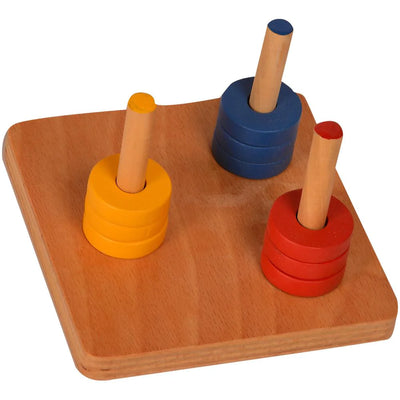
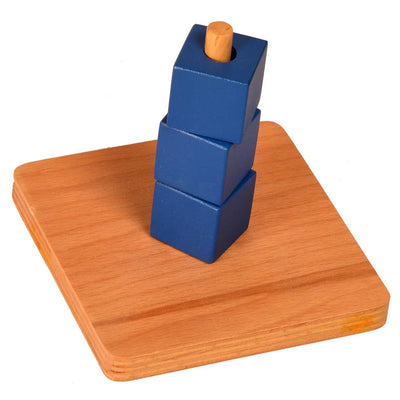
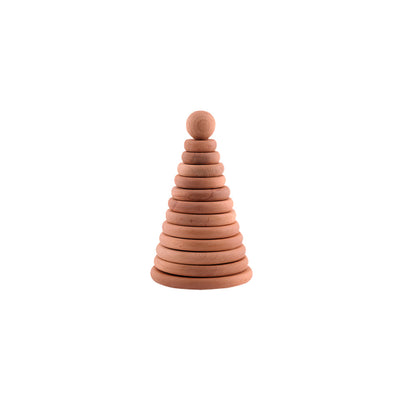
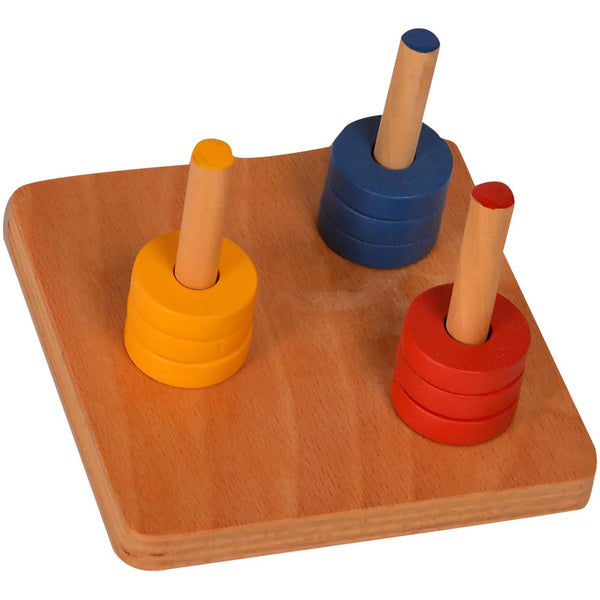
- Are Age-Appropriate: For toddlers (1-3 years), chunky pieces, simple matching, or stacking games are ideal. For preschoolers (3-6 years), games with dice, simple rules, and clear objectives work best.
- Encourage Tactile Interaction: Games with varied textures, shapes, or sizes of pieces enhance sensory exploration alongside motor skill development.
- Promote Self-Correction: Montessori education values materials that allow children to discover errors themselves. Many board games, like puzzles or matching games, inherently offer this, building problem-solving skills without adult intervention.
- Offer Repetition: Repetitive actions, like rolling a die or moving a pawn the same way, reinforce motor patterns and muscle memory.
Instead of complex games, consider classic Indian choices like Ludo or simple memory matching games, which inherently involve these motor-skill-building actions. For a wide selection of engaging and educational options, browse our Montessori learning materials and toys.
One non-obvious insight for parents is this: the true power of board games for motor skill development lies in the *unconscious, repetitive engagement* with physical objects. While you might think of them as 'thinking games,' the constant picking up, placing, and manipulating of pieces acts as a low-pressure, high-frequency gym for tiny hands. This consistent practice builds the neural pathways necessary for more complex tasks like writing, drawing, and even using cutlery, offering a crucial screen-free alternative to develop foundational skills.
For parents in bustling cities like Bengaluru, where screen time is a constant concern and academic pressure mounts, board games offer a serene yet highly effective antidote. They provide a structured, engaging way to develop essential motor skills that are often overlooked amidst the focus on early literacy and numeracy. So, the next time your child pulls out a board game, remember it's not just about winning or losing; it's a vital developmental session disguised as pure fun, contributing to their holistic readiness for the world.
- Board games are invaluable for developing precise fine motor skills like the pincer grip.
- Gross motor skills such as posture, reaching, and spatial awareness are subtly honed during board game play.
- Maria Montessori advocated for learning through purposeful movement, a principle perfectly embodied by board games.
- Choosing tactile, age-appropriate board games fosters concentration and independent problem-solving.
- Regular engagement with physical board games significantly contributes to pre-writing skills and everyday self-care tasks.
- Board games provide a hands-on, screen-free avenue for holistic child development in Indian homes.
What age is best to introduce board games for motor skills?
Children as young as 18-24 months can start with simple board games that involve chunky pieces and basic movements like inserting or stacking. By 3-4 years, they can engage in games requiring more precise hand movements and understanding of rules, crucial for developing foundational motor skills.
How do board games help with a child's pre-writing skills?
Board games directly support pre-writing skills by strengthening fine motor control, hand-eye coordination, and the pincer grip. Actions like picking up small pawns, holding dice, or moving cards build the hand strength and dexterity necessary for holding a pencil correctly and forming letters.
Are electronic board games as effective for motor skills as traditional ones?
Traditional, physical board games are significantly more effective for motor skill development than electronic versions. They require tangible interaction, precise physical manipulation of pieces, and direct hand-eye coordination that touchscreens cannot fully replicate, offering richer sensory and tactile input.
How can I encourage my child to play board games for motor skill development?
Introduce board games as fun, family time rather than a chore, especially after school or during weekend gatherings with grandparents. Start with games that match your child's developmental stage, allowing them to choose, and celebrate small achievements to build confidence and intrinsic motivation.
What kind of board games are best for developing both fine and gross motor skills?
Look for games that involve varied movements: picking up small tokens (fine motor), rolling dice, placing pieces precisely, and even reaching across the board or adjusting posture (gross motor). Games like simple matching, stacking, or 'first-board' games with large, colourful pieces are ideal starting points for integrated motor skill development.