Educational Toys for Motor Skills: An Age-Wise Guide
Selecting the right educational toys for motor skills is a definitive step Indian parents can take to support their child's crucial physical development from infancy through early school years. Research consistently shows that play-based learning, deeply ingrained in our cultural fabric from traditional games to festive activities, is fundamental for developing both fine and gross motor abilities, directly impacting a child's confidence and future learning success. While many educational toys for kids focus on cognitive aspects, understanding which ones specifically target physical development is vital.
As preschool education evolves beyond just ABCs and 123s, as highlighted by The Hans India, the emphasis on holistic development, including robust motor skills, has never been stronger. This guide provides actionable, age-wise recommendations for the best educational toys that foster physical dexterity and coordination, ensuring your child, whether nurtured in a bustling joint family or a nuclear home, has the tools to thrive.
What Are Motor Skills?
Motor skills refer to the coordinated movements of our muscles and limbs. These are broadly categorized into gross motor skills, involving larger muscle groups for activities like walking and jumping, and fine motor skills, which require smaller muscles for precise actions such as writing or buttoning. Both are critical for a child's holistic physical development and independence.
Child development experts agree that a strong foundation in motor skills during early childhood is crucial not only for physical independence but also for cognitive and social development. Early childhood development research highlights that approximately 80% of brain development occurs by age three, underscoring the importance of stimulating environments and appropriate educational toys from the earliest months.
0-12 Months: Laying the Foundations of Movement
During their first year, babies are rapidly developing foundational motor skills. Their world expands from gazing to grasping, rolling, sitting, and eventually crawling. Educational toys at this stage focus on sensory engagement and encouraging natural movements.
Gross Motor Skill Toys for Infants
For newborns and young infants, tummy time mats and activity gyms with dangling toys encourage reaching, swatting, and head lifting, strengthening neck and core muscles. As they grow, soft balls and push-along toys motivate crawling and eventually cruising. Providing a safe, open space, perhaps a colourful playmat in the living room where grandparents can join in, allows for essential floor time.
Fine Motor Skill Toys for Little Hands
Simple rattles, soft stacking rings, and textured fabrics are excellent fine motor skill toys for infants. These items promote grasping, transferring objects between hands, and developing hand-eye coordination. Maria Montessori emphasized the importance of manipulatives; even simple wooden blocks or a teether can offer varied textures and weights for exploration.
1-3 Years: Toddling Towards Independence
This age is characterized by incredible physical strides – from first steps to running, jumping, and manipulating objects with greater purpose. Montessori toys for motor skills are particularly impactful here, as they are designed to match developmental urges.
Gross Motor Skills for Explorers
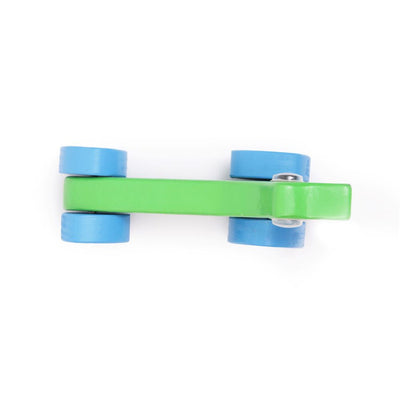
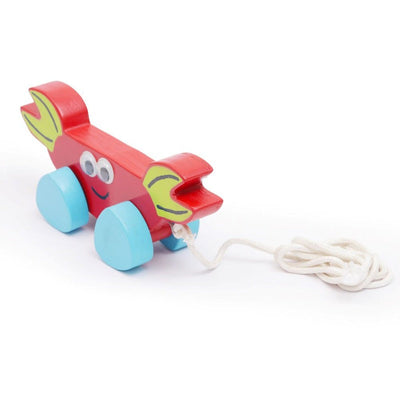
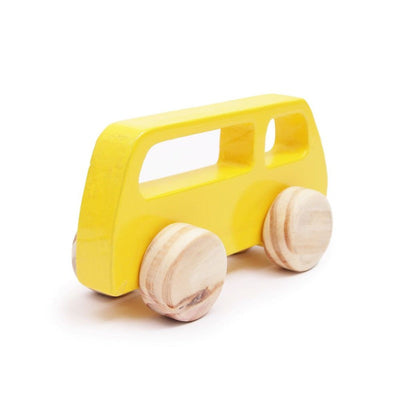
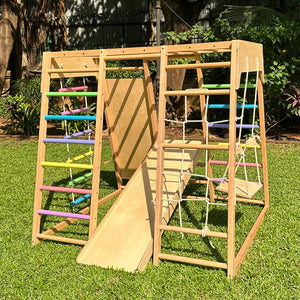
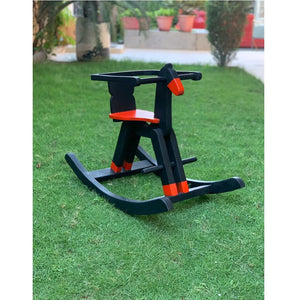
Toddlers are natural explorers. Push-and-pull toys, small ride-on vehicles, and climbing structures (like a small slide or soft play tunnel) encourage balance, coordination, and spatial awareness. Outdoor play, whether at a local park or a backyard filled with sand and water play, is essential. Studies indicate that children engaging in regular physical play demonstrate better academic readiness and problem-solving skills.
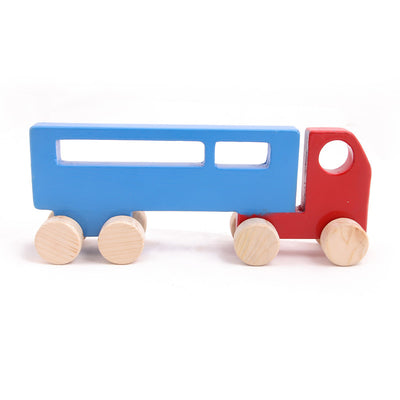
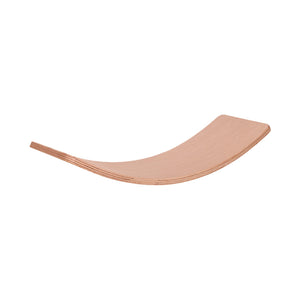
Consider items like our sturdy wooden wagons or balance boards that allow children to develop their sense of equilibrium and strengthen their legs. For more options, explore our range of gross motor skill toys.
Fine Motor Precision for Little Hands
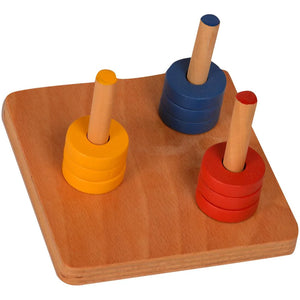
For developing precise finger movements, toddlers benefit from stacking blocks, simple puzzles with large knobs, and shape sorters. Practical life activities, a cornerstone of Montessori education, also become valuable: spooning lentils from one bowl to another or transferring water with a small sponge mimics daily tasks and refines hand control. Bead threading with large beads, often a favourite during festive preparations, also significantly enhances dexterity.
3-6 Years: Developing Dexterity and Coordination
Preschoolers refine both their gross and fine motor skills, preparing them for formal schooling and more complex activities. Their movements become more intentional and coordinated.
Refining Fine Motor Skills for Preschoolers
At this age, fine motor skill toys include intricate puzzles, lacing activities, and building sets with smaller pieces. Montessori materials like the Knobbed Cylinders, Pink Tower, and geometric cabinet directly target discrimination, pincer grasp, and visual motor integration, which are crucial pre-writing skills. Engaging children in drawing, cutting with child-safe scissors, and even helping with intricate rangoli patterns during Diwali develops precision and control.
Enhancing Gross Motor Coordination
Children aged 3-6 benefit immensely from activities that involve throwing, catching, hopping, and skipping. Tricycles, balance bikes, skipping ropes, and ball games are excellent for improving coordination, balance, and agility. Encouraging outdoor play in neighbourhood parks or through simple cricket games with cousins reinforces these skills in a culturally relevant way, providing vital physical activity amidst growing academic pressures.
6+ Years: Advanced Coordination and Strategic Play
As children enter primary school, their motor skills continue to mature, allowing them to engage in more complex sports, hobbies, and academic tasks.
Building Complex Motor Patterns
For older children, educational toys that require advanced problem-solving alongside motor skills are ideal. Construction sets with many small parts, intricate craft kits, and strategic board games that involve precise piece manipulation continue to hone fine motor skills. Gross motor development can be encouraged through team sports, cycling, and traditional Indian games like kho-kho or kabaddi, which demand high levels of coordination, agility, and strategic thinking. Providing them access to a diverse range of Montessori method learning materials and toys ensures they are continuously challenged.
The SkilloToys Advantage for Motor Skill Development
At SkilloToys.com, we understand the unique developmental journey of every child in India. Our curated collection of Montessori-inspired educational toys for motor skills is meticulously chosen to support each milestone. We champion play-based learning, recognising that it deserves equal footing with nutrition in child development, as echoed by India Today. From tactile infant toys to complex problem-solving sets for older children, our products empower parents to confidently nurture their child's physical abilities, setting them on a path of self-discovery and competence.
- Educational toys are fundamental for developing both fine and gross motor skills from infancy.
- Early childhood motor skill development directly impacts a child's confidence, cognitive abilities, and academic readiness.
- Maria Montessori's approach emphasizes manipulative toys that allow children to self-correct and master specific movements.
- Integrating traditional Indian games and daily practical life activities enhances motor skill development culturally.
- Choosing age-appropriate toys is critical for effective motor skill stimulation and overall physical development.
- Regular outdoor play and diverse physical activities are as vital as indoor educational toys for comprehensive motor skill growth.
What is the difference between fine and gross motor skills?
Fine motor skills involve small muscle movements, typically in the hands and fingers, used for precise actions like writing or buttoning. Gross motor skills involve larger muscle groups for whole-body movements such as walking, running, or jumping.
How do Montessori toys help with motor skill development?
Montessori toys are specifically designed with a 'control of error' feature, allowing children to self-correct and refine their movements independently. They isolate specific skills, encouraging focused repetition and mastery of both fine and gross motor abilities.
Are screens detrimental to a child's motor skill development?
Excessive screen time can be detrimental as it often replaces active, hands-on play essential for developing motor skills and coordination. Experts recommend limiting screen exposure and prioritizing activities that encourage physical interaction and movement for healthy development.
When should I introduce educational toys for motor skills?
Educational toys for motor skills should be introduced from infancy, adapting to a child's developmental stage. Even newborns benefit from sensory toys that encourage reaching and grasping, setting the stage for more complex motor tasks later on.
How can grandparents encourage motor skill development in children?
Grandparents can encourage motor skill development by engaging children in traditional Indian games, storytelling with actions, and simple chores like helping with gardening or preparing rotis. Providing a safe, stimulating environment with age-appropriate toys also significantly supports their growth.