Educational Toys: Montessori Science for Motor Skills
Montessori educational toys are scientifically engineered tools that profoundly develop both fine and gross motor skills in children by offering structured, purposeful, and self-correcting activities. Child development experts agree that these meticulously crafted materials engage children's natural curiosity, fostering crucial physical coordination and cognitive growth from an early age, which is vital for every Indian child's holistic development.
Montessori motor skill development focuses on empowering children to move, manipulate, and master their environment through intentional play. This matters immensely because proficient motor skills are foundational for academic readiness, independence, and self-confidence, helping children thrive in Bengaluru's fast-paced educational landscape and beyond. Indian parents can proactively support this by providing a stimulating home environment rich with appropriate learning materials.
The Scientific Foundation of Montessori Educational Toys
The Montessori method, pioneered by Dr. Maria Montessori, is rooted in observing children's natural developmental stages and designing materials that correspond to their innate needs. Scientific studies consistently show that hands-on, experiential learning significantly strengthens neural pathways related to motor control and problem-solving. These Montessori learning materials are not just playthings; they are carefully calibrated instruments for cognitive and physical development.
Each Montessori material has a specific purpose, isolating a single skill to ensure focused learning and mastery. This pedagogical approach helps children build essential skills progressively, from simple grasping to complex problem-solving. This structured progression is crucial for optimal brain development, as it allows children to internalize concepts through repetition and self-correction, fostering a deep understanding that transcends rote learning.
Mastering Fine Motor Skills: Precision, Focus, and the Brain
Fine motor skills involve the coordinated movement of small muscles in the hands, wrists, and fingers, crucial for tasks like writing, drawing, and fastening buttons. Montessori fine motor skills development toys are meticulously designed to refine these intricate movements, enhancing dexterity and hand-eye coordination. Research indicates that children who engage in early fine motor skill activities demonstrate better academic performance in later years, especially in subjects requiring writing and detailed manipulation.
For Indian families, where children often engage in traditional arts, crafts, and even prepare small items for festivals, developing these skills early is invaluable. Montessori materials like knobbed cylinders, dressing frames, and bead stringing activities require precise finger movements and focused attention, strengthening the small muscles necessary for future tasks. This purposeful engagement lays a solid foundation for school readiness, a key concern for parents across India as children transition from home to formal education.
Precision and Dexterity with Montessori Fine Motor Skills Development Toys
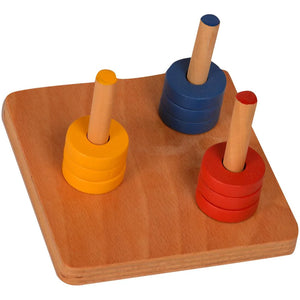
Montessori materials are engineered to isolate specific fine motor challenges. For instance, the Pink Tower encourages children to stack cubes of varying sizes in sequence, refining their pincer grasp and spatial awareness. Practical Life activities, such as pouring water or scooping grains, develop control, concentration, and coordination, all vital components of fine motor mastery. These seemingly simple tasks are powerful learning opportunities, allowing children to practice and perfect their movements repeatedly.
Child development experts emphasize that the self-correcting nature of these materials is paramount. If a child misplaces a knobbed cylinder, it simply won't fit, providing immediate feedback without adult intervention. This empowers children to learn independently, fostering resilience and problem-solving skills, which are crucial for success in a competitive academic environment like India's. These activities ensure that children develop not just physical skills but also confidence in their own abilities.
Boosting Gross Motor Skills: Movement, Balance, and Coordination
Gross motor skills encompass the use of large muscles for walking, running, jumping, balancing, and climbing. These foundational movements are essential for overall physical health, coordination, and spatial awareness. Montessori principles extend beyond the tabletop, incorporating environments and materials that encourage large-scale movement and exploration, making them excellent gross motor skills activities for active children.
A well-designed Montessori environment includes ample space and opportunities for children to move freely, often featuring low shelves, child-sized furniture, and open areas for activity. This freedom of movement is critical for developing balance, proprioception (awareness of one's body in space), and muscle strength. Studies consistently show that physical activity positively impacts cognitive development, attention span, and emotional regulation, offering a holistic benefit that aligns with modern parenting goals in India.
Active Play and Whole-Body Engagement through Gross Motor Skills Activities
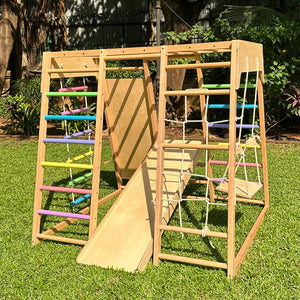
Montessori environments often incorporate elements that naturally promote gross motor skill development. Walking on a line, carrying heavy objects (like a pitcher of water for Practical Life activities), or engaging with larger outdoor equipment all contribute to strengthening core muscles and improving coordination. These activities are designed to be purposeful, not just random play, integrating physical movement with a learning objective.
For parents concerned about their child's screen time and limited outdoor play in urban settings like Bengaluru, integrating purposeful gross motor activities at home or in school is essential. The Deccan Herald recently highlighted how sports improve motor skills in children with autism; similarly, structured Montessori gross motor activities benefit all children by providing a safe and engaging outlet for physical development, ensuring they are active and engaged learners. This prepares them not just for school but for a healthy, active lifestyle.
Montessori's Pedagogical Principles: Nurturing Natural Development
The success of Montessori educational toys in developing motor skills lies in their alignment with core pedagogical principles. Dr. Maria Montessori believed in a child's innate drive to learn and explore, advocating for a "prepared environment" that supports this natural development. This environment is carefully curated with age-appropriate materials that entice children to engage and master skills independently.
Unlike traditional directive teaching, the Montessori approach emphasizes self-directed activity, allowing children to choose their work, repeat it as often as they desire, and learn at their own pace. This autonomy fosters deep concentration and intrinsic motivation, leading to more profound and lasting skill acquisition. This method contrasts sharply with high-pressure learning, promoting a joyful and organic developmental journey for Indian children.
The Prepared Environment: A Catalyst for Skill Building
In a Montessori classroom or home, the prepared environment is key. Materials are organized on accessible shelves, inviting children to select activities that resonate with their current developmental stage. This arrangement supports concentration and encourages a sense of order, vital for effective learning. The focus is on providing materials that are aesthetically pleasing and functionally sound, encouraging engagement and repetition.
This deliberate setup helps children develop not only motor skills but also independence and executive function — skills like planning, task initiation, and problem-solving. For families navigating the 'padhai pivot' and aiming to close school-readiness gaps for Viksit Bharat 2047, Montessori's holistic approach offers a robust framework. It equips children with essential foundational skills, ensuring they are not just academically ready but also physically and emotionally prepared for the challenges ahead.
Bridging Gaps and Empowering Every Child
Montessori educational toys are a powerful investment in a child's future, offering benefits that extend far beyond simple play. The scientific design of these materials addresses critical developmental needs, ensuring that children build a strong foundation for both physical and cognitive growth. This approach is especially pertinent in India, where parents often prioritize foundational learning and skill development from an early age.
While reports like "Spending ₹1 lakh on preschool activities" highlight the financial considerations for early education, investing in quality educational toys provides lasting value. Unlike transient classes, Montessori materials offer reusable, self-paced learning opportunities that children can return to repeatedly, cementing skills over time. They are not merely distractions but essential tools that foster independence, concentration, and a lifelong love of learning, preparing children for success in school and life.
- Montessori educational toys are scientifically designed to develop both fine and gross motor skills through purposeful, hands-on activities.
- Fine motor skill development through Montessori materials enhances dexterity, hand-eye coordination, and prepares children for writing and detailed tasks.
- Gross motor activities in a Montessori setting improve balance, coordination, and overall physical strength, contributing to holistic child development.
- The Montessori method's prepared environment fosters self-directed learning, allowing children to progress at their own pace and build intrinsic motivation.
- Research indicates that engaging with Montessori materials positively impacts cognitive development, attention span, and problem-solving abilities in children.
- Montessori provides a structured, supportive learning framework beneficial for all children, including those with developmental delays, enhancing their school readiness and independence.