Educational Toys: Ultimate Guide to Holistic Child Development
Educational toys are fundamental tools that foster holistic child development, moving beyond mere play to build foundational skills essential for a bright future. Research shows that engaging with purpose-driven educational toys in early childhood significantly enhances cognitive abilities, social-emotional intelligence, language acquisition, and critical motor skills, providing a robust learning foundation for every Indian child.
What exactly are educational toys? Educational toys are specifically designed materials that stimulate learning through play, encouraging children to explore, discover, and develop new skills in a natural, engaging way. This matters immensely because they bridge the gap between abstract concepts and concrete experiences, making complex ideas accessible and fun. Indian parents can confidently integrate these toys to prepare their children not just for school, but for life's diverse challenges.
The Pillars of Holistic Child Development for Indian Children
Holistic child development is a comprehensive approach that nurtures every aspect of a child's growth, ensuring they become well-rounded individuals capable of thriving in various environments. It encompasses cognitive, social-emotional, language, fine motor, and gross motor skills, all working in synergy to build a strong foundation. India Today recently highlighted why play-based learning deserves equal footing with nutrition in child development, underscoring its critical role in this holistic journey.
Cognitive development involves thinking, problem-solving, and understanding the world around them. Social-emotional growth builds empathy, cooperation, and self-regulation, vital for navigating complex family dynamics and peer interactions. Language development fosters communication, literacy, and expression, crucial for a child's voice to be heard.
Simultaneously, fine motor skills refine hand-eye coordination and dexterity, preparing little hands for writing and daily tasks like buttoning a shirt. Gross motor skills involve larger movements, enhancing balance, coordination, and physical confidence. Each pillar is interconnected, and educational toys are specifically designed to stimulate these areas simultaneously, ensuring no aspect of development is overlooked.
Montessori Educational Toys: A Proven Approach for Indian Homes
The Montessori method, pioneered by Dr. Maria Montessori, stands as a testament to the power of child-led learning, a philosophy deeply resonant with the nurturing spirit often found in Indian households. This approach champions self-directed activity, hands-on learning, and collaborative play, encouraging children to discover at their own pace within a carefully prepared environment. Montessori educational toys are meticulously designed to foster independence, concentration, and a lifelong love for learning.
For instance, classic Montessori materials like the Pink Tower help children aged 18-24 months develop visual discrimination of size and fine motor control, while Sandpaper Letters are instrumental in introducing phonetic sounds, vital for early language and literacy development. These materials are not just toys; they are tools that respect the child's innate drive to learn.
In many Indian joint families, where grandparents and older siblings play a significant role, Montessori principles can be seamlessly integrated. The emphasis on practical life skills, respect for the child, and a calm learning environment naturally complements the rich intergenerational learning opportunities present in such homes. SkilloToys.com proudly offers a wide range of authentic Montessori materials, meticulously crafted to support your child's journey. Explore our full collection of Montessori learning materials.
Nurturing Cognitive Growth with Engaging Educational Toys
Cognitive development is the cornerstone of learning, enabling children to understand cause and effect, solve problems, and think creatively. Educational toys are specifically engineered to challenge young minds, encouraging them to strategize and experiment. Research indicates that children regularly engaging with constructive play materials demonstrate significantly higher levels of cognitive flexibility and problem-solving skills by age five.
Puzzles, building blocks, and sorting games are prime examples of educational toys that ignite cognitive processes. A child assembling a complex wooden puzzle learns spatial reasoning and perseverance. Stacking colorful blocks encourages an understanding of balance and geometry. Even simple sorting activities with different coloured beads can introduce concepts of classification and patterns, preparing them for more complex academic challenges.
These activities are not just about finding the right piece; they are about fostering logical thinking, critical analysis, and the joy of discovery. When a child successfully completes a task with an educational toy, they build confidence in their own abilities, which is crucial for tackling the demands of school and beyond.
Fostering Social-Emotional Intelligence and Language Skills
Beyond academics, a child's ability to understand and manage emotions, interact positively with others, and communicate effectively is paramount for overall well-being. Educational toys play a pivotal role in developing these crucial social-emotional and language skills, especially in India's diverse cultural landscape. Role-playing sets, puppets, and interactive storybooks provide opportunities for children to act out scenarios, express feelings, and develop empathy.
In homes where multiple generations coexist, sharing and cooperation become natural lessons learned through play with educational toys. Playing board games or cooperative building challenges teaches patience, negotiation, and turn-taking – essential social skills for navigating family life and friendships. These interactions also provide rich contexts for language development, as children articulate their thoughts, ask questions, and narrate stories.
Language skills are further enhanced through toys that encourage verbal interaction, such as story sequencing cards or alphabet puzzles. Engaging in conversations about their play not only expands vocabulary but also strengthens their ability to express complex ideas. Child development experts agree that rich language environments, supported by interactive play, are critical for early literacy and communication competence.
Building Strong Foundations: Fine and Gross Motor Skills with Educational Toys
Physical development, encompassing both fine and gross motor skills, forms the very foundation upon which all other learning is built. Fine motor skills involve the precise movements of small muscles in the hands and wrists, crucial for everyday tasks like writing, drawing, and fastening clothes. The Times of India recently shared "5 fun tricks to supercharge fine motor skills in your child," emphasizing creative ways to boost dexterity.
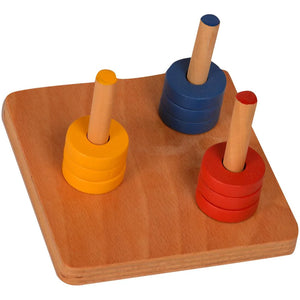
Educational toys specifically designed for fine motor development include lacing beads, stacking blocks, and shape sorters. Engaging with these toys helps children refine their grip, coordination, and precision, essential for future academic success and self-care. Discover a world of toys dedicated to enhancing fine motor skills.
Gross motor skills involve larger movements, such as running, jumping, balancing, and throwing. These skills are vital for overall physical health, coordination, and spatial awareness. While the focus of this guide is holistic development, it's worth noting the clinical significance of motor skill development, as highlighted by Nature's research on cerebral palsy in Eastern India, underscoring the importance of early intervention and appropriate physical stimulation for all children.
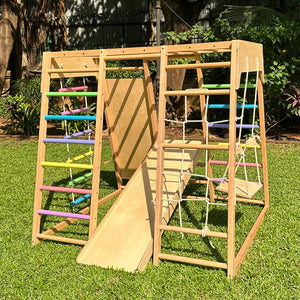
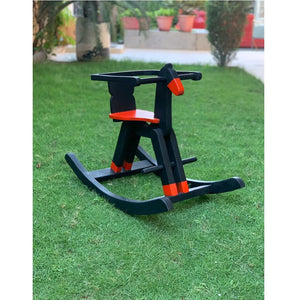
Toys like climbing structures, balance beams, and ride-on toys encourage active play that strengthens muscles, improves balance, and develops coordination. These activities are not only fun but also critical for healthy physical growth and energy regulation. Explore our collection of gross motor skill development toys to foster active play.
The Tangible Benefits of Educational Toys for Your Child's Future
Investing in educational toys is an investment in your child's future, yielding benefits that extend far beyond their early years. These toys instill a natural curiosity and a lifelong love for learning, traits that are invaluable in an ever-evolving world. Children who engage with educational toys develop enhanced problem-solving abilities, adaptability, and resilience – skills crucial for navigating school pressure and complex challenges.
Furthermore, early engagement with purpose-driven play has a profound impact on school readiness. Children arrive at school with a stronger grasp of foundational concepts, better social skills, and the confidence to participate actively in the classroom. A study by the American Academy of Pediatrics concluded that play is essential to development because it contributes to the cognitive, physical, social, and emotional well-being of children.
By providing rich, stimulating play experiences through educational toys, Indian parents empower their children to not only excel academically but also to grow into empathetic, innovative, and well-adjusted individuals ready to make their mark on the world. SkilloToys.com is committed to being your partner in this incredible journey of holistic child development.
- Educational toys are foundational tools for holistic child development, covering cognitive, social-emotional, language, fine motor, and gross motor skills.
- The Montessori method emphasizes child-led learning and specific materials designed to foster independence and concentration in children.
- Research indicates that engaging with constructive play materials significantly enhances children's cognitive flexibility and problem-solving skills.
- Educational toys facilitate social-emotional intelligence by encouraging empathy, cooperation, and effective communication through interactive play.
- Both fine and gross motor skills are critical for physical development and future academic readiness, with specific toys aiding their refinement.
- Investing in educational toys cultivates a lifelong love for learning, enhances school readiness, and builds essential life skills like adaptability and resilience.
What age are educational toys best suited for?
Educational toys are beneficial for children of all ages, from infants to teenagers, as they are designed to match developmental stages. For toddlers, simple stackers and shape sorters are ideal, while preschoolers benefit from puzzles and early literacy tools.
How do educational toys differ from regular toys?
Educational toys are specifically designed with a learning objective in mind, promoting skill development in areas like cognition, motor skills, or social-emotional growth. Regular toys primarily focus on entertainment, though many can offer incidental learning opportunities.
Are Montessori educational toys expensive for Indian families?
While some authentic Montessori materials might seem like an initial investment, their durability, open-ended nature, and long-term developmental benefits offer significant value. Many affordable, high-quality Montessori-inspired educational toys are available, making them accessible to diverse Indian households.
Can educational toys help with school readiness?
Yes, educational toys are highly effective in preparing children for school by developing foundational skills such as problem-solving, fine motor control for writing, language comprehension, and social skills for classroom interaction. They build confidence and a positive attitude towards learning.
How many educational toys does a child need for holistic development?
The quantity of educational toys is less important than their quality and appropriateness for the child's developmental stage. A curated selection of versatile, open-ended toys that encourage various skill sets is more effective than an overwhelming number of single-purpose items. Focus on thoughtful selection over accumulation.