Malayalam Crafts for Fine Motor Skills: Hands-On Learning
Engaging children in creative and educational tasks is fundamental for their early development. Integrating Malayalam crafts for fine motor skills provides a powerful dual benefit for Indian children, enhancing dexterity while introducing them to their regional language. This approach ensures children build crucial physical coordination alongside cultural and linguistic understanding, preparing them for future academic challenges and everyday independence.
Research shows that strong fine motor skills are a cornerstone of early childhood development, impacting everything from writing to self-care. For parents in Bengaluru and across India, incorporating purposeful play into daily routines can make a significant difference.
What Are Fine Motor Skills and Why Are They Crucial for Children?
Fine motor skills involve the coordination of small muscles, typically in the hands and fingers, in conjunction with the eyes. This matters because these skills are essential for everyday tasks like eating, dressing, writing, and manipulating objects. Indian parents can actively support this development through engaging, hands-on activities, ensuring their child is ready for school and independent living.
Child development experts agree that developing these skills early helps close the school-readiness gap, a crucial step towards the 'Viksit Bharat 2047' vision. Investing time in these foundational skills at home can prevent future learning struggles, empowering children to excel.
The Montessori Advantage in Malayalam Activities for Kids
Maria Montessori's philosophy emphasizes hands-on, self-directed learning, perfectly suited for developing practical life skills. Incorporating Montessori crafts for kids with a focus on Malayalam language learning creates an immersive environment that caters to a child's natural curiosity and developmental needs.
In Indian homes, where joint families often provide a rich learning environment, these activities can be a wonderful way for grandparents to bond with children, sharing cultural heritage through language. From sorting lentils to forming alphabets, the possibilities are endless and align with the principles of self-correction and mastery.
Simple Malayalam Crafts for Fine Motor Skills You Can Do Today
Here are several engaging DIY Malayalam learning activities that nurture Malayalam crafts for fine motor skills, perfect for your child:
-
Lentil Sorting & Letter Formation: Provide different types of lentils (toor dal, moong dal) and small bowls. Children can use tongs or their pincer grasp to sort the lentils. Then, draw large Malayalam alphabets on paper and have them outline the letters using the sorted lentils. This activity strengthens finger muscles and introduces Malayalam script visually.
-
Playdough Malayalam Vowels & Consonants: Homemade playdough is excellent for strengthening hand muscles. Encourage your child to roll, pinch, and flatten playdough to form basic Malayalam vowels (സ്വരങ്ങൾ) and consonants (വ്യഞ്ജനങ്ങൾ). You can find high-quality fine motor skill toys at SkilloToys that complement this tactile learning.
-
Paper Tearing & Pasting for Murals: Give children colourful paper scraps and ask them to tear them into small pieces. Then, using glue, they can paste these pieces to create abstract art or simple Malayalam word patterns on a larger sheet. This activity builds hand strength and encourages creative expression.
-
Bead Stringing for Malayalam Word Making: Large, colourful beads and thick string are perfect for developing hand-eye coordination. Write simple Malayalam letters on individual beads or small cardboard cut-outs. Children can string them together to form short words, practicing both fine motor control and language recognition.
-
Traditional Rangoli with Grains/Sand: A scaled-down, child-friendly version of traditional Rangoli using coloured sand or fine grains can be incredibly engaging. Children use their fingers to create patterns or even outline Malayalam letters, fostering precision and creativity while connecting with cultural practices.
Integrating 'Malyalam' Learning into Daily Routines
The term 'malyalam' is a common search query, highlighting the strong interest in Malayalam language learning. Beyond dedicated craft sessions, integrate Malayalam naturally. For instance, label household items with Malayalam words, read Malayalam storybooks, or sing traditional Malayalam rhymes.
Such consistent exposure, particularly during festivals like Onam or Vishu, makes language learning a joyful family experience. Studies indicate that early language exposure enhances cognitive flexibility and problem-solving skills, contributing significantly to a child's overall development.
Choosing the Right Materials for Fine Motor Skills Malayalam
Selecting appropriate materials is key to effective fine motor development. Focus on child-safe, non-toxic, and durable items. Natural materials like wood, fabric, and grains, commonly found in Indian households, are ideal for Montessori-inspired activities.
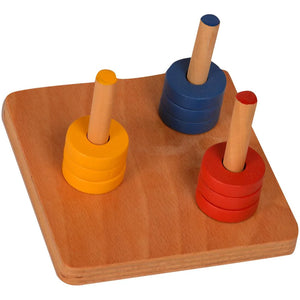
For more structured learning, consider educational tools that are specifically designed to enhance fine motor skills, such as lacing toys, sorting sets, and small construction blocks. SkilloToys offers a curated selection of Montessori learning materials that perfectly support these activities, ensuring quality and safety.
Empowering children with robust fine motor skills through culturally rich Malayalam crafts sets a strong foundation for lifelong learning. It’s a smart way for parents to actively participate in their child's holistic growth, making learning fun, effective, and deeply connected to their heritage.
- Malayalam crafts uniquely combine fine motor skill development with regional language acquisition.
- Early fine motor skill proficiency is critical for school readiness and future academic success, as highlighted by 'Viksit Bharat 2047' goals.
- Montessori principles, focusing on hands-on and practical life activities, are highly effective for these crafts.
- Simple, everyday materials like lentils, playdough, and paper can be transformed into powerful learning tools.
- Consistent engagement in fine motor activities, even for short periods, significantly enhances a child's dexterity and cognitive abilities.
- Integrating Malayalam learning naturally into daily routines and cultural celebrations fosters comprehensive child development.