Play-Based Learning India's Future: Motor Skills Development
Play-based learning, fundamentally driven by motor skill development, is actively building India's future by fostering critical cognitive and physical foundations essential for a skilled, innovative workforce and resilient society. This approach ensures children develop not just academic readiness, but also the adaptability, creativity, and problem-solving abilities crucial for national progress, as recently highlighted in national discussions.
Play-based learning is an educational approach where children learn through play, exploration, and discovery, rather than rote memorisation. This matters because it naturally develops critical thinking, social-emotional intelligence, and crucial motor skills. Indian parents can integrate this by providing open-ended materials and encouraging child-led exploration at home.
The National Mandate: Play-Based Learning & Motor Skills for India's Progress
The recent emphasis on play-based learning, as underscored by The Hindu's report on its importance for India’s future, is a testament to its pivotal role in national development. The National Education Policy (NEP) 2020 strongly advocates for Early Childhood Care and Education (ECCE), recognising that the first eight years are critical for holistic child development India future. This policy shift acknowledges that foundational learning, deeply rooted in play and motor skill acquisition, prepares children for formal schooling and beyond, directly contributing to the nation's vision of Viksit Bharat 2047.
Child development experts agree that up to 90% of brain development occurs by age five. Therefore, providing stimulating environments through play-based activities is not merely recreational; it is a strategic investment in our human capital. By encouraging activities that build both fine and gross motor skills from an early age, we are equipping our children with the physical dexterity and neural pathways necessary for complex cognitive tasks later in life.
How Motor Skills Drive Innovation for Future-Ready Kids India
Robust motor skills are not just about physical coordination; they are foundational to cognitive development, problem-solving, and creativity – attributes vital for innovative learning India. Fine motor skills, involving the small muscles of the hands and fingers, are essential for writing, drawing, using tools, and even manipulating digital interfaces, making them critical for future-ready kids India. As The Times of India recently suggested with "5 fun tricks to supercharge fine motor skills in your child," engaging children with activities like stacking blocks, doing puzzles, or threading beads directly enhances their ability to interact with and shape their world.
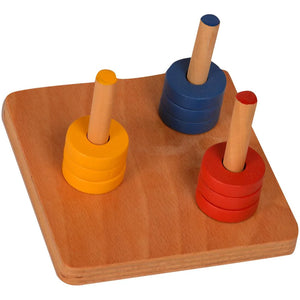
Developing these skills also builds perseverance and focus. When a child struggles to fit a puzzle piece or carefully paints a picture, they are learning patience and problem-solving strategies. SkilloToys offers a wide range of fine motor skill toys designed to engage little hands and minds, from practical life materials to intricate lacing activities. These experiences directly translate into the cognitive agility needed for future scientific discovery and technological innovation.
Montessori for India's Future: A Holistic Approach
The Montessori method, pioneered by Dr. Maria Montessori, inherently champions play-based learning with a strong emphasis on motor skill development, making it highly relevant for Montessori for India's future. Its philosophy of self-directed activity, hands-on learning, and collaborative play aligns perfectly with the NEP's vision. Montessori materials are specifically designed to isolate concepts and refine motor skills. For instance, the Pink Tower hones visual discrimination and fine motor control, while Sandpaper Letters integrate tactile and auditory learning with fine motor precision, preparing children for literacy.
This approach empowers children aged 18-24 months and beyond to develop independence, concentration, and a love for learning – traits that are indispensable for a nation aiming for global leadership. By allowing children to choose their activities and learn at their own pace, the Montessori environment fosters intrinsic motivation and deep understanding, laying a robust foundation for their future academic and professional lives in India.
Bridging the Gap: Play-Based Learning as a Societal Pillar for Motor Skills National Development
Play-based learning is increasingly recognised as fundamental to child development, deserving equal footing with nutrition, as India Today recently articulated. This holistic perspective is crucial for motor skills national development, as healthy bodies and active minds are intertwined. Unicef���s global advocacy, encapsulated in "It’s Right to Play," further solidifies the notion that play is not a luxury but a fundamental right and a developmental necessity. For Indian families, where grandparents often play a significant role, encouraging traditional games and free play can bridge generational gaps while fostering essential physical and social skills.
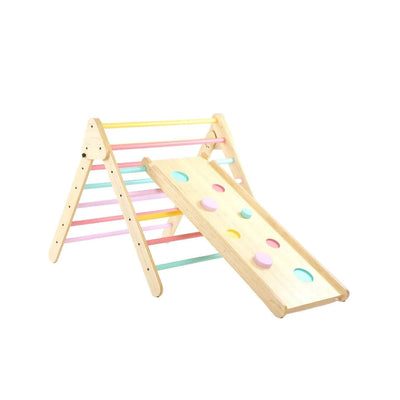
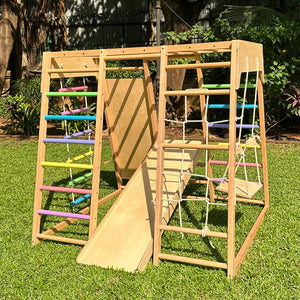
When children engage in active play, such as running, jumping, or climbing, they develop gross motor skills vital for physical health, balance, and coordination. These activities contribute to overall well-being and reduce the risk of sedentary lifestyles. SkilloToys offers diverse gross motor skill toys like balance boards and climbing frames, encouraging active exploration in a safe home environment. A nation with physically adept, healthy citizens is better equipped to tackle challenges and innovate across all sectors.
Empowering Parents: Action for Innovative Learning India
Indian parents hold the key to integrating innovative learning India into their children’s lives. Beyond formal schooling, the home environment, especially in joint families, offers countless opportunities for play-based motor skill development. Simple activities like kneading dough during festivals, helping with household chores (sorting pulses, folding clothes), or even playing traditional Indian games like kho-kho or gilli-danda, contribute immensely.
Focus on creating a 'prepared environment' at home, as advocated by Montessori principles, where materials are accessible and children are encouraged to explore independently. Prioritise experiences over excessive academic pressure, recognising that a child who enjoys learning through play is a child who will thrive. This proactive approach by parents directly influences the calibre of India's future workforce and its capacity for sustained national progress.
- Play-based learning is a foundational strategy for India's national development, fostering innovation and a skilled workforce.
- Motor skill development, encompassing both fine and gross motor abilities, is intrinsically linked to cognitive growth and problem-solving.
- The National Education Policy (NEP) 2020 emphasizes ECCE, recognising play and motor skills as crucial for early brain development.
- Montessori education, with its focus on hands-on, self-directed learning, provides an ideal framework for building future-ready children in India.
- Integrating play into daily life, especially within the Indian home and family structure, significantly contributes to a child's holistic development.
- Providing purposeful educational toys enhances motor skill development, preparing children for complex academic and real-world challenges.
Why is play-based learning considered crucial for India's future?
Play-based learning is crucial because it develops essential skills like critical thinking, creativity, problem-solving, and adaptability, which are vital for an innovative workforce. It builds a strong foundation for children to become future leaders and contributors to India's national progress.
How do motor skills contribute to a child's readiness for school and future success?
Motor skills are fundamental to school readiness as they impact a child's ability to write, draw, use classroom tools, and participate in physical activities. Beyond school, well-developed motor skills enhance coordination, focus, and cognitive function, supporting success in various academic and professional pursuits.
What specific Montessori materials help develop motor skills?
Montessori materials like the Pink Tower and Brown Stair refine visual discrimination and fine motor control. Sandpaper Letters and Numbers integrate tactile learning with precision grip, while practical life activities such as pouring, scooping, and buttoning directly enhance hand-eye coordination and independence.
How can Indian parents integrate play-based learning at home?
Indian parents can integrate play-based learning by providing open-ended toys, encouraging participation in household chores like sorting or kneading dough, and facilitating traditional games. Creating a prepared environment where materials are accessible and child-led exploration is encouraged significantly supports this approach.
Is play-based learning effective alongside traditional academic pressure in India?
Yes, play-based learning is highly effective even with traditional academic pressures in India. It complements academic learning by strengthening foundational skills, reducing stress, and fostering a love for learning, ultimately improving academic outcomes and overall well-being.
What is the link between play-based learning and the National Education Policy (NEP) 2020?
The NEP 2020 strongly advocates for play-based learning as a core component of Early Childhood Care and Education (ECCE). It recognises that this approach is essential for holistic development, preparing children not just academically but also socially, emotionally, and physically for India's future challenges.