Play-Based Learning & Motor Development: A Child's Vital Need
Research confirms that robust play-based learning motor development is as critical for a child’s foundational growth as nutrition, a truth highlighted recently by India Today. This approach leverages a child's natural curiosity to build essential physical skills. For Indian parents, understanding this scientific connection empowers them to integrate intentional, purposeful play into their child's daily routine, ensuring comprehensive development from an early age.
Play-based learning is an educational approach where children learn through actively engaging in play. This method is fundamental for developing motor skills by providing hands-on experiences that strengthen muscles, improve coordination, and enhance body awareness. It matters because it builds the physical foundation necessary for academic readiness and lifelong well-being. Indian parents can facilitate this by offering diverse play opportunities at home and beyond.
The Science of Movement: Why Play is Essential for Physical Development Through Play
Child development experts universally agree that play is the brain's favourite way of learning, especially for motor skills. When children engage in activities like crawling, running, stacking blocks, or using crayons, they are not just having fun; their brains are actively forming new neural connections, refining muscle control, and enhancing sensory processing. Studies indicate that children engaged in regular play-based activities show superior coordination and dexterity compared to those with limited opportunities, reinforcing the physical development through play.
This foundational period, particularly from infancy to preschool, sees rapid development in both gross motor skills (large movements like walking and jumping) and fine motor skills (small, precise movements like grasping and pinching). For instance, learning to balance on one foot, often seen during a game of 'langdi', strengthens core muscles and improves proprioception. Similarly, manipulating small objects, crucial for future handwriting, is honed through activities with fine motor skill toys.
Research further shows that adequate opportunities for movement and exploration can mitigate risks associated with motor development delays, fostering resilience and adaptability. As noted by the clinical studies on motor issues, such as those related to cerebral palsy, early, consistent, and varied motor engagement is paramount for establishing healthy developmental trajectories. Play offers this variety in a natural, child-led manner.
Beyond Movement: Holistic Child Development Play
The benefits of play extend far beyond just physical prowess, fostering holistic child development play. When a child attempts to build a tower, they are not only refining their fine motor skills but also engaging in problem-solving, spatial reasoning, and developing patience. If the tower falls, they learn about gravity and resilience, picking up the pieces to try again.
This integrated learning approach, where physical actions are intertwined with cognitive challenges, social interactions, and emotional regulation, is a cornerstone of robust early childhood development. For instance, playing traditional Indian games like 'kho-kho' or 'gilli-danda' not only builds stamina and agility but also teaches teamwork, strategy, and negotiation – crucial life skills often overlooked in purely academic settings. This highlights the profound importance of play in child development in India, where competitive academic pressure often overshadows the value of free play.
Montessori Philosophy: Nurturing Motor Skills Through Purposeful Play
Maria Montessori, a pioneer in child development, understood the intrinsic link between movement and learning. Her philosophy emphasizes a 'prepared environment' where children are free to explore specially designed materials that naturally invite them to develop their motor skills. These materials are not just toys; they are tools for learning, crafted to refine specific movements and concepts.
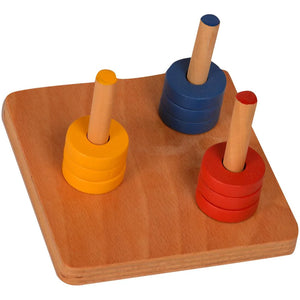
For example, Montessori's Cylinder Blocks or the Pink Tower are not merely stacking games; they are meticulously designed to enhance visual discrimination, logical thinking, and precise fine motor control necessary for manipulation and placement. The Sandpaper Letters and Movable Alphabet, while teaching literacy, simultaneously refine the pincer grip and wrist movements essential for writing, embodying Montessori play for motor skills.
At SkilloToys.com, our collection of Montessori educational toys directly aligns with this philosophy. Each item is chosen to provide concrete, hands-on experiences that support a child's natural urge to move, touch, and discover. By offering these purposeful play opportunities, we empower children to develop independence, concentration, and coordinated movement, preparing them for a lifetime of learning and accomplishment.
Empowering Indian Parents: Integrating Play into Daily Life
In the bustling landscape of Indian households, balancing academic goals with ample play can be a challenge. However, recognizing why play is essential for kids means actively carving out time for it. This isn't just about structured activities; it's about embedding play into the fabric of daily life.
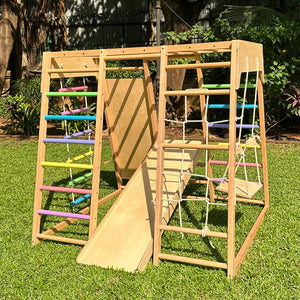
Parents can encourage outdoor play in local parks or even within apartment complexes, fostering gross motor skills through running, climbing, and cycling. Involving children in simple household chores like sorting pulses, kneading dough for rotis, or helping arrange clothes (practical life skills in Montessori) provides excellent fine motor practice. Grandparents, with their wealth of traditional games and stories, can be invaluable partners in facilitating playful learning, creating cherished memories while honing skills.
Even amidst the academic rigour, remember the insights from initiatives like KhiladiPro, which aim to bridge India's youth sports gap. Providing accessible opportunities for fitness and play is paramount. Regular free play, whether it’s building a fort with bedsheets, enacting stories, or playing with clay, stimulates creativity, problem-solving, and critical motor development, ensuring a well-rounded individual ready for the challenges of school and life.
- Play-based learning is scientifically proven to be as vital as nutrition for a child's motor development.
- Active play builds crucial neural connections and refines both fine and gross motor skills.
- Montessori materials are specifically designed to develop precise motor control and coordination through purposeful play.
- Holistic child development relies on play to integrate physical, cognitive, social, and emotional learning.
- Indian parents can easily integrate play into daily routines through household tasks, outdoor activities, and traditional games.
- Prioritizing play provides a strong foundation for future academic success and overall well-being.