Early Childhood Development Rural India: A Parent's Guide
In rural India, the journey of early childhood development for children aged 3-5 years is a unique tapestry woven with nature, community, and daily life. Parents can effectively nurture their preschoolers by embracing the abundant natural resources and strong family structures around them, laying a robust foundation for school readiness.
What is Early Childhood Development (3-5) in Rural India?
Early childhood development for 3-5 year olds in rural India encompasses physical, cognitive, social-emotional, and language growth within the unique context of village life and joint families. This crucial period focuses on fostering independence, curiosity, and foundational skills through play, practical experiences, and cultural immersion, preparing children for formal schooling.
Leveraging Rural India's Unique Strengths for Child Development
The rural landscape offers an unparalleled 'classroom' for child development. Instead of lamenting the absence of fancy urban preschools, parents can view fields, village ponds, and community gatherings as rich learning environments. Research from the Harvard Center on the Developing Child consistently highlights that a stimulating, responsive environment is paramount for brain development, and rural settings often provide this naturally through unstructured play.
Children like four-year-old Rani, helping her grandmother sort rice grains on their verandah in a Karnataka village, are engaging in critical fine motor skill development and early numeracy. These practical life activities, a cornerstone of Montessori education, are inherently integrated into rural Indian households. Parents can encourage this by involving children in safe, age-appropriate chores, fostering a sense of responsibility and capability.
Preschool Activities Rural India: Nature's Classroom
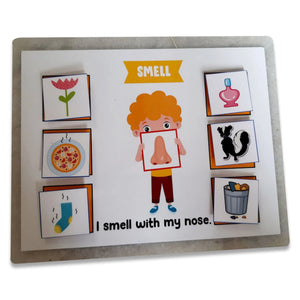
Outdoor play in rural areas is a goldmine for gross motor skills and sensory exploration. Climbing trees, running in open fields, playing with mud, or observing farm animals not only builds physical strength but also stimulates all senses. The smell of wet earth after rain, the sound of birds, the texture of leaves – these experiences are fundamental for cognitive growth. The National Council of Educational Research and Training (NCERT) emphasizes play-based learning for holistic development, a concept deeply rooted in natural rural life.
Engage your child in simple nature walks. Ask them to collect different coloured flowers or uniquely shaped stones. These activities enhance observation skills, classification, and language as they describe their finds. For a deeper dive into hands-on learning, SkilloToys offers a range of activity kits that complement natural exploration with structured, skill-building play.
Adapting Montessori Principles at Home, Rural Indian Style
Maria Montessori's philosophy, focusing on self-directed activity, hands-on learning, and collaborative play, is incredibly adaptable to rural Indian homes. You don't need elaborate materials to implement these principles. The core idea is to create a 'prepared environment' where the child can explore independently and safely.
Consider simple household tasks: let your child help wash small vegetables, pour water from one pot to another, or sweep a small area with a child-sized broom. These build concentration, coordination, and a sense of contribution to the family. In a joint family setting, older siblings and grandparents naturally model these behaviours, providing a rich social learning context.
Learning Resources for Rural Children: Everyday Treasures
The best learning resources for rural children are often found right outside their door or within their home. Use pebbles for counting, leaves for sorting by size or colour, empty matchboxes for stacking, or old clothes for buttoning and zipping practice. These foster practical life skills and early mathematical concepts without requiring expensive purchases. When you do consider purchasing, look for durable, open-ended Montessori-inspired materials that can be used in multiple ways.
Preparing for School: Beyond Books in Rural Settings
School readiness isn't just about knowing the alphabet; it's about developing social skills, attention span, problem-solving abilities, and a love for learning. In rural India, where formal preschools might be scarce, these foundations are built through community interaction and family engagement.
Grandparents, or 'Dadis' and 'Nanis', are invaluable in this. Their traditional storytelling sessions not only expand a child's vocabulary and imagination but also teach cultural values and history. Encouraging your child to listen, ask questions, and retell stories helps develop crucial pre-literacy and listening skills. These oral traditions are powerful tools for language development rural India.
Language and Literacy through Storytelling
Make storytelling a daily ritual. Ask your child to describe their day, fostering descriptive language and memory. Use local festivals as opportunities to explain traditions and share stories, enriching their cultural understanding and expanding their world knowledge. Even simple rhyming games using local words can boost phonological awareness, a key pre-reading skill.
Nurturing Problem-Solving with Everyday Materials
Problem-solving can be cultivated through simple puzzles made from cardboard or by asking children to figure out how to stack uneven stones. These activities encourage critical thinking and spatial reasoning. For more structured engagement, SkilloToys offers a variety of puzzles designed to build problem-solving and fine motor skills effectively.
Simple Tools, Big Impact: Educational Toys for Rural Kids
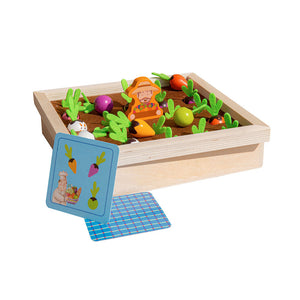
While natural resources are abundant, thoughtful selection of educational toys can significantly enhance development. Look for toys that are durable, open-ended, and encourage active participation rather than passive observation. Wooden blocks, stacking toys, and simple shape sorters are excellent choices because they promote creativity, fine motor skills, and cognitive development. They allow children to imagine, build, and explore concepts at their own pace.
Consider toys that can withstand outdoor play and are easy to clean, fitting seamlessly into a rural lifestyle. These aren't just playthings; they are tools that aid in developing crucial skills like hand-eye coordination, concentration, and spatial awareness, which are vital for formal schooling.
Nurturing your preschooler in rural India means recognizing the profound learning potential in every corner of their world. By embracing local resources, adapting Montessori principles, and fostering strong family and community bonds, you empower your child to thrive, preparing them not just for school, but for a lifetime of curious and capable learning.