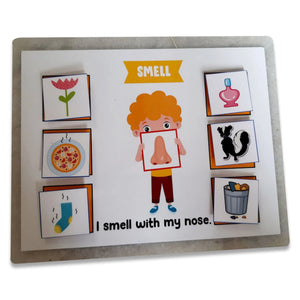
Educational Toys: Brain Development for 3-5 Year Olds
Educational toys demonstrably stimulate critical brain development in 3-5 year olds by fostering neural connections essential for cognitive growth, language acquisition, and problem-solving skills. Research shows that engaging with purpose-driven play materials during these formative years lays a robust foundation for academic success and holistic development.
What is Preschool Cognitive Development?
Preschool cognitive development refers to the growth of a child's thinking, reasoning, and problem-solving abilities between ages 3 and 5. This period is crucial for developing memory, attention, logical thinking, and early literacy skills, which are fundamental for school readiness. Indian parents can actively support this by providing stimulating environments and age-appropriate learning tools.
The preschool years, typically between ages three and five, are a period of astonishing brain growth and development. Your child is not just learning rhymes or colours; their brain is rapidly building complex neural networks that will support all future learning. Child development experts agree that up to 90% of a child’s brain develops by age five, making every interaction and every play moment incredibly significant.
In Indian homes, where joint families often provide a rich tapestry of interactions, purposeful play can sometimes be overlooked amidst daily routines and screen time. However, integrating engaging Montessori learning materials and educational activities can make a profound difference, especially in busy urban environments where dedicated outdoor play might be limited.
How Educational Toys Foster Cognitive Growth
Preschool cognitive development is profoundly impacted by the types of activities children engage in. Educational toys, unlike passive entertainment, demand active participation, challenging children to think, strategise, and explore. This process directly stimulates the prefrontal cortex, the part of the brain responsible for executive functions like planning, memory, and impulse control.
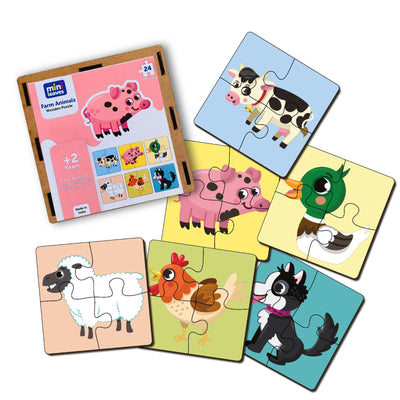
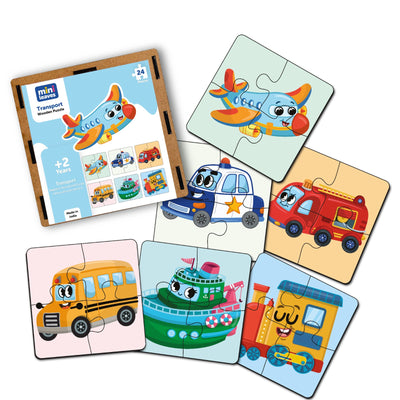
For instance, building blocks encourage spatial reasoning and problem-solving as children figure out how structures fit together without toppling. Puzzles, such as those found in our puzzles collection, require children to analyse shapes, colours, and patterns, enhancing visual discrimination and fine motor control. Studies indicate that children who regularly engage with such manipulatives demonstrate stronger mathematical reasoning skills later in school.
These activities are not merely about 'passing time'; they are brain workouts. They help children develop crucial skills for future learning, like categorisation, sequencing, and understanding cause and effect. This active engagement is vital for preparing children for the structured learning environment of primary school.
The Role of Kids Learning Toys in Language & Social Skills
Kids learning toys play a pivotal role in accelerating language acquisition and fostering vital social-emotional skills. When children engage with storytelling puppets, role-play sets, or even simple block play with peers, they are constantly practicing communication, negotiation, and empathy. This is especially important in India, where multilingual exposure is common and social interactions within families are deeply valued.
Interactive games and collaborative building tasks encourage children to articulate their thoughts, listen to others, and understand different perspectives. This boosts vocabulary, sentence structure, and narrative skills. Moreover, navigating shared play teaches valuable lessons in sharing, taking turns, and managing emotions, which are crucial for developing strong social bonds and resilience.
Montessori materials, often designed for individual use but adaptable for small group interactions, encourage focused engagement and respectful collaboration. These experiences build the foundation for effective communication and emotional intelligence, essential traits for thriving in both academic and personal spheres.
Building Motor Skills and Sensory Awareness Through Play
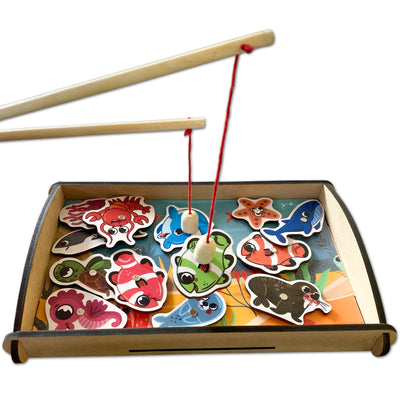
Beyond cognitive and social skills, educational toys are instrumental in refining both fine and gross motor skills in 3-5 year olds. Fine motor skills, which involve precise hand and finger movements, are developed through activities like stringing beads, using tongs, or manipulating small objects – all precursors to holding a pencil and writing. Our diverse activity kits are specifically designed to enhance these crucial motor functions.
Gross motor skills, involving larger movements, are honed through climbing, pushing, pulling, and balancing, often incorporated into outdoor play or specific gross motor toys. Developing these physical proficiencies is intrinsically linked to brain development, as movement and sensory input directly influence neural pathway formation.
Sensory exploration through different textures, weights, and sounds also enriches a child’s understanding of the world. Maria Montessori’s philosophy heavily emphasises sensory materials like the Pink Tower or sound cylinders, which train the senses to discern subtle differences, thereby sharpening observation and concentration skills. This holistic development prepares children for school-level tasks and everyday independence.
The Science of Play-Based Learning: A Montessori Perspective
Play-based learning science underscores the efficacy of child-led, exploratory activities in robust brain development. The Montessori method, championed by Dr. Maria Montessori, is a prime example of this scientific approach, recognising play as a child's natural work. It posits that children learn best when they are intrinsically motivated and actively engaged with their environment.
Montessori classrooms and homes in India often feature self-correcting materials that allow children to learn through trial and error, fostering independence and problem-solving without direct adult intervention. This "discovery learning" approach stimulates multiple brain regions simultaneously, creating deeper and more lasting neural connections than rote memorisation.
Experts consistently highlight that children learn significantly more when they are having fun and are emotionally invested. This joy of discovery reinforces positive learning experiences, making them eager lifelong learners. It’s not just about what they learn, but how they learn, establishing a positive attitude towards education from an early age, which is a great relief for parents managing school admissions pressure.
Choosing the Right Educational Toys for Your Child
Selecting appropriate educational toys for your 3-5 year old is key to maximising their developmental benefits. Focus on open-ended toys that encourage creativity, critical thinking, and multiple ways of playing, rather than those with a single function. Consider toys that grow with your child, offering increasing levels of challenge as their skills advance.
When selecting toys, remember the importance of durability and safety, especially in bustling Indian households with siblings and cousins. Look for materials that encourage interaction and exploration, supporting their unique personality and interests. Ultimately, the best educational toys are those that spark curiosity and encourage a child's innate drive to learn and discover the world around them.
- Educational toys enhance critical brain development in 3-5 year olds by building essential neural connections for cognitive and social skills.
- Up to 90% of a child's brain develops by age five, making purposeful play during preschool years vital for future learning.
- Engaging with educational manipulatives like puzzles and building blocks significantly boosts spatial reasoning and problem-solving abilities.
- Kids learning toys foster language acquisition and social-emotional development through interactive play and collaborative activities.
- Montessori principles emphasise self-correcting, open-ended materials that promote independence, concentration, and discovery learning.
- Choosing multi-functional, durable, and engaging toys that align with a child's developmental stage maximises their learning potential.