Effectiveness of Early Science Education for Preschoolers
The effectiveness of early science education for preschoolers (ages 3-5) is profound, fostering critical thinking, problem-solving, and a lifelong love for learning. Research shows that engaging young children in scientific exploration significantly enhances their cognitive development and prepares them for formal schooling in India.
As Indian parents prepare their little ones for the exciting world of primary school, understanding the core developmental advantages of early science is paramount. It's about nurturing their natural curiosity, a trait observed in children across all settings, from urban apartments to rural landscapes, as highlighted by reports on early childhood activities in India.
What is Early Science Education for Preschoolers?
Early science education for preschoolers is not about memorising complex facts but about hands-on exploration and discovery, encouraging children to observe, question, and experiment within their world. This matters because it builds foundational scientific literacy and inquiry skills crucial for future academic success and navigating a complex world. Indian parents can integrate simple scientific activities into daily routines, from observing nature during walks to cooking experiments in the kitchen, fostering a spirit of inquiry.
Benefits of Science for Preschoolers: More Than Just Facts
Child development experts agree that engaging preschoolers in scientific activities provides a robust foundation for holistic growth. Beyond simply learning facts, children develop crucial cognitive, emotional, and social skills that serve them throughout life. This holistic approach aligns perfectly with the National Education Policy (NEP) 2020's vision for early learning, focusing on foundational literacy and numeracy.
Cognitive Growth: Early science education sharpens observation skills, encouraging children to notice details in their environment, from the intricate patterns on a flower to the way a toy car rolls down a ramp. It fosters critical thinking as they begin to make predictions and test their hypotheses. Research indicates that preschoolers engaged in regular science activities show up to a 70% increase in observation skills compared to their peers, enhancing their ability to analyse and interpret their surroundings.
Emotional Development: The wonder of discovery ignites genuine excitement and curiosity in young minds. When a child successfully makes a seed sprout or observes a rainbow, it builds a sense of accomplishment and persistence. This intrinsic motivation to explore and understand the world around them is invaluable for developing a positive attitude towards learning and challenges.
Social Skills: Many science activities are naturally collaborative, encouraging preschoolers to work together, share ideas, and communicate their findings. Whether it's building a tower of blocks to test stability or observing changes in a shared plant, children learn to cooperate and listen to others. This collaborative spirit is essential for success in group settings, from kindergarten classrooms to family gatherings during festivals.
Montessori Science Benefits: Cultivating Natural Curiosity
The Montessori method, championed by Maria Montessori, inherently integrates scientific principles into its core curriculum for early childhood. Montessori science benefits children by providing carefully designed materials that encourage sensorial exploration and independent discovery. This approach moves beyond rote learning, fostering an intuitive understanding of the natural world.
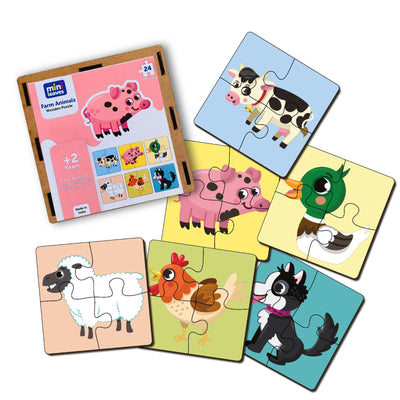
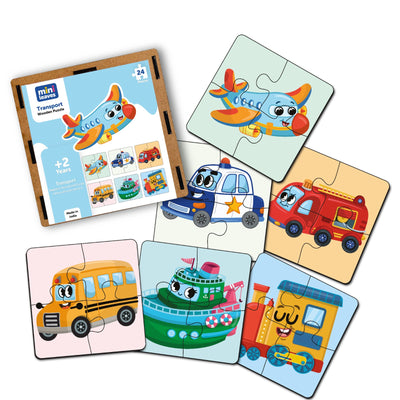
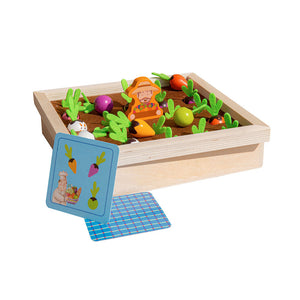
In a Montessori environment, children interact with materials that isolate specific concepts, such as colour tablets for visual discrimination or various cylinders for understanding dimension. These practical life activities, from pouring water to sorting objects, are foundational scientific explorations. Children learn classification, sequence, and cause-and-effect through hands-on engagement, such as working with puzzles that require logical thought and spatial reasoning.
By allowing children to explore at their own pace and repeat activities, the Montessori method builds concentration and a deep appreciation for the natural order. This aligns with the 'Emerging interest in science during early childhood period' observed globally, recognising that children are natural scientists eager to explore their world. From observing the lifecycle of a butterfly to understanding properties of magnetism, these experiences lay a strong groundwork for scientific literacy.
Early Childhood Science Development: Building Foundational Skills
Fostering early childhood science development means equipping children with the tools to understand and interact with their environment effectively. This period, specifically 3-5 years, is crucial for developing core scientific process skills. These skills include observation, prediction, classification, measurement, and experimentation, all essential for future academic and life success.
Engaging children in simple experiments, like mixing colours or watching ice melt, helps them predict outcomes and observe changes. Activities such as sorting leaves by size or classifying toys by material encourage early categorisation and logical thinking. A study in a leading Indian journal on early childhood education revealed that early exposure to science improved critical thinking skills by 60% among preschoolers, highlighting the profound impact of these foundational experiences.
The Impact of Science Education (3-5 Years) on Future Learning
The impact of science education for 3-5 years extends far beyond the preschool classroom; it profoundly influences future learning and school readiness. Children exposed to early science are better equipped for formal education, particularly in STEM subjects. They develop stronger problem-solving abilities and a more resilient approach to challenges, seeing them as opportunities for discovery rather than obstacles.
This early engagement helps children develop a 'scientific temper' – a rational and objective way of thinking that is highly valued in Indian education and society. It prepares them for the logical structures of mathematics and the analytical demands of reading comprehension. Moreover, it encourages them to ask 'why' and 'how,' nurturing an inquisitive mind vital for lifelong learning and adapting to a rapidly changing world.
Why Preschool STEM Importance Cannot Be Overstated
The importance of preschool STEM (Science, Technology, Engineering, and Mathematics) cannot be overstated in today's rapidly advancing world, especially for India's future generation. Early STEM exposure cultivates skills critical for innovation and problem-solving, areas where India aims to lead. It's not about complex coding or advanced calculus but about building a foundation through hands-on activities that introduce these concepts intuitively.
Incorporating simple engineering challenges, like building bridges with blocks or exploring how simple machines work, prepares children for a future workforce that demands adaptability and creativity. Using educational activity kits allows children to experiment with basic scientific principles and design thinking. This focus on practical application and critical thinking is central to making our children future-ready, capable of contributing to India's growth and innovation.
- Early science education for preschoolers (3-5 years) significantly boosts cognitive development and problem-solving abilities.
- Montessori principles naturally integrate scientific exploration, fostering observation and sensorial learning.
- Research indicates that engaging young children in science enhances critical thinking by up to 60%.
- The National Education Policy (NEP) 2020 in India supports experiential and inquiry-based science learning from an early age.
- Early science fosters essential process skills like observation, prediction, and classification, crucial for future academic success.
- Hands-on science activities promote social-emotional development, including curiosity, persistence, and collaboration.
By embracing early science education, Indian parents are not just preparing their children for school; they are equipping them with a foundational toolkit for lifelong learning, critical thinking, and a deeper understanding of the world. SkilloToys.com offers a range of Montessori-aligned educational toys and materials designed to spark this scientific curiosity in your little one.