Foundational Skills for School Readiness: 3-5 Years
Ensuring children develop essential foundational skills for school readiness 3-5 years is critical for their long-term academic success and preventing learning gaps, a concern increasingly highlighted in India's educational discourse. Child development experts agree that these early years lay the groundwork for all future learning, directly impacting a child's ability to thrive in primary school and beyond.
Research shows that children who enter school with strong foundational skills are more likely to achieve higher grades, exhibit better social adjustment, and develop a lifelong love for learning. For Indian parents navigating the complexities of school admissions and academic pressure, understanding and actively fostering these skills at home is paramount.
What are Foundational Skills for Preschoolers?
Foundational skills for preschoolers are the core abilities children develop between ages 3 and 5 that prepare them for formal schooling. This matters because these skills are essential for future literacy, numeracy, problem-solving, and social interaction, preventing potential learning gaps. Indian parents can foster these by engaging children in playful, age-appropriate activities and providing stimulating learning environments.
Why Foundational Skills Matter in India's Early Learning Revolution
The emphasis on early childhood education in India has never been stronger, driven by policies like the National Education Policy (NEP) 2020. This policy unequivocally states that foundational literacy and numeracy are crucial for all children by Grade 3. This focus directly addresses the ‘Failing at the Foundation: Why India’s Learning Crisis Begins in Early Childhood’ concerns, urging parents to understand their role in this revolution.
Experts consistently point out that a significant number of children, particularly in rural India, enter primary school lacking basic foundational skills, leading to persistent learning gaps. By understanding and implementing strategies to build these – from cognitive and language to motor and social-emotional – parents can actively contribute to a generation of resilient, school-ready learners.
Cognitive Development: Building Early Brain Power
Cognitive development encompasses a child's ability to think, learn, and problem-solve. For 3-5 year olds, this means developing skills like attention, memory, logical reasoning, and early mathematical concepts. These are essential preschool cognitive development activities that can be seamlessly integrated into daily routines.
Actionable Strategies for Parents:
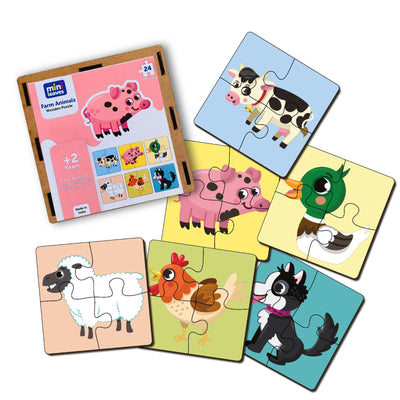
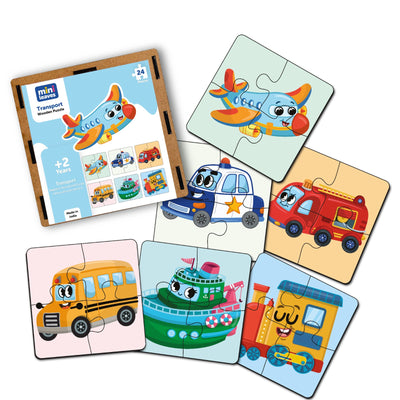
- Problem-Solving Puzzles: Engage children with simple puzzles, encouraging them to find solutions independently.
- Memory Games: Play "What's missing?" with a few objects or "Simon Says" to boost working memory.
- Sorting and Categorising: Ask children to sort their toys by colour, size, or type. This builds logical thinking and early classification skills crucial for academic success.
- Story Sequencing: After reading a story, ask them to recall events in order, or use picture cards to sequence a simple narrative.
Language & Communication: Voicing Their World
Language development is paramount during the preschool years, enabling children to express thoughts, ask questions, and understand instructions. Robust language development in preschool India is not just about vocabulary; it involves active listening, storytelling, and developing conversational skills, which are vital for classroom participation.
Actionable Strategies for Parents:
- Read Aloud Daily: Make reading a daily ritual, discussing characters and plots. Encourage children to "read" their favourite storybooks to you.
- Conversational Engagement: Ask open-ended questions during meals or family outings, like "What was your favourite part of the day?" or "How did you feel when...?"
- Sing Songs & Recite Rhymes: Traditional Indian rhymes and songs not only entertain but also develop phonetic awareness and rhythm.
- Storytelling: Encourage children to create their own stories, perhaps about a family festival or a visit to their grandparents.
Fine & Gross Motor Skills: Moving Towards Independence
Motor skills for 3-5 year olds encompass both large movements (gross motor) and small, precise movements (fine motor). Gross motor skills involve activities like running, jumping, and climbing, while fine motor skills are crucial for tasks like holding a pencil, cutting with scissors, and buttoning clothes. Both are fundamental for independent functioning in a school setting.
Actionable Strategies for Parents:
- Outdoor Play: Encourage activities like running in the park, climbing on safe structures, and playing "pakda pakdi" (tag) with cousins.
- Art & Craft: Provide opportunities for drawing, painting, cutting paper with child-safe scissors, and stringing beads. These activities enhance hand-eye coordination and strengthen small muscles.
- Practical Life Activities: Involve them in simple household chores like pouring water, sweeping with a small broom, or kneading dough for rotis. These Montessori-inspired tasks are excellent for developing both fine and gross motor skills.
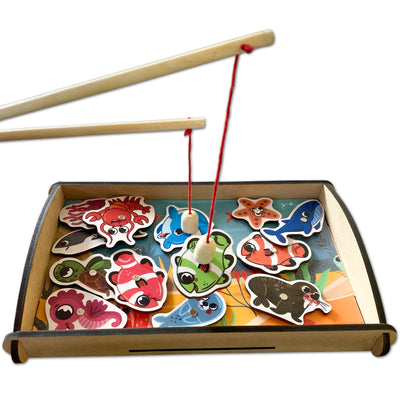
- Building Blocks: Stacking blocks and building structures helps with spatial awareness and fine motor control. Many activity kits offer engaging ways to develop these skills.
Social-Emotional Skills: Nurturing Little Hearts and Minds
Developing social-emotional skills means learning to understand and manage emotions, build relationships, and interact appropriately with others. These skills are vital for navigating the social dynamics of a classroom and forming friendships. Child development experts agree that emotional regulation and empathy are strong predictors of academic and life success.
Actionable Strategies for Parents:
- Role-Playing: Use dolls or puppets to act out different social scenarios, like sharing toys or resolving a minor conflict.
- Expressing Emotions: Help children identify and name their feelings (e.g., "Are you feeling frustrated?"). Validate their emotions while teaching appropriate ways to express them.
- Group Play: Encourage interactions with siblings, cousins, and friends. Facilitate turn-taking and sharing during playdates, mirroring the "joint family" environment.
- Empathy Building: Discuss how others might feel in different situations, for instance, "How do you think your Dadi feels when you help her?"
Montessori's Role in Foundational Skill Development
Maria Montessori's philosophy offers a powerful framework for fostering these foundational skills. The Montessori method emphasizes hands-on learning, self-directed activity, and collaborative play, making it highly effective for developing well-rounded children. SkilloToys.com offers a range of authentic Montessori materials designed to support this holistic development.
Montessori foundational skills are cultivated through carefully designed "prepared environments" that allow children to explore and learn at their own pace. Materials like the Pink Tower for visual discrimination, Sandpaper Letters for pre-reading, and Practical Life exercises for motor skills, directly target key developmental areas for 3-5 year olds. This approach aligns perfectly with NEP 2020's call for activity-based, experiential learning.
Actionable Strategies for Indian Parents: Fostering Skills at Home
Creating a "learning home" doesn't require a dedicated classroom; it's about integrating purposeful activities into everyday life. Here's how Indian parents can foster these critical foundational skills:
- Embrace Everyday Learning: Involve children in daily chores – sorting vegetables, setting the table, or helping with laundry – to build motor skills and responsibility.
- Leverage Grandparent Wisdom: Grandparents often have a wealth of stories, traditional games, and hands-on activities that naturally foster language, cognitive, and social-emotional skills.
- Limit Screen Time: Excessive screen time can hinder the development of crucial social interaction, creative play, and motor skills. Encourage active, imaginative play instead.
- Provide Open-Ended Play Materials: Simple blocks, art supplies, and household items encourage creativity and problem-solving far more than single-use toys.
- Prioritise Play-Based Learning: Remember, play is a child's work. Structured play, like using educational Montessori materials, allows children to learn through exploration and discovery.
By actively nurturing these essential foundational skills for school readiness in their 3-5 year olds, Indian parents are not just preparing their children for school; they are empowering them with the tools for lifelong success. This proactive approach ensures children are not merely surviving but thriving in India's dynamic educational landscape, mitigating the risk of early learning gaps and setting them on a path of confident exploration.
- Strong foundational skills for 3-5 year olds are crucial for academic success and preventing learning gaps in India.
- NEP 2020 highlights foundational literacy and numeracy as critical by Grade 3, urging parental involvement in early learning.
- Cognitive development activities like puzzles and sorting boost problem-solving and memory skills.
- Daily reading, conversational engagement, and storytelling significantly enhance language and communication abilities.
- Fine and gross motor skills are developed through outdoor play, art activities, and practical life tasks, vital for independence.
- Montessori methods, emphasizing hands-on and self-directed learning, are highly effective in cultivating comprehensive foundational skills.
What are the most important foundational skills for a 3-year-old?
For a 3-year-old, crucial foundational skills include basic language comprehension, early problem-solving, fine motor skills like holding a crayon, gross motor skills for running and jumping, and nascent social skills like sharing. These skills form the bedrock for future learning and interaction.
How does NEP 2020 define foundational learning for parents?
NEP 2020 defines foundational learning as literacy and numeracy skills developed by age 8, emphasising a flexible, multi-faceted, and activity-based learning approach for children aged 3-8. For parents, this means fostering a playful and engaging environment at home that supports holistic development, rather than rote memorisation.
What causes early learning gaps in Indian children?
Early learning gaps in Indian children often stem from a lack of exposure to stimulating environments, limited access to quality early childhood education, and insufficient parental engagement in foundational skill development. Factors like socio-economic background, parental literacy levels, and the absence of age-appropriate learning materials at home also contribute significantly.
How can Montessori methods help develop foundational skills at home?
Montessori methods aid foundational skill development at home by encouraging independent exploration, hands-on learning with purpose-driven materials, and fostering concentration. Activities like practical life exercises (pouring, dressing), sensory exploration (pink tower), and language materials (sandpaper letters) build cognitive, motor, and social skills naturally.
What is school readiness for a 5-year-old in India?
School readiness for a 5-year-old in India involves more than just knowing alphabets and numbers; it encompasses social-emotional maturity, the ability to follow instructions, basic problem-solving, independent self-care skills, and a genuine curiosity for learning. These comprehensive skills prepare them for the structured environment of primary school.