Urban Childhood Development India: Nurturing City Preschoolers
Raising a child in India's bustling cities presents unique challenges and triumphs, making intentional approaches to urban childhood development India crucial. This involves understanding the specific environmental, social, and educational factors that shape a child's growth from ages 3-5. Parents can navigate these complexities by leveraging home environments, fostering practical independence, and choosing enriching educational tools tailored for city life.
Urban childhood development in India refers to the holistic growth of children aged 3-5 years within metropolitan environments, characterized by dense living, diverse cultural exposure, and often high academic expectations. It matters because a thoughtful approach ensures children thrive despite city-specific pressures. Indian parents can actively create stimulating, supportive spaces that promote cognitive, emotional, and social readiness for school and life.
The Unique Landscape of Preschool Development Urban India
Life in India's cities, like Bengaluru, offers a vibrant tapestry of experiences, yet it also poses distinct considerations for preschool development urban India. Research by institutions like the Harvard Center on the Developing Child consistently shows that the early years are critical for brain development, making intentional engagement in urban settings particularly impactful. While access to better schools and diverse communities is a boon, parents often contend with limited green spaces, increased screen exposure, traffic congestion, and the societal pressure for early academic achievement.
The 'Urban Childhood Matters' initiative, highlighted by NDTV, underscores the urgent need to address the distinct developmental pathways of children in urban India. For little Aarav in a high-rise apartment, his world might be smaller physically than a child in a village, but his exposure to languages, technology, and various cultures is vast. This unique dynamic means parents must be deliberate in crafting environments that balance these influences, ensuring holistic development rather than just academic drill.
Creating a Prepared Environment: Montessori Principles for Urban Homes
Despite the perceived constraints of city living, the urban home can become a powerful 'prepared environment' for learning, a cornerstone of Montessori philosophy. Maria Montessori believed in making the child's surroundings accessible and ordered, fostering independence. For city living challenges for kids like limited space, this means thoughtful organization and toy rotation.
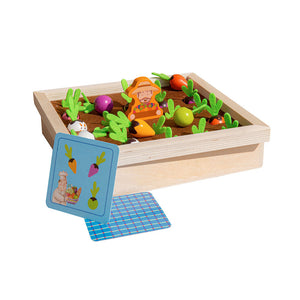
Consider creating a 'work station' in a corner of your living room or a child's bedroom. Here, specific, engaging materials are neatly arranged and easily accessible. Montessori-inspired educational toys are perfect for this, as they are often self-correcting and encourage focused activity. For instance, puzzles develop problem-solving skills and fine motor coordination, while activity kits can introduce practical life skills like pouring or sorting, even within a compact space. The satisfying 'clunk' of wooden blocks being stacked, or the quiet focus on threading beads, offers a welcome contrast to the cacophony of city sounds outside.
Balancing City Living Challenges with Holistic Growth
One of the biggest city living challenges for kids is the ubiquitous presence of screens. While technology is part of modern urban life, excessive passive screen time can impede creativity and social development. Instead, engage your child with hands-on activities. Involve them in small household tasks, like helping set the dining table or tidying their toy shelf. These practical life skills, encouraged by Montessori, build competence and self-esteem.
For outdoor play, explore local parks, even if small, or create a 'nature corner' on your balcony with potted plants. During festivals, involve children in preparations – rolling laddoo dough or decorating the puja space. This connects them to Indian traditions while developing sensory and fine motor skills. Grandparents, a common feature in many Indian joint families, can be invaluable in this. Their stories of growing up, their knowledge of local games, or even their patient guidance in making traditional crafts, provide a rich, multi-generational learning experience.
Preparing Urban Children for School: Beyond Academics
Dr. Swati Popat Vats, a prominent voice in early childhood education, emphasizes that a robust early childhood education framework is vital for India's urban youth, advocating for systemic support beyond just academic readiness. While parents in Indian cities often feel immense pressure for their children to excel academically even before formal schooling begins, true school readiness encompasses far more than just knowing alphabets or numbers. It's about developing strong socio-emotional skills, independence, and a genuine love for learning.
Encourage imaginative play, which is crucial for language development and problem-solving. Through role-playing as a shopkeeper or a doctor, children learn negotiation, empathy, and social rules. Materials from our Montessori collection are designed to foster this intrinsic motivation, allowing children to discover concepts at their own pace, reducing the stress associated with forced learning. This approach builds resilience and adaptability, essential qualities for thriving in a dynamic urban school environment.
Early Childhood Care India Cities: Community & Connection
Early childhood care India cities also necessitates building a strong sense of community and connection. While apartment living can sometimes feel isolating, seeking out opportunities for peer interaction is vital for developing social skills like sharing, cooperation, and conflict resolution. Look for local playgroups, community centers, or even organized events in your residential complex.
Take your child to local libraries, children's museums, or cultural performances when available. These experiences broaden their horizons and expose them to diverse perspectives, which is a significant advantage of urban life. Encouraging your child to interact with children from different backgrounds in a safe, supervised setting helps them develop a more nuanced understanding of the world around them, preparing them for the social complexities of school and beyond.
Nurturing preschoolers in India's cities requires intentionality and a deep understanding of their unique developmental needs. By transforming urban challenges into opportunities for rich, hands-on learning within the home and community, you can ensure your 3-5 year old develops into a confident, curious, and well-adjusted individual, ready to embrace the world.