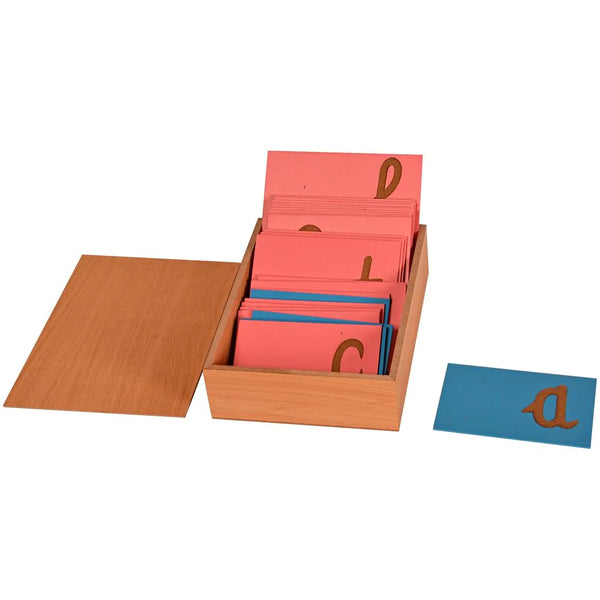
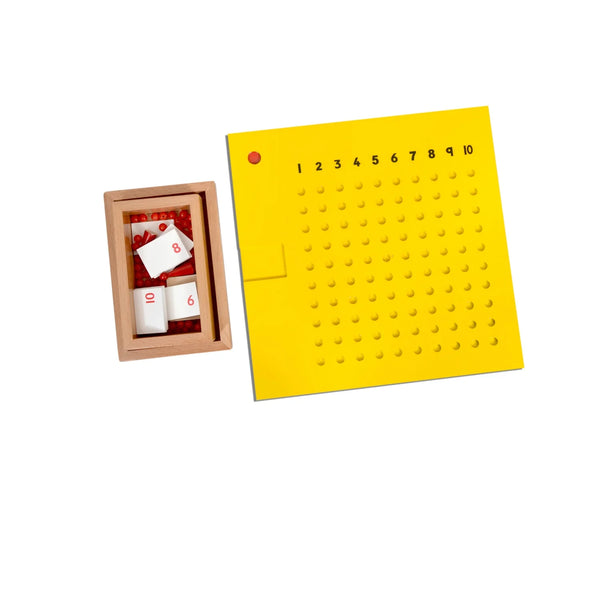
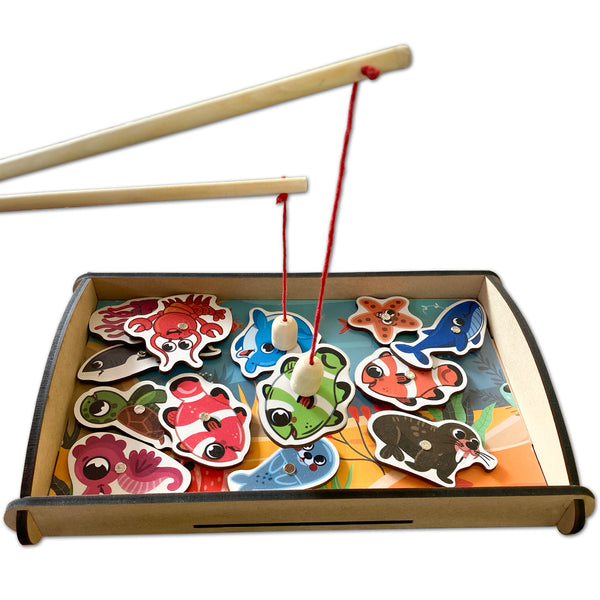
Wooden Puzzles for Kids: Skill Focus (3-5 Years)
Choosing the right wooden puzzles for kids aged 3-5 years is a definitive step towards fostering targeted skill development in preschoolers. Research shows that engaging with carefully selected puzzles significantly enhances cognitive abilities, fine motor control, and problem-solving skills, crucial foundations for school readiness.
Wooden puzzles are tactile, educational tools crafted from natural wood, designed to challenge and develop a child's cognitive and physical skills. This matters because they offer a hands-on, multi-sensory learning experience that promotes concentration and independent problem-solving, aligning perfectly with early childhood education goals in India. Indian parents can thoughtfully select puzzles that match their child's specific developmental needs, moving beyond mere entertainment.
Why Wooden Puzzles are Vital for Preschool Development (3-5 Years)
As discussions around 'Urban Childhood Matters' and the call for a dedicated Ministry for Early Childhood Education gain momentum in India, the role of foundational learning tools like wooden puzzles becomes even more critical. Child development experts agree that the 3-5 year age bracket is a golden period for neurological growth, making intentional play essential. Wooden puzzles offer a unique blend of challenge and reward, nurturing patience and persistence, qualities highly valued in a child's academic journey.
In many Indian homes, where joint families are common, grandparents often play a pivotal role in a child's early learning. Introducing age-appropriate puzzles creates a shared activity that bridges generations, allowing elders to guide and encourage without overtly 'teaching'. This gentle interaction strengthens family bonds while subtly preparing the child for the structured environment of school.
Boosting Fine Motor Skills: The Power of Peg and Knob Puzzles
For children aged 3-5 years, developing robust fine motor skills is paramount for tasks like holding a pencil, buttoning clothes, and self-feeding. Peg puzzles and knobbed puzzles are specifically designed to hone this precision. The act of grasping a small knob or peg, guiding it into a corresponding hole, and releasing it requires intricate hand-eye coordination and finger strength.
Consider a 3-year-old in a Bengaluru flat, carefully picking up a cylindrical peg and trying to fit it into its slot. The satisfying 'clunk' when it settles perfectly is a tiny victory, reinforcing the effort. Studies indicate that regular engagement with such activities significantly improves dexterity, which is a direct precursor to legible handwriting. Explore a range of wooden puzzles that specifically target these essential fine motor developments.
Cultivating Spatial Reasoning: Shape Sorters and Geometric Puzzles
Spatial reasoning, the ability to understand and manipulate objects in space, is a fundamental cognitive skill that underpins mathematical understanding and problem-solving. For a 4-year-old, shape sorters and simple geometric puzzles are excellent tools. These puzzles require children to recognise shapes like circles, squares, and triangles, and then orient them correctly to fit into corresponding cut-outs.
This isn't just about matching; it's about mentally rotating a piece, understanding its dimensions, and predicting how it will interact with a space. The American Academy of Pediatrics highlights the importance of such manipulative play in developing abstract thinking. When a child successfully fits a star into its complex slot, they're not just playing; they're building crucial neural connections for future geometry and architecture concepts.
Sharpening Problem-Solving: Jigsaw and Layer Puzzles
As children approach 5 years, their capacity for logical thought and sequential reasoning blossoms. Jigsaw puzzles, ranging from 12 to 30 pieces, become powerful instruments for sharpening problem-solving skills. They teach children to look at a larger picture, break it down into smaller components, and then work systematically to reconstruct it.
The frustration a child experiences when a puzzle piece doesn't immediately fit isn't a setback; it's a critical moment for brain development. This 'productive struggle' strengthens neural pathways for perseverance and teaches resilience – a skill far more valuable than simply completing a puzzle effortlessly. Layer puzzles, depicting a process like the growth of a plant or the layers of the human body, further enhance understanding of cause and effect and complex sequences. These types of activity kits push children to think critically and strategically.
Developing Cognitive Sequencing: Story and Progressive Puzzles
Cognitive sequencing, the ability to understand and order events or information, is a cornerstone of literacy and logical thought. For preschoolers heading to school, story puzzles or progressive puzzles are invaluable. Story puzzles depict a sequence of events, like a chick hatching from an egg, requiring the child to arrange the pieces in the correct narrative order.
Progressive puzzles, which offer a series of jigsaws with increasing piece counts (e.g., a 6-piece, 9-piece, and 12-piece set), gradually build a child's confidence and ability to tackle more complex challenges. This method, rooted in Montessori principles, ensures that learning is incremental and self-paced, reducing overwhelm and fostering a love for learning that lasts beyond the preschool years.
Montessori Wooden Puzzles: A Bengaluru Parent's Choice
In urban centres like Bengaluru, parents are increasingly seeking educational tools that offer more than just fleeting entertainment. Montessori wooden puzzles, known for their specific learning objectives and self-correcting nature, are a preferred choice. Maria Montessori's philosophy emphasizes hands-on, experiential learning where children discover concepts through manipulation.
These puzzles are often designed to isolate a single concept, allowing a child to focus intently without distraction. From learning shapes and colours to developing early literacy and numeracy skills, Montessori wooden puzzles empower children to become active participants in their own learning journey. They are durable, safe, and thoughtfully crafted to support a child's natural curiosity and innate drive to learn, preparing them holistically for formal schooling and the vibrant world around them.
Choosing the right wooden puzzle is an investment in your child's developmental future. By understanding which types of puzzles target specific skills, you can empower your preschooler to build a strong foundation for learning, one delightful piece at a time. Tonight, pick a puzzle that matches your child's next developmental leap and watch them grow with every solved challenge.