LKG UKG Readiness Skills: Indian Parents' Practical Guide
Preparing your little one for the exciting journey of LKG or UKG is a significant milestone for Indian parents. Understanding the essential LKG UKG readiness skills is crucial for ensuring a smooth transition into formal schooling, setting the stage for lifelong learning.
Child development experts agree that focusing on these foundational abilities empowers children, reduces anxiety for both child and parent, and allows them to embrace new learning environments with confidence. This practical guide provides a clear roadmap to help your child thrive.
What Are LKG UKG Readiness Skills?
LKG UKG readiness skills encompass a range of developmental abilities that prepare a child for a structured learning environment. This matters because strong foundational skills correlate with better academic outcomes and social adjustment, as research indicates. Indian parents can proactively foster these skills through engaging activities and a supportive home environment.
In India, where early education is gaining significant traction and quality, as highlighted by initiatives like NEP 2020, focusing on comprehensive readiness is paramount. It’s not just about academic prowess but also about nurturing a well-rounded individual ready for the classroom and beyond.
Understanding What Child Should Know Before LKG/UKG
Many Indian parents wonder, "what child should know before LKG?" It's not about memorizing facts or reading complex sentences. Instead, it’s about a blend of cognitive, motor, language, social-emotional, and self-help skills that build a strong base.
This holistic approach aligns with the Montessori philosophy, which emphasizes self-directed activity, hands-on learning, and collaborative play. Child development experts agree that children aged 3-5 benefit most from an environment that encourages exploration and independence.
Developing Essential Cognitive Skills for School Readiness
Cognitive skills for school readiness involve a child's ability to think, reason, and solve problems. These include early math concepts, pattern recognition, and basic memory recall.
Engaging activities at home can significantly boost these skills. For instance, sorting everyday items by colour or size, playing memory games with family, or completing simple puzzles helps develop logical thinking. Studies show that play-based learning enhances cognitive development by up to 20% compared to rote methods.
Montessori materials, such as the Pink Tower, are excellent for developing visual discrimination of size and sequence, fostering concentration and early mathematical understanding. These tools encourage children to explore concepts through hands-on manipulation.
Enhancing Fine Motor Skills for LKG Readiness
Fine motor skills for LKG are crucial for tasks like holding a pencil, turning pages, and manipulating small objects. These skills involve the coordination of small muscles, especially in the hands and fingers.
Simple activities like drawing, colouring, cutting with child-safe scissors, and stringing beads can greatly improve dexterity. Even helping in daily chores, like buttoning shirts or peeling vegetables with supervision, builds strength and coordination.
Practical Life materials, available in our Montessori Collection, offer structured ways to practice pouring, spooning, and transferring, which are fundamental for developing precise hand movements and independence.
Fostering Language & Communication Abilities
Clear communication is a cornerstone of school readiness. This includes being able to express needs and thoughts, understand instructions, and engage in simple conversations.
Indian families, especially in joint households, have a unique advantage with grandparents often narrating stories and engaging children in rich discussions. Encourage storytelling, reading aloud daily (in English and regional languages), and asking open-ended questions.
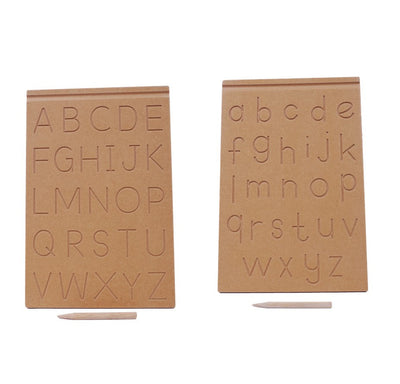
Montessori Sandpaper Letters help children link sounds to symbols, laying a strong foundation for reading and writing. Engaging in conversations about festivals, family events, or even daily routines at home significantly expands vocabulary and comprehension.
Cultivating Social-Emotional Growth and Independence
Social-emotional readiness involves a child's ability to manage emotions, share, take turns, and separate from parents. These skills are vital for thriving in a classroom setting.
Encourage opportunities for peer play, whether with cousins or neighbourhood children. Teach polite phrases like 'Dhanyawaad' (thank you) and 'Kripaya' (please). Assign simple responsibilities at home, such as putting away toys or helping set the table, to foster a sense of competence and independence.
Maria Montessori believed in fostering a child's inner discipline and respect for others, which are critical for smooth classroom integration. Research shows children with strong foundational social-emotional skills demonstrate better academic performance and social adjustment later on.
A Practical Preschool Readiness Checklist India Parents Can Use
To help Indian parents confidently prepare their children, here's a general preschool readiness checklist India parents can use as a guide:
- Can follow 2-3 step instructions (e.g., "Pick up the ball and put it in the basket.").
- Can separate from parents for short periods without excessive distress.
- Shows curiosity and willingness to try new activities.
- Can use the washroom independently or communicate needs clearly.
- Holds a crayon or pencil with a developing grasp.
- Can recognize and name basic colours and shapes.
- Can count to 10 and recognize some numbers.
- Communicates needs and wants using sentences.
- Engages in imaginative play (e.g., role-playing).
- Shares toys and takes turns with others (most of the time).
Montessori Activities for School Readiness at Home
Integrating Montessori activities for school readiness into your child's daily routine can be simple and effective. Focus on practical life skills, sensory exploration, and language development. For example:
- **Pouring and Transferring:** Provide small pitchers with water or dried beans for pouring practice. This builds concentration and fine motor control.
- **Sorting and Matching:** Use buttons, beads, or even different types of pulses to sort by colour, size, or type. This enhances cognitive discrimination.
- **Buttoning and Zipping Frames:** These materials teach dressing skills, fostering independence and fine motor dexterity.
- **Nursery Rhymes and Storytelling:** Regularly read Indian folk tales or sing rhymes to enrich language and cultural understanding.
These activities don't require expensive materials; many can be created using items found in a typical Indian home. The key is to provide a prepared environment that encourages independent exploration and learning.
- LKG UKG readiness skills are holistic, encompassing cognitive, fine motor, language, social-emotional, and self-help abilities.
- Research indicates that strong foundational skills before school lead to better academic and social outcomes.
- Montessori education actively fosters independence, concentration, and fine motor skills crucial for school readiness.
- Play-based learning, rather than rote memorization, is highly effective for developing cognitive skills for school readiness.
- Indian parents can use a practical preschool readiness checklist India-specific to guide their child's preparation.
- Encouraging practical life activities at home significantly boosts independence and fine motor control, essential for classroom tasks.
What is the ideal age for LKG admission in India?
The ideal age for LKG admission in India typically ranges from 3 to 4 years, varying slightly by state and school board guidelines. It's crucial to check the specific age criteria of the schools you are considering.
How much academic pressure should I put on my child before LKG?
Child development experts strongly advise against excessive academic pressure before LKG. Focus on nurturing natural curiosity, play-based learning, and the development of social-emotional skills, as these create a more positive and effective learning foundation than early rote academics.
Can grandparents help with LKG UKG readiness skills?
Absolutely. Grandparents, integral to many Indian joint families, are invaluable in fostering LKG UKG readiness skills through storytelling, traditional games, cultural lessons, and daily interactions that build language, social skills, and emotional security. Their wisdom and presence provide a rich learning environment.
What role do educational toys play in school readiness?
Educational toys, particularly Montessori-inspired ones, play a vital role in developing LKG UKG readiness skills by providing hands-on learning experiences. They help children develop fine motor skills, cognitive abilities, problem-solving, and concentration in a fun and engaging way, making learning tangible and self-directed.
How do I address separation anxiety before LKG?
Address separation anxiety by practicing short separations, talking positively about school, and establishing consistent drop-off routines. A reassuring and confident approach from parents helps children feel secure, understanding that their caregiver will return, fostering trust and independence.