Educational Toys for Kids: Nurturing Holistic Development
Screen-free educational toys for kids play a definitive role in nurturing holistic development, offering a tangible alternative to digital engagement and its associated challenges. Research consistently demonstrates that hands-on, interactive play is crucial for developing cognitive abilities, fine motor skills, social-emotional intelligence, and language proficiency, laying a robust foundation for a child's future.
In today's Indian homes, where concerns about increased screen time, reduced attention spans, and even physical health issues like fatty liver are rising as highlighted by recent studies, parents are actively seeking solutions. This guide illuminates how well-chosen educational toys proactively address these developmental concerns, providing enriching and beneficial play experiences.
What Are Screen-Free Educational Toys?
Screen-free educational toys are thoughtfully designed play materials that engage children without requiring digital interfaces, fostering active learning and exploration. This matters profoundly because they stimulate creativity, critical thinking, and physical dexterity through direct interaction. Indian parents can leverage these toys to cultivate crucial developmental milestones in a natural, enriching environment.
Fostering Cognitive Growth: Beyond Rote Learning
Educational toys for kids are instrumental in sharpening cognitive functions, moving beyond the traditional emphasis on rote memorisation often seen in Indian schooling. Materials like complex puzzles, building blocks, and logical sequencing games challenge children to think critically, solve problems creatively, and develop spatial reasoning. For instance, a child manipulating a Montessori Pink Tower is not just stacking; they are intuitively grasping concepts of size, order, and proportion.
This kind of engaged play strengthens neural pathways, enhancing memory, attention span, and the ability to follow multi-step instructions. Child development experts agree that such early cognitive stimulation is vital for academic readiness and long-term intellectual curiosity, equipping Indian children with adaptable minds ready for real-world challenges.
Enhancing Physical Dexterity and Sensory Exploration
One of the most immediate benefits of screen-free play is the development of essential physical skills, both fine and gross motor. Toys like threading beads, lacing cards, and shape sorters refine fine motor skills, crucial for tasks such as writing and self-care. Meanwhile, pushing, pulling, and manipulating larger objects develop gross motor coordination and balance.
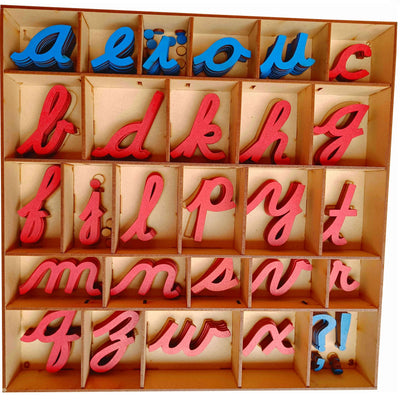
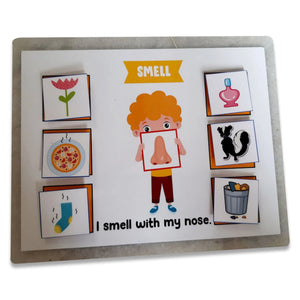
Sensory exploration is equally vital; sandpaper letters introduce tactile learning, while various textures and materials in activity kits stimulate touch, sight, and sound. Studies indicate that rich sensory experiences during early childhood are foundational for brain development and processing information, offering a healthy alternative to the passive consumption of digital content which often neglects these vital sensory inputs.
Nurturing Social-Emotional Intelligence and Language Skills
Screen-free play provides unparalleled opportunities for children to develop robust social-emotional and language skills. Engaging in imaginative play with dolls, puppets, or miniature kitchens encourages role-playing, fostering empathy, cooperation, and the ability to understand different perspectives. This is particularly valuable in joint Indian family settings, where shared play can strengthen familial bonds and teach negotiation.
Through conversations during play, children naturally expand their vocabulary, practice sentence construction, and learn narrative structures. Whether narrating a story with their toys or discussing how to build a shared structure, they are actively honing their communication skills. These interactions are critical for emotional regulation, teaching children how to express feelings, manage frustration, and build meaningful relationships without the isolating effects of excessive screen time.
Why Montessori Toys Are Key for Holistic Child Development in India
Maria Montessori's philosophy, deeply rooted in fostering independence and self-directed learning, makes Montessori toys in India uniquely suited for holistic child development. These materials are designed to be self-correcting, allowing children to learn through discovery and repetition, building intrinsic motivation rather than relying on external validation.
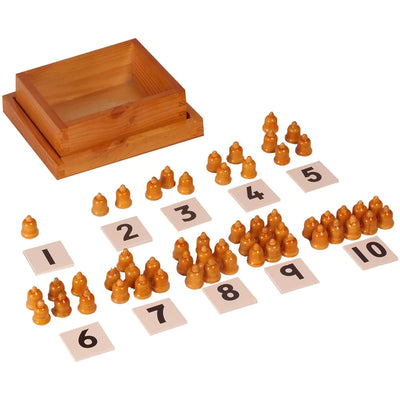
Montessori education aligns seamlessly with the Indian ethos of respect for the child's individual pace and potential. From practical life activities like pouring and buttoning to academic preparations using sandpaper letters and number rods, these toys cater to diverse learning styles. They cultivate concentration, discipline, and a profound respect for the learning process, empowering children to become active participants in their growth within their homes and communities.
Practical Tips for Integrating Screen-Free Play into Indian Homes
Transitioning to a screen-free childhood requires intention and consistency, especially in our digitally-connected world. Indian parents can begin by creating a dedicated, inviting play area stocked with a variety of engaging educational toys. Involve grandparents and other family members, leveraging the rich tradition of storytelling and interactive play prevalent in Indian culture.
Set clear boundaries for screen time and model screen-free behaviour yourself. Introduce toys based on your child's interests and developmental stage, observing their engagement and rotating toys to maintain novelty. Remember, the goal is not just to replace screens, but to provide richer, more meaningful experiences that nurture every facet of your child's being.
- Screen-free educational toys are critical for developing cognitive, physical, social-emotional, and language skills in children.
- Research confirms that hands-on play is superior to passive screen time for brain development and skill acquisition.
- Montessori educational materials foster independence, concentration, and a self-directed love for learning.
- Engaging with educational toys enhances fine and gross motor skills, crucial for real-world tasks.
- Collaborative play with screen-free toys significantly improves social-emotional intelligence and communication abilities.
- Indian parents can proactively counter screen-related developmental concerns by providing enriching, interactive play alternatives.
What are the core benefits of screen-free educational toys for kids?
Screen-free educational toys for kids offer profound benefits, fostering critical thinking, fine motor skills, social interaction, and emotional regulation. They provide hands-on learning experiences that screens cannot replicate, promoting deeper engagement and skill acquisition.
How do educational toys support cognitive development in children?
Educational toys actively stimulate cognitive development by encouraging problem-solving, memory retention, and logical reasoning. Materials like puzzles and building blocks challenge children to think critically, understand cause and effect, and develop spatial awareness.
Are Montessori toys effective for holistic child development in India?
Yes, Montessori toys are highly effective for holistic child development, especially in the Indian context, as they promote self-directed learning and practical life skills. They encourage independence, concentration, and a love for learning, aligning well with the values of many Indian families seeking well-rounded growth for their children.
At what age should parents introduce educational toys to their children?
Parents can introduce educational toys right from infancy, with age-appropriate options designed for different developmental stages. Soft sensory toys are ideal for newborns, while stacking rings and simple puzzles benefit toddlers, progressively building skills as they grow.
How can I encourage my child to play with educational toys instead of screens?
Encouraging screen-free play involves creating an inviting environment and actively participating with your child initially. Make educational toys easily accessible, model engagement with them, and set clear boundaries around screen time, celebrating their imaginative and constructive play.