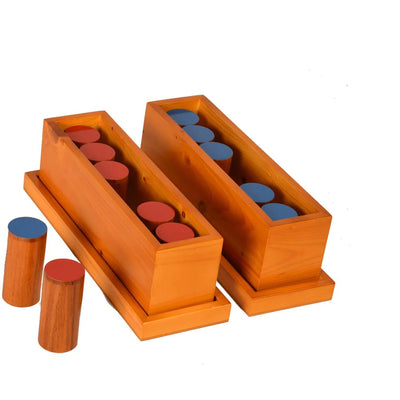
Board Games for Kids: Montessori Boosts Sensory & Cognitive Growth
Montessori board games for kids are powerful tools that significantly enhance sensory and cognitive development by engaging children in hands-on, self-directed learning experiences. These specially designed games foster critical thinking, fine motor skills, and problem-solving abilities, laying a strong foundation for lifelong learning from an early age in Indian homes.
Research consistently demonstrates that early childhood is a critical period for brain development, making purposeful play indispensable. For Indian parents, ensuring children have access to activities that support this growth, without adding to academic pressure, is paramount. Montessori board games offer a balanced approach, promoting holistic development in a joyful, engaging manner.
What Are Montessori Board Games?
Montessori board games are educational tools rooted in Dr. Maria Montessori's philosophy, emphasizing self-directed, hands-on learning through specially designed materials. This matters because they allow children to learn at their own pace, correcting mistakes independently and developing concentration. Indian parents can integrate these games to provide structured yet playful learning opportunities that prepare children for school and life.
Montessori Board Games: Building Blocks for Sensory Development
Montessori board games are exceptional for sensory development, crucial for how children perceive and interact with their world. These games are designed to engage multiple senses simultaneously, creating rich learning experiences.
Child development experts agree that children aged 0-5 learn best through direct sensory interaction. Games featuring varied textures, vibrant colours, and distinct shapes stimulate tactile, visual, and even auditory senses. For instance, games involving sorting colourful beads or matching textured cards help refine sensory discrimination, which is vital for later academic tasks like reading and writing.
Consider the joy on a child’s face when they match a soft felt piece to its corresponding shape, or the focused concentration as they carefully place a wooden block into a pattern. These moments, often shared with grandparents in a joint family setting, are not just play; they are profound learning experiences. Such activity kits enhance fine motor skills, hand-eye coordination, and spatial awareness.
Educational Board Games for Toddlers: Fostering Cognitive Skills
Educational board games for toddlers are pivotal in nurturing their burgeoning cognitive abilities. These games challenge young minds to think, remember, and strategize in age-appropriate ways.
Studies indicate that children who engage in regular problem-solving play develop stronger executive function skills. Montessori board games often introduce concepts like sequence, cause and effect, and categorisation through simple, repetitive actions. For example, a game requiring a toddler to place items in a specific order helps them understand sequencing, a foundational skill for mathematics and logical thinking.
In the vibrant environment of an Indian home, where storytelling and traditional games are common, Montessori board games offer a structured complement. They encourage independent decision-making and persistence, invaluable traits for future academic success and navigating life's challenges. As children prepare for preschool, activities like these can significantly boost their readiness, mirroring the holistic approach seen in new nature-inspired preschools across India.
Board Games for 3 Year Olds: Developing Logic and Problem-Solving
As children reach three years of age, their capacity for logical reasoning and problem-solving expands rapidly, making board games for 3 year olds incredibly beneficial. Games designed for this age group move beyond simple sensory input to introduce more complex rules and objectives.
Maria Montessori's philosophy emphasizes the importance of providing children with materials that allow for self-correction. Many Montessori board games for 3 year olds are designed so that the child can visually or tactually understand when they have made a mistake, enabling them to learn without constant adult intervention. This fosters independence and builds confidence.
Imagine a child in Bengaluru playing a simple matching game, carefully aligning corresponding pictures or shapes. This seemingly simple act is building crucial cognitive pathways related to pattern recognition and memory. Such engagement helps them develop focus and attention span, vital skills in a world increasingly filled with distractions. These foundational experiences parallel the joyful, inclusive play advocated by initiatives like 'Umang Vatika' for children with disabilities, emphasizing accessible learning for all.
Cognitive Development Board Games: Preparing for Lifelong Learning
Cognitive development board games are instrumental in laying the groundwork for more advanced learning, preparing children for the complexities of school and beyond. They move children from concrete manipulation to abstract thought.
Research shows that early exposure to games that require strategy and planning can enhance critical thinking skills significantly. Montessori board games often involve classifying objects, understanding spatial relationships (like with the Pink Tower or Brown Stair materials), and even basic mathematical concepts through counting and grouping. These experiences build a robust mental framework.
For Indian families, where educational success is highly valued, integrating these Montessori method learning materials into daily routines can make a significant difference. They offer a playful alternative to rote learning, ensuring children enjoy the process of acquiring knowledge and skills. This approach cultivates a love for learning that extends well into their schooling years and throughout life.
- Montessori board games for kids significantly boost sensory and cognitive development.
- Early childhood (0-5 years) is a critical period where purposeful play through board games enhances brain development.
- These games engage multiple senses, refining tactile, visual, and auditory discrimination skills.
- Montessori board games foster executive function skills, including memory, focus, and problem-solving.
- Games for 3 year olds promote logical reasoning, pattern recognition, and self-correction, building independence.
- Integrating cognitive development board games prepares children for academic success and lifelong learning.
At what age can children start playing Montessori board games?
Children can begin engaging with simplified Montessori board games as early as 18-24 months, focusing on basic concepts like matching or sorting. As they grow, more complex games designed for 3 year olds and beyond can be introduced to challenge their developing skills.
How do Montessori board games differ from regular board games?
Montessori board games are distinct because they are designed with specific learning objectives, encouraging self-correction, independent play, and multi-sensory engagement. They often focus on real-world concepts and develop specific cognitive and motor skills, rather than solely relying on luck or abstract rules.
What kind of skills do sensory board games develop in toddlers?
Sensory board games for toddlers actively develop fine motor skills through manipulation of pieces, visual discrimination, tactile exploration, and auditory processing. They also lay the groundwork for cognitive skills like focus, memory, and logical thinking by engaging multiple senses simultaneously.
Are there specific Montessori board games recommended for joint families?
Yes, many Montessori-inspired games are excellent for joint families as they promote cooperative play and intergenerational bonding. Look for games that allow multiple players, encourage discussion, and are adaptable to different age groups, fostering a shared learning experience for everyone, including grandparents.
How can I choose the right educational board games for my 3-year-old?
When choosing educational board games for 3 year olds, prioritize those that match their current developmental stage and interests, focusing on color matching, shape sorting, simple puzzles, or early counting. Ensure the materials are durable, non-toxic, and provide opportunities for hands-on exploration and self-correction, aligning with Montessori principles.