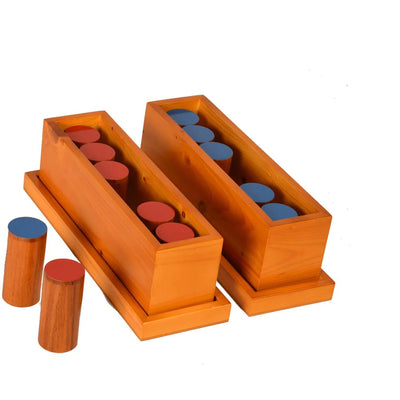
Doll House for Kids: Best for Sensory Play (0-5 Years)
Choosing the best doll house for kids, specifically a Montessori-aligned one, profoundly supports sensory development from 0-5 years by offering a rich, multi-faceted environment for exploration and learning. This focused selection ensures your child engages with materials that stimulate their senses naturally, laying crucial foundations for cognitive and physical growth.
A Montessori doll house for sensory development is a thoughtfully designed miniature environment that prioritises natural materials, realistic proportions, and open-ended play to stimulate a child's senses. This matters because early sensory experiences directly shape brain development, impacting everything from fine motor skills to problem-solving. Indian parents can leverage these educational toys to provide a consistent, enriching sensory input right within their homes, supporting holistic development.
Why a Montessori Doll House is Key for Sensory Development (0-5 Years)
Child development experts agree that the first five years are critical for sensory integration, where children learn to process and respond to sensory information. A Montessori doll house offers a curated, safe space for this exploration, standing in contrast to the often overstimulating public environments that can be challenging for children, as highlighted by recent discussions around accessible play spaces like 'Umang Vatika'.
Studies indicate that children engaging with diverse textures and shapes develop stronger neural connections related to touch and spatial reasoning. A well-chosen doll house, free from excessive lights and sounds, allows children to focus their senses on manipulating objects, understanding cause and effect, and developing a nuanced perception of their surroundings.
Furthermore, the manipulation of doll house furniture and figures significantly enhances fine motor skills and hand-eye coordination. This aligns perfectly with expert advice on supercharging fine motor skills, which are crucial for later tasks like writing and self-care, easing the transition to formal schooling pressure common in India.
Essential Sensory Features in a Montessori Doll House for Kids
When selecting the ideal educational doll house for kids, focus on specific features that maximise sensory engagement. These elements are designed to offer a rich, varied experience without overwhelming the child, ensuring truly beneficial sensory play.
Tactile Richness: Exploring Textures and Materials
Research shows that varied tactile input is fundamental for sensory development. Look for a Montessori doll house made from natural materials like smooth wood, soft fabrics, and perhaps even small metal or stone elements for furniture. These offer a spectrum of textures that children can explore with their fingertips, enhancing their haptic perception and understanding of material properties. This direct experience with different materials is far more enriching than uniform plastic surfaces.
Visual Stimulation: Colours and Realistic Design
The visual appeal of a doll house for kids should be realistic and calming. Montessori principles advocate for natural, subdued colours over bright, artificial hues, which can be overstimulating for young children. A doll house with accurate proportions and familiar designs allows children to connect their play to the real world, fostering recognition and observation skills rather than overwhelming them with fantastical, abstract visuals.
Auditory Engagement: Simple Sounds and Silence
True sensory doll houses promote quiet, focused play. Avoid doll houses with pre-recorded sounds or flashing lights, as these can detract from a child's own imaginative sound-making and internal concentration. The soft sounds of wooden blocks clicking, fabric rustling, or a child's own voice narrating their play are far more beneficial for developing auditory discrimination and fostering inner quiet.
Proprioceptive and Vestibular Input: Movement and Spatial Awareness
Manipulating figures and furniture within a doll house provides valuable proprioceptive input – the sense of body position and movement. As children arrange rooms or move dolls through different spaces, they develop spatial awareness, depth perception, and an understanding of cause and effect. This active engagement is crucial for developing balance and coordination, providing a foundation for more complex motor skills.
Choosing the Right Montessori Doll House for Different Age Groups (0-5 Years)
The ideal Montessori doll house evolves with your child's developmental stage, ensuring it remains a relevant and stimulating tool for sensory exploration. Understanding these age-specific needs is vital for making an informed choice for your child's growth.
Infants (0-12 Months): Simple and Safe Exploration
For infants, focus on very simple, robust, and safe doll house components. Think large, graspable wooden blocks or soft fabric houses with oversized, detachable figures. The emphasis here is on safe mouthing, grasping, and visual tracking. These early interactions introduce varied textures and forms without posing choking hazards, making them excellent first sensory doll houses.
Toddlers (1-3 Years): Developing Dexterity and Imagination
As toddlers grow, their fine motor skills develop rapidly. Doll houses for this age can introduce slightly smaller, but still robust, furniture pieces and figures. This stage is perfect for exploring cause-and-effect by moving items, engaging in early imaginative play like feeding dolls, and developing a sense of order. Consider complementing with activity kits that foster similar hands-on learning.
Preschoolers (3-5 Years): Complex Play and Social Scenarios
Preschoolers thrive with more detailed doll houses that allow for elaborate imaginative scenarios, mirroring the social dynamics of joint families or school environments. These best doll houses for sensory play can include more intricate furniture, multiple rooms, and figures representing different family members or community roles. This promotes social-emotional development, language skills, and complex problem-solving alongside continued sensory engagement.
SkilloToys' Commitment to Authentic Sensory Play for Your Child
At SkilloToys, Bengaluru, we understand the profound impact quality educational toys have on a child's development, especially in the crucial early years. Our selection of Montessori-aligned doll houses is carefully curated to ensure they offer maximum sensory benefits, adhering to principles of natural materials, safety, and open-ended play.
We believe every Indian home, whether a bustling joint family or a nuclear setup, deserves access to toys that foster genuine learning and development. Providing a dedicated space for sensory exploration with an educational doll house helps children build confidence, refine their senses, and engage in meaningful play, preparing them for a future filled with curiosity and learning.
- Montessori doll houses for kids are essential for rich sensory development from 0-5 years.
- Natural materials like wood and fabric offer superior tactile stimulation compared to plastic.
- Subdued, realistic colours and designs promote focused visual development without overstimulation.
- The absence of artificial sounds and lights in a doll house fosters internal auditory discrimination and imaginative play.
- Manipulating doll house elements significantly enhances fine motor skills, spatial awareness, and proprioceptive input.
- Choosing age-appropriate doll houses ensures continuous, relevant sensory and cognitive development.
What age is best for a Montessori doll house?
Montessori doll houses are beneficial from infancy (0-12 months) with large, simple pieces, and continue to offer developmental value through toddlerhood (1-3 years) and preschool (3-5 years) with increasing complexity that supports fine motor skills and imaginative play.
How does a doll house help sensory development?
A doll house helps sensory development by providing diverse tactile experiences through varied materials, visual stimulation from natural colours and realistic design, auditory engagement from simple play sounds, and proprioceptive input through manipulating figures and furniture, enhancing spatial awareness.
What features make a doll house Montessori-aligned for sensory play?
Montessori-aligned doll houses for sensory play feature natural, varied materials like wood and fabric, realistic and proportionate designs, subtle colours, and an absence of overstimulating lights or loud sounds. They encourage open-ended play and independent exploration.
Are plastic doll houses good for sensory development?
While some plastic doll houses offer visual stimulation, they often lack the diverse tactile experiences and natural feel of wooden or fabric Montessori doll houses. Research shows natural materials provide a richer sensory input crucial for developing touch and understanding different textures.
How can I incorporate a doll house into my child's daily routine in an Indian home?
In an Indian home, a doll house can be a central part of your child's 'free play' time, allowing them to mimic family life, celebrate mini-festivals, or engage grandparents in storytelling. Place it in an accessible, calm corner, perhaps alongside their other activityKits, encouraging independent and collaborative play.