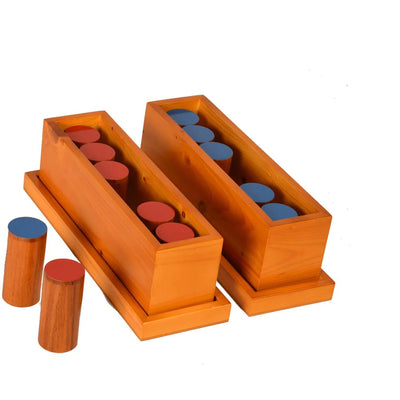
Doll House for Kids: Sensory & Cognitive Development (0-5 Years)
A Montessori doll house for kids is a powerful educational tool that significantly enhances sensory and cognitive development in children aged 0-5 years. Unlike conventional toys, these thoughtfully designed dollhouses offer a rich, multi-sensory experience that builds crucial foundational skills essential for a child's holistic growth, making them a cornerstone of play-based learning in Indian homes.
As Indian parents increasingly seek enriching play experiences beyond traditional methods, understanding the profound impact of Montessori principles becomes vital. This approach prepares children for the complexities of life, fostering independence and a love for learning from a very young age.
What is a Montessori Dollhouse?
A Montessori dollhouse is a meticulously crafted, open-ended play environment designed to foster independence, concentration, and practical life skills. It provides a miniature world where children can safely explore concepts of home, family, and community, encouraging self-directed learning in a child-centric way. Indian parents value these durable, non-toxic materials for their educational longevity.
This distinct approach aligns with Dr. Maria Montessori's philosophy, emphasizing learning through direct experience and exploration. For children in Bengaluru and across India, these dollhouses are more than just toys; they are tools for developmental growth.
Montessori Dollhouse Benefits: Foundations for Future Learning
Research shows that engaging with a Montessori dollhouse offers numerous benefits beyond simple entertainment. It acts as a microcosm for real-world interactions, allowing children to safely experiment with social roles and emotional expressions within a familiar context. This is particularly valuable in Indian joint families, where understanding diverse relationships is key.
These benefits lay critical groundwork for later academic success and social competence. Child development experts agree that early, purposeful play significantly impacts a child's ability to adapt and thrive in formal learning environments, much like those being developed by institutions such as EuroKids and UBIKA Learning across India.
Sensory Play with Dollhouse: A Multi-Sensory Experience
The beauty of a Montessori dollhouse lies in its ability to stimulate multiple senses simultaneously. Children touch varied textures – smooth wood, soft fabrics, tiny metal accessories – refining their tactile discrimination. They visually sort and arrange objects, enhancing spatial awareness and color recognition, much like working with a Pink Tower or Red Rods.
This constant sensory input is crucial for brain development in the 0-5 age range. Studies indicate that children who engage in rich sensory play develop stronger neural pathways, leading to improved learning capabilities and better adaptability to new experiences, preparing them for everything from preschool to future family gatherings.
Fine Motor Skills Dollhouse: Precision and Purpose
Handling the miniature furniture, arranging tiny dolls, and placing small household items within a dollhouse are powerful exercises for developing fine motor skills. These precise movements strengthen hand-eye coordination, finger dexterity, and the pincer grasp, which are foundational for tasks like writing, buttoning clothes, and using cutlery.
For children aged 18-24 months, the act of picking up a tiny chair or placing a doll in a bed is not just play; it's a purposeful activity that builds muscle memory and control. These essential skills are practiced repeatedly, contributing to a child's independence and confidence in everyday practical life activities, from tying a shoelace to preparing for a festival like Diwali.
Explore our range of activity kits that complement dollhouse play, further refining these critical motor skills.
Imaginative Play & Cognitive Growth: Beyond the Mundane
A Montessori dollhouse is a fertile ground for imaginative play, a cornerstone of cognitive development. Children invent stories, role-play family scenarios, and solve miniature problems, which are all vital for developing executive functions like planning and problem-solving. They might recreate a day at school, a visit to grandparents, or even experiences like those offered at Safdarjung Hospital's 'Umang Vatika' for children with disabilities, fostering empathy.
This type of open-ended play significantly enhances language development, as children narrate their stories and use new vocabulary. Research from the National Association for the Education of Young Children highlights the importance of such play in developing critical thinking and social-emotional intelligence, providing children with a safe space to explore emotions and relationships.
Choosing the Right Educational Dollhouse for Your Child
When selecting a dollhouse for your child, consider designs that are simple, sturdy, and made from natural materials. An open-ended structure allows for greater creativity and accessibility, preventing frustration and encouraging sustained engagement. Look for dollhouses that are appropriately scaled for small hands and inspire a sense of wonder without overwhelming them.
Prioritize quality and durability, ensuring the dollhouse can withstand years of enthusiastic play, perhaps even passing down through generations within your family. A well-chosen Montessori dollhouse is an investment in your child's developmental journey, offering countless hours of educational and joyful exploration. Our main collection of Montessori learning materials provides excellent choices designed for optimal child development.
- Montessori dollhouses significantly enhance sensory and cognitive development in young children.
- They foster fine motor skills, hand-eye coordination, and spatial awareness through purposeful manipulation.
- Imaginative play with dollhouses boosts problem-solving, language, and social-emotional intelligence.
- These educational toys support practical life skills, mirroring real-world family and community dynamics.
- Choosing an open-ended, natural-material dollhouse promotes independent, child-led exploration.
- Durable, high-quality dollhouses offer a safe, sustainable, and long-lasting play experience for children aged 0-5.
Are Montessori dollhouses different from regular dollhouses?
Yes, Montessori dollhouses are distinct due to their open-ended design, natural materials, and focus on fostering independence and practical life skills. They are typically simpler, allowing children to drive the narrative and develop their own scenarios, unlike highly structured conventional dollhouses.
What age is best for introducing a Montessori dollhouse?
Montessori dollhouses are ideal for children from 18 months to 5 years, adapting to various developmental stages. Younger toddlers can practice grasping and placing, while older preschoolers engage in complex imaginative scenarios, role-playing, and problem-solving.
How do dollhouses specifically help with sensory development?
Dollhouses engage multiple senses through varied textures of wood, fabric, and miniature accessories, along with visual discrimination and spatial reasoning. Handling small furniture and figures also refines tactile perception and proprioception, providing a rich sensory input for growing minds.
Can a dollhouse really improve a child's cognitive skills?
Absolutely. Playing with a dollhouse significantly boosts cognitive skills by encouraging imaginative storytelling, problem-solving, and sequential thinking. Children develop language, social awareness, and critical thinking as they create scenarios, assign roles, and navigate miniature worlds, mirroring real-life situations.
What kind of materials should I look for in a Montessori dollhouse?
Look for dollhouses made from natural, durable materials like sustainable wood, non-toxic paints, and organic fabrics for miniature furnishings. These materials are safe, pleasant to touch, and align with Montessori principles of providing authentic, high-quality sensory experiences for children.