Educational Toys: Age-by-Age Guide for Sensory Development
Choosing the right educational toys for your child's sensory development from birth to five years is crucial for fostering cognitive growth and physical coordination, laying a strong foundation for future learning. Research shows that age-appropriate sensory experiences, like those offered by Montessori materials, significantly enhance neural pathways. For Indian parents, understanding these developmental stages ensures purposeful play that aligns with both global best practices and local upbringing.
As parents in bustling Bengaluru and across India, we constantly seek ways to nurture our children's potential. This guide offers a clear, age-by-age approach to selecting Montessori-inspired educational toys, ensuring every playtime contributes meaningfully to their sensory journey, from their first giggles to their confident strides into school.
What is Sensory Development in Children?
Sensory development is the process by which a child receives, interprets, and responds to information from their senses – sight, sound, touch, taste, and smell. This matters because it directly impacts a child's ability to learn, interact with their environment, and perform daily tasks. Indian parents can actively support this by providing stimulating, purposeful experiences and materials from an early age.
Birth to 12 Months: Nurturing Early Sensory Exploration with Sensory Toys for Babies
During the first year, infants rapidly develop their sensory perception, making this a critical period for exploration. Studies indicate that newborns begin to distinguish high-contrast patterns, developing visual tracking, while tactile experiences refine their understanding of their body and environment. Providing simple, safe, and stimulating items is paramount.
For this stage, Montessori principles advocate for materials that isolate specific sensory qualities. Consider soft rattles with gentle sounds, textured balls that are easy to grasp, and mobiles that offer visual stimulation without overstimulation. These Montessori learning materials help refine their senses without overwhelming their developing brains, echoing UNICEF's focus on nurturing beginnings in early childhood development.
- Key Educational Toys: High-contrast cards, soft fabric books, wooden rattles, textured rings, discovery baskets with natural objects (safe for mouthing).
- Why they work: They encourage visual tracking, grasping reflexes, tactile exploration, and auditory discrimination.
12-24 Months: Discovering the World with Montessori Toys by Age
As toddlers enter their second year, they become more mobile and curious, moving from passive observation to active manipulation. Child development experts agree that this period marks significant strides in independence and cognitive understanding, with a surge in fine motor skills and problem-solving abilities. They start understanding cause and effect and developing a sense of self.
Montessori toys for this age group focus on practical life skills and basic cognitive concepts. Items like object permanence boxes, simple shape sorters, and stacking rings promote hand-eye coordination and problem-solving. These activities not only develop their senses but also build concentration and independence, preparing them for more complex tasks. Engaging them in activities that boost fine motor skills, as highlighted by The Times of India, is key here.
- Key Educational Toys: Object permanence boxes, shape sorters, large stacking rings, chunky puzzles, walking wagons, simple activity kits for sorting.
- Why they work: They enhance fine motor skills, spatial reasoning, cause-and-effect understanding, and gross motor development.
2-3 Years: Building Foundations with Toddler Educational Toys
Between two and three years, children's language skills explode, and they begin to understand more complex concepts like classification and sequencing. By age three, a child's brain has reached about 80% of its adult size, emphasizing the need for rich sensory input to support this rapid growth. This is a crucial time for refining fine motor control and fostering early independence.
Montessori philosophy introduces materials like knobbed cylinders for developing pincer grip and visual discrimination, and practical life activities such as pouring, scooping, and buttoning. These activities are perfect for little hands that are gaining strength and precision, crucial for later writing skills. Encouraging them to participate in simple household chores, often seen in Indian joint families, also provides invaluable sensory and practical experience.
- Key Educational Toys: Knobbed cylinders, simple lacing activities, large building blocks, sensory bins (rice, lentils, safe tools), play dough.
- Why they work: They develop fine motor precision, concentration, practical life skills, and early mathematical concepts through manipulation.
3-5 Years: Preparing for School with How to Choose Educational Toys
The preschool years are a time of significant cognitive and social development, where children prepare for formal schooling. Engaging in purposeful play at this age can boost a child's readiness for formal schooling by up to 20%, fostering not just academic skills but also crucial social-emotional intelligence. They refine their senses further, integrating information to understand the world around them comprehensively.
Montessori materials for this age group include sandpaper letters and numbers, geometric solids, and complex puzzles that build pre-reading, pre-writing, and early mathematical concepts. Materials like the Pink Tower and Broad Stair enhance visual discrimination of dimension. Role-play toys and art supplies encourage imaginative play and expression, refining all senses and preparing them for the structured environment of a school, much like inclusive parks foster diverse play experiences.
- Key Educational Toys: Sandpaper letters and numbers, geometric solids, complex puzzles, lacing beads, weaving frames, art and craft supplies.
- Why they work: They promote abstract thinking, fine motor control, early literacy and numeracy, problem-solving, and creativity.
Key Takeaways for Indian Parents on Sensory Development
- Age-appropriate Montessori educational toys are crucial for optimal sensory development from 0-5 years.
- Research consistently shows that rich sensory experiences enhance neural pathways and cognitive growth.
- Maria Montessori's method emphasizes purposeful, hands-on materials that isolate sensory qualities for focused learning.
- Early exposure to diverse sensory stimuli, starting from birth, builds a strong foundation for future academic and life skills.
- Avoiding hedged language in toy selection ensures parents make definitive choices that support specific developmental milestones.
- Incorporate everyday Indian household activities into sensory play to make learning relatable and engaging.
Nurturing a child's sensory development is an ongoing journey, and choosing the right educational toys plays a pivotal role. By understanding the unique needs of each age group from 0-5 years, Indian parents can provide stimulating, purposeful, and joyful learning experiences. At SkilloToys, we are committed to offering Montessori-inspired educational toys for kids that foster holistic development, helping your child explore, discover, and thrive in their incredible world.
What are the benefits of age-appropriate educational toys?
Age-appropriate educational toys align with a child's current developmental stage, preventing frustration and encouraging engagement. They specifically target skills like fine motor coordination, problem-solving, and sensory integration, fostering holistic growth effectively.
How do Montessori toys support sensory development?
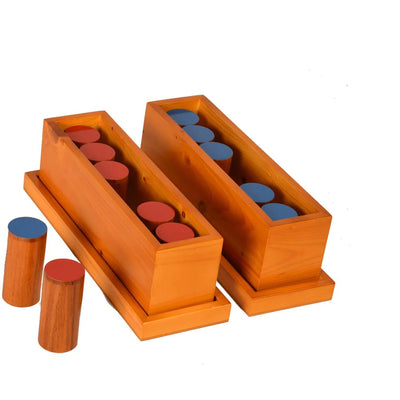
Montessori toys are designed to isolate specific qualities, allowing children to focus on one sensory attribute at a time, such as texture, weight, or sound. This focused interaction enhances sensory discrimination and refines a child's perception of their environment.
When should I introduce sensory toys to my baby?
Sensory toys can be introduced from birth, starting with simple visual stimuli like high-contrast mobiles and gradually moving to tactile items. Early exposure supports rapid neural development and helps babies begin to understand their senses.
Are there any specific Montessori materials for fine motor skill development?
Yes, many Montessori materials are excellent for fine motor skills. Examples include knobbed cylinders, dressing frames, transferring activities using tongs or spoons, and bead stringing, all of which enhance hand-eye coordination and dexterity crucial for writing.
How can I incorporate sensory play into a busy Indian household?
Sensory play can be integrated simply using everyday items like spices for smell, different fabrics for touch, or water play with kitchen utensils. In joint families, grandparents often have traditional games or natural materials that offer rich sensory experiences.