Educational Toys: Choosing for Your Child's Sensory Profile
Selecting the right educational toys for your child’s unique sensory profile (0-5 years) is crucial for fostering optimal development and a love for learning. By understanding whether your child is a sensory seeker or avoider, Indian parents can choose toys that provide appropriate stimulation, supporting their child's natural growth and preventing overwhelm or under-stimulation. This personalized approach ensures play is both engaging and developmental, creating a harmonious learning environment at home.
What is a Child's Sensory Profile?
A child's sensory profile describes their unique way of processing and responding to sensory information from their environment. This matters because it directly impacts how a child interacts with toys and learns, influencing their engagement and development. Indian parents can observe their child's reactions to different textures, sounds, and movements to understand their profile.
In a country like India, where children grow up amidst vibrant festivals, bustling markets, and often in close-knit joint families, their sensory experiences are rich and diverse from birth. However, each child filters these experiences uniquely. Child development experts agree that recognizing a child's individual sensory needs allows us to offer them the most effective tools for learning and growth, rather than pushing them into a one-size-fits-all approach that might hold them back, as recent discussions in The Times of India highlight about academic pressure.
Understanding Your Child's Unique Sensory Profile
Every child possesses a distinct way of perceiving and reacting to the world through their senses, which forms their unique child's sensory profile. This profile is not about 'good' or 'bad,' but rather about understanding how your little one processes touch, sound, sight, taste, smell, movement (vestibular), and body awareness (proprioception). Research consistently shows that respecting these individual differences is foundational to effective early childhood education.
Observation is key for parents. In many Indian homes, with grandparents and extended family often present, collective observations can provide invaluable insights. Does your child shy away from loud music during Diwali celebrations, or do they revel in the cacophony? Do they prefer soft, familiar textures, or are they drawn to exploring every rough surface on the ghar (home) or garden? These everyday interactions offer significant clues to their sensory preferences.
The Sensory Seeker: Toys for Active Explorers
A sensory seeker thrives on intense sensory input. These children often enjoy vigorous movement, loud noises, strong flavours, bright lights, and touching everything around them. They might be the little ones who love to climb, jump, spin, and get messy, constantly seeking new sensations to feel regulated and engaged.
For these energetic explorers, provide sensory seeker toys that offer rich, varied stimulation. Think about activities that involve deep pressure, movement, and hands-on exploration. Montessori materials like practical life pouring exercises, water play, or large building blocks encourage active engagement. Activity kits focused on creative arts, like sculpting with clay or finger painting, are also excellent choices for satisfying their need for tactile input and fine motor skill development. You can explore a wide range of engaging activityKits tailored for active learners.
The Sensory Avoider: Gentle Play for Sensitive Souls
In contrast, a sensory avoider can become overwhelmed by too much sensory input and may withdraw from stimulating environments. These children might dislike bright lights, loud noises, certain textures of clothes, or crowded places. They often prefer quiet, predictable play spaces and activities that offer a sense of control and calm.
For sensitive souls, sensory avoider toys should be calming, predictable, and offer gentle input. Montessori items like smooth wooden puzzles, sorting activities with distinct shapes, or focused fine motor work like threading beads can be incredibly soothing. Soft textiles, natural materials, and quiet open-ended play provide a safe space for exploration without overwhelming their senses. The goal is to offer just enough stimulation to engage, but not so much as to cause discomfort, creating an inviting environment akin to the 'Umang Vatika' approach for children with disabilities.
Montessori Sensory Toys for Balanced Development
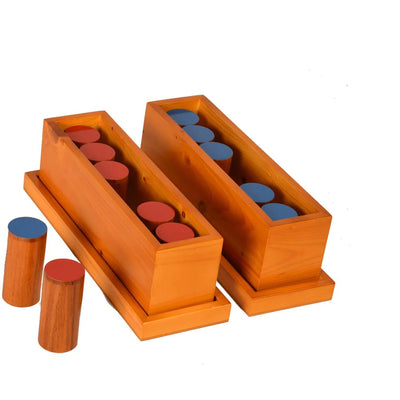
Maria Montessori's philosophy inherently understands the power of sensory exploration, making Montessori sensory toys ideal for supporting diverse sensory profiles. Her materials are designed to isolate specific qualities – such as size, shape, colour, or texture – allowing children to focus intensely on one sensory experience at a time. This controlled environment is beneficial for all children, offering both stimulation for seekers and a manageable input for avoiders.
From the precise grading of the Pink Tower, engaging visual and stereognostic senses, to the tactile exploration of Sandpaper Letters, each material is crafted to develop concentration and discrimination. Studies indicate that engagement with such thoughtfully designed materials significantly enhances neural pathways and cognitive development. SkilloToys offers a curated collection of Montessori method learning materials that cater to this individualized, hands-on learning approach.
Choosing Educational Toys 0-5 Years: Age-Appropriate & Profile-Matched
When selecting choosing toys 0-5 years, combining age-appropriateness with your child's sensory profile creates the most effective learning environment. For infants (0-12 months), soft rattles, textured balls, and mobiles cater to early sensory exploration. Toddlers (12-36 months) benefit from stacking toys, shape sorters, and push-pull toys that encourage movement and problem-solving, aligning with their growing physical independence.
Preschoolers (3-5 years) thrive with more complex puzzles, art supplies, and role-playing props that foster creativity and social skills. For a sensory seeker, this might mean robust construction sets or a mini climbing frame in the garden. For a sensory avoider, a quiet corner with detailed sorting games or soft sensory bottles would be perfect. This focus on individualized sensory play ensures that learning is never forced, allowing children to develop at their own unique pace and reducing the pressure often seen in early childhood education.
Ultimately, the best educational toys are those that resonate with your child, inviting them into a world of curious exploration and joyful learning. By understanding their unique sensory profile, parents in India can create nurturing spaces, whether in a bustling joint family or a quieter nuclear home, where every child feels seen, supported, and celebrated for who they are.
- Understanding a child's unique sensory profile is fundamental for effective early childhood development.
- Educational toys chosen based on sensory needs prevent overstimulation or under-stimulation in children aged 0-5 years.
- Sensory seeker children benefit from toys offering strong, varied input like active play and tactile exploration.
- Sensory avoider children thrive with calming, predictable toys that provide gentle stimulation and a sense of control.
- Montessori materials are inherently designed to support diverse sensory profiles through isolated sensory experiences.
- Observation by parents and family members is crucial for identifying and adapting to a child's evolving sensory preferences.
How do I identify my child's sensory profile?
You can identify your child's sensory profile by carefully observing their reactions to different textures, sounds, lights, and movements. Look for consistent patterns of seeking more stimulation or avoiding certain sensations, and consult a pediatrician or occupational therapist if you have concerns.
Are Montessori sensory toys suitable for all sensory profiles?
Yes, Montessori sensory toys are inherently designed to cater to a wide range of sensory needs by offering varying levels of challenge and stimulation. Their self-correcting nature allows children to engage at their own pace, making them adaptable for both sensory seekers and avoiders.
What if my child's sensory profile changes as they grow?
A child's sensory profile can evolve as they develop and gain new experiences, especially between 0-5 years. Continuous observation and adapting their play environment and educational toys accordingly are important for supporting their changing needs and fostering ongoing development.
Can choosing the wrong educational toys harm my child's development?
Choosing educational toys that are misaligned with a child's sensory profile can lead to frustration, disengagement, or overstimulation. This can hinder their natural learning process and may even cause them to develop a negative association with play or specific activities.
How can grandparents help with sensory play for children in a joint family?
Grandparents in a joint family can play a vital role by observing children's play patterns and providing supportive interactions tailored to their sensory profiles. They can offer gentle encouragement for sensory avoiders or engage actively with sensory seekers, enriching the child's learning experience within the home.