Educational Toys for Sensory Development (0-3 Years)
Choosing the right educational toys is paramount for fostering optimal sensory development in infants and toddlers (0-3 years), a critical period for brain growth. Research definitively shows that a rich, stimulating sensory environment built with purposeful Montessori materials lays a robust foundation for future cognitive and emotional skills.
Montessori sensory development focuses on refining a child's five senses through specifically designed materials, enabling them to explore, understand, and categorize their world. This approach is vital because early sensory experiences directly shape neural pathways, influencing everything from language to problem-solving. Indian parents can thoughtfully select age-appropriate Montessori toys for babies and toddlers to provide these essential experiences.
In India, where urban initiatives like the Urban95 Pune project are transforming cities to be more Infants, Toddlers, and Caregiver (ITC) friendly, the emphasis on quality early childhood environments is growing. Similarly, organizations like UBIKA Learning are expanding access to nature-inspired preschools. This national focus underscores the importance of intentional play and learning at home, especially in joint family setups where grandparents often play a pivotal role in guiding a child's early interactions.
Educational Toys for Infants: Sensory Play 0-12 Months
For newborns and infants up to 12 months, sensory development is primarily about exploring the world through sight, sound, and touch. Educational toys for infants at this stage should encourage observation, grasping, and cause-and-effect understanding. Maria Montessori herself emphasized that an infant’s environment is their first teacher, making thoughtfully chosen materials crucial.
High-contrast mobiles stimulate visual tracking, while soft rattles introduce sound differentiation and encourage reaching. Grasping rings and textured balls provide essential tactile experiences, strengthening tiny hand muscles. These simple, purposeful items, unlike overwhelming flashy toys, allow the child to focus and derive meaningful sensory input.
As your baby grows, introduce object permanence boxes, which help them understand that objects still exist even when unseen. Stacking rings or nesting cups also develop hand-eye coordination and spatial awareness. SkilloToys offers a range of carefully curated Montessori Method Learning Materials that cater specifically to these foundational sensory needs.
Montessori Toys for Babies: Enhancing Sensory Exploration 12-24 Months
Between 12 and 24 months, toddlers become more mobile and curious, making this an exciting phase for deeper sensory exploration. Montessori toys for babies in this age group should encourage fine motor skill development, problem-solving, and a more nuanced understanding of different textures, shapes, and sizes.
Simple wooden puzzles with large knobs, shape sorters, and graduated cylinders or discs are excellent for refining hand-eye coordination and teaching discrimination. Textured fabrics, water play (under supervision), and even simple musical instruments like shakers or drums stimulate auditory and tactile senses. These activities, often incorporated into family playtime, provide rich learning experiences.
Kids learning toys that promote practical life skills, such as pouring beans or scooping rice, also offer invaluable sensory input and foster independence. These aren't just toys; they are tools for developing concentration and coordination. Consider exploring SkilloToys' Activity Kits designed to support these developmental milestones.
Toddler Sensory Development: Educational Toys for 24-36 Months
From 24 to 36 months, toddler sensory development involves more complex manipulation, categorization, and the beginnings of abstract thought. At this stage, children refine their ability to differentiate subtle differences in weight, temperature, and sound, preparing them for pre-academic skills.
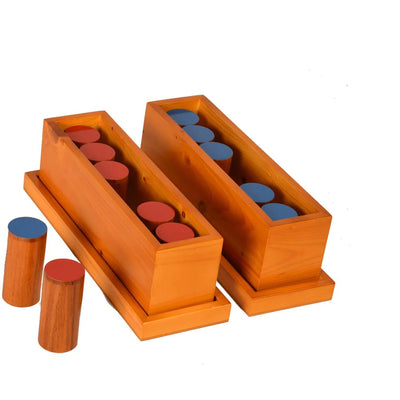
Materials like the Montessori Pink Tower or Broad Stair, which teach dimension and size discrimination, become highly engaging. Sound cylinders, fabric boxes, and touch tablets refine auditory and tactile senses further. Puzzles with increasing complexity and lacing beads enhance fine motor control and concentration, vital for future writing skills.
Encourage outdoor play, too; feeling different textures like mud, grass, and sand provides unparalleled sensory input. Studies by the American Academy of Pediatrics indicate that approximately 90% of a child's brain develops before age five, highlighting the profound importance of these diverse, early sensory inputs.
Why Montessori Educational Toys are Crucial for Sensory Growth
Montessori educational toys for toddlers and infants are not just playthings; they are scientifically designed tools that align with a child's natural developmental trajectory. They are often made from natural materials, offer a single focus, and allow for self-correction, fostering intrinsic motivation and independence. Neuroscientific research consistently demonstrates that multi-sensory experiences enhance learning retention and cognitive flexibility in young children, laying the groundwork for academic success and problem-solving abilities.
By providing a prepared environment with these purposeful materials, Indian parents empower their children to become active learners, exploring the world with all their senses. This hands-on, experiential learning nurtures curiosity and a lifelong love for discovery, far beyond rote memorization often associated with traditional schooling pressure. It is about building a solid foundation for holistic development, preparing them not just for school, but for life.
- Choosing appropriate educational toys is crucial for sensory development in infants and toddlers (0-3 years).
- Montessori materials are specifically designed to refine a child's senses through purposeful, hands-on exploration.
- Early sensory experiences directly shape neural pathways, impacting future cognitive and emotional skills.
- Infants (0-12 months) benefit from high-contrast visuals, rattles, and grasping toys for foundational sensory input.
- Toddlers (12-36 months) advance with materials like shape sorters, puzzles, and practical life activities that enhance fine motor skills and discrimination.
- Research confirms that a rich sensory environment during early childhood is vital for optimal brain development and learning retention.
What is sensory play?
Sensory play involves any activity that stimulates a child's senses of touch, smell, taste, sight, and hearing, as well as movement and balance. It is crucial for brain development, helping children process and understand the world around them in a foundational way.
How do Montessori toys aid sensory development?
Montessori toys are intentionally designed to isolate specific sensory qualities, such as texture, shape, or sound, allowing children to focus on one attribute at a time. This targeted approach enhances discrimination, concentration, and fine motor skills, fostering independent discovery.
At what age should I introduce sensory toys?
Sensory exploration begins from birth, and age-appropriate sensory toys can be introduced immediately. For newborns, focus on high-contrast visuals and gentle sounds, gradually progressing to objects that encourage grasping, mouthing, and more complex interaction as they grow.
Are screen time and sensory development related?
Excessive screen time can hinder holistic sensory development as it offers passive, two-dimensional experiences, unlike the active, multi-sensory engagement of physical toys. Experts recommend minimizing screen exposure for children under two years and ensuring balanced, hands-on play.
How can I create a sensory-rich environment at home for my child?
Creating a sensory-rich environment involves providing varied textures, colors, sounds, and opportunities for movement and exploration. Incorporate natural materials, designate a 'yes' space for safe exploration, and engage in simple activities like cooking or gardening together, celebrating everyday learning.