Educational Toys for Sensory Development (0-5 Years)
Choosing the right educational toys is pivotal for nurturing optimal sensory development in children aged 0-5 years, a critical period for brain growth. Research shows that engaging children with purpose-built Montessori materials significantly enhances their ability to process sensory information, laying a robust foundation for future learning. This guide helps Indian parents confidently select and implement these vital tools in their homes.
Sensory development is the process by which a child’s nervous system receives, processes, and responds to sensory information from their environment. This matters because it directly impacts their motor skills, cognitive function, and emotional regulation. Indian parents can actively support this by thoughtfully curating their child's play environment with stimulating, age-appropriate educational toys.
Understanding Sensory Development Stages (0-5 Years)
Child development experts agree that sensory experiences are the building blocks of early learning. From birth, children actively explore their world through their senses – touch, sight, sound, taste, smell, and proprioception (body awareness) and vestibular sense (balance). Each stage brings new developmental milestones and unique sensory needs.
In the first year, babies are absorbing everything; their sensory systems are rapidly forming connections. Toddlers, from 1-3 years, refine these connections through active exploration and movement. Preschoolers, aged 3-5, begin to integrate complex sensory information for problem-solving and higher-level thinking, preparing them for the structured learning environments of schools like Kendriya Vidyalaya.
Choosing Montessori Educational Toys for Babies (0-12 Months)
For newborns and infants, sensory development toys for babies focus on fundamental stimulation that is not overwhelming. Research indicates that high-contrast visual mobiles, such as the Munari or Octahedron, capture their developing vision and encourage focus. These provide visual tracking practice without overstimulation, unlike flashy electronic toys.
As babies grow, introduce materials that engage touch and sound. Soft rattles made from natural materials, textured balls, and discovery baskets filled with safe, everyday objects (like wooden spoons or silk scarves) allow them to explore different textures and sounds. This mimics the safe, engaging environment of an 'Umang Vatika', where children can freely explore and develop. Explore our Montessori Method Learning Materials & Toys for foundational pieces.
Selecting Montessori Educational Toys for Toddlers (1-3 Years)
Toddlers are naturally curious and constantly on the move, making this a prime time for sensory development toys for toddlers that encourage active exploration. Studies indicate that fine motor skills and hand-eye coordination develop rapidly during these years. Stacking blocks, shape sorters, and threading beads are excellent for refining grip and precision.
Practical life activities, a cornerstone of Montessori, also offer rich sensory experiences. Simple pouring exercises with water or grains, transferring activities with scoops and tongs, or even helping with household chores like wiping a table, engage multiple senses while fostering independence. These activities resonate well within Indian joint families, where little ones often observe and imitate elders. Discover engaging options in our Activity Kits.
Empowering Preschoolers with Montessori (3-5 Years)
As children approach preschool age, their cognitive abilities expand, and they begin to integrate sensory input for more complex learning. Best educational toys 0-5 for this age group include sensorial materials like the Pink Tower, Brown Stair, and Cylinder Blocks, which help refine visual discrimination of dimension. Sandpaper letters and numbers introduce tactile learning of pre-reading and pre-math concepts.
Montessori education at this stage fosters concentration, problem-solving, and a sense of order. Engaging with these materials helps children categorise and understand abstract concepts through concrete experiences. This systematic approach prepares them for formal schooling while allowing them to learn at their own pace, reducing the pressure often associated with early academics in India.
Creating a Sensory-Rich Montessori Environment at Home
The home environment plays a critical role in supporting sensory development, especially in Indian homes where space might be a consideration. Child development experts recommend creating a 'prepared environment' where toys are accessible and organised, inviting independent exploration. This doesn't require a large dedicated room; a small corner can become a child's personal learning space.
Rotate Montessori educational toys periodically to maintain interest and prevent overstimulation. Encourage open-ended play, allowing children to interact with materials in their own way. Grandparents can also be wonderful facilitators, sharing traditional stories and engaging in simple sensory activities like sorting pulses or kneading dough during festival preparations, enriching their grandchild's sensory world culturally and developmentally.
- Choosing open-ended Montessori educational toys significantly enhances early childhood sensory development.
- Sensory play from 0-5 years builds crucial neural connections for cognitive and motor skills.
- Age-appropriate Montessori materials refine specific senses, such as visual discrimination and tactile exploration.
- Practical life activities offer rich, multi-sensory experiences and foster independence in toddlers.
- Creating a 'prepared environment' at home, even in small spaces, supports child-led sensory exploration.
- Natural materials in toys provide authentic sensory feedback superior to electronic alternatives.
What is the best way to choose educational toys for sensory development?
The best way is to select open-ended, natural Montessori educational toys that engage multiple senses, are age-appropriate, and allow for child-led exploration. Prioritise toys that encourage discovery rather than passive entertainment, fostering independence and cognitive growth.
How do Montessori educational toys support sensory development?
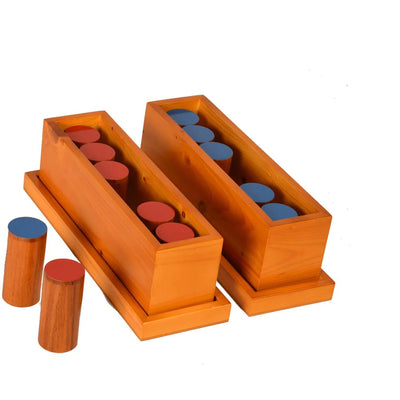
Montessori educational toys are specifically designed to isolate and refine sensory experiences through materials like the Pink Tower (visual discrimination), Sandpaper Letters (tactile), and Bells (auditory). This focused engagement helps children build strong neurological pathways and develop a keen sense of observation.
At what age should I introduce sensory development toys to my baby?
Sensory development begins right from birth. You can introduce simple, high-contrast visual mobiles, soft textured rattles, and gentle auditory toys to newborns. As they grow, incorporate taste-safe teethers and more complex tactile experiences, supporting their natural exploratory instincts.
Are screen time alternatives better for sensory development than educational toys?
Yes, screen time alternatives, especially hands-on engagement with Montessori educational toys, are significantly better for sensory development. Real-world interaction through touch, manipulation, and exploration builds crucial neural connections that screens cannot replicate, fostering deeper learning and creativity.
How can I create a sensory-rich environment at home with Montessori toys?
Create a designated, uncluttered play space with low shelves displaying a limited selection of Montessori educational toys. Rotate toys regularly to maintain interest and ensure they are accessible for child-led exploration, inviting children to engage with materials that stimulate their senses purposefully.