Educational Toys: Foundation for Sensory Development 0-5
Educational toys are fundamentally important for sensory development in children aged 0-5 years because they provide structured, stimulating experiences crucial for brain growth and skill acquisition. Research shows that engaging with purposeful play materials directly supports the wiring of neural pathways, enabling young children to better understand and interact with their world. Indian parents can confidently choose these toys to lay a strong foundation for their child's holistic development, fostering curiosity and independent learning.
Sensory development is the process by which a child learns to use and understand information from their five senses: touch, sight, sound, smell, and taste, along with proprioception and vestibular sense. This development is critical for cognitive growth, motor skills, language acquisition, and social-emotional regulation, allowing children to make sense of their environment.
What is Sensory Development and Why Does It Matter for Indian Children?
Sensory development is the bedrock of how a child perceives and interacts with their surroundings. From the gentle touch of a grandmother's hand to the vibrant colours of a Diwali rangoli, every experience contributes to building a child's sensory map. For young children in India, this development is especially crucial, as they navigate diverse environments, from bustling family gatherings to quiet moments of play at home.
While public initiatives, like the new sensory garden for neurodivergent children at Safdarjung Hospital in Delhi, highlight the growing recognition of inclusive play, many Indian families still rely heavily on home environments for their children's foundational sensory experiences. Educational toys become indispensable tools here, offering consistent and safe opportunities for exploration, particularly when accessible public spaces for diverse play might be limited. Child development experts agree that a rich sensory environment during the early years is a powerful predictor of future learning capabilities and adaptability.
Educational Toys: The Building Blocks of Sensory Exploration
The importance of educational toys for young children cannot be overstated. These aren't just mere distractions; they are carefully designed tools that encourage active engagement, helping children make sense of the world through their senses. Unlike passive entertainment, educational toys invite children to touch, manipulate, observe, and experiment, fostering essential neural connections.
Studies indicate that children who engage with a variety of sensory development toys during their formative years exhibit better problem-solving skills, enhanced concentration, and improved fine motor coordination. They learn cause and effect, develop spatial awareness, and begin to understand abstract concepts, all through hands-on, self-directed play. These foundational experiences are vital for all children, preparing them for the complexities of academic learning and social interactions as they grow.
How Educational Toys Stimulate Each Sense
Thoughtfully selected educational toys target specific sensory inputs, providing a comprehensive developmental experience:
- Touch (Tactile): Toys with varied textures like wooden blocks, soft fabrics, or rough sandpaper letters encourage tactile exploration. These help children differentiate textures, develop fine motor skills, and understand object properties.
- Sight (Visual): High-contrast cards for infants, colourful stacking rings, and sorting games stimulate visual tracking, colour recognition, and depth perception. They train the eyes and brain to interpret visual information accurately.
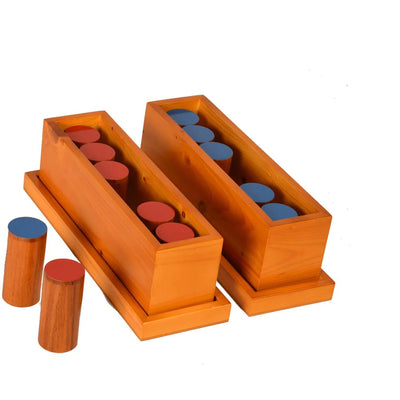
- Sound (Auditory): Shakers, simple musical instruments, and rattles introduce children to different pitches, rhythms, and volumes. This aids in auditory discrimination, language development, and sound localization.
- Smell & Taste (Olfactory & Gustatory): While less common in commercial toys due to safety, safe discovery sets focusing on natural elements (e.g., fragrant spices, edible playdough) can engage these senses under supervision, connecting children to the natural world.
- Proprioception & Vestibular (Movement & Balance): Push-pull toys, tunnels, and climbing structures enhance body awareness, balance, and coordination. These large motor activities are crucial for gross motor development and a child's sense of self in space. Consider exploring diverse activity kits that encourage full-body engagement.
Montessori Educational Toys: A Pathway to Integrated Sensory Learning
The Montessori philosophy, pioneered by Dr. Maria Montessori, places sensory development at the core of early childhood education. Montessori educational toys are renowned for their intentional design, promoting independent exploration and refining specific senses. These materials are not just toys; they are 'works' designed to facilitate a child's natural drive for self-learning.
For instance, the Pink Tower helps children discriminate dimensions visually, while the Cylinder Blocks refine their perception of size and spatial relationships. Sandpaper letters engage both visual and tactile senses, preparing children for reading and writing. These materials offer benefits that extend beyond individual senses, fostering concentration, problem-solving, and a deep understanding of concepts. By providing children with these precise and self-correcting materials, SkilloToys.com offers a robust collection of Montessori educational toys that support a child's integrated sensory development, empowering them to learn at their own pace.
Beyond Play: Long-Term Benefits for Your Child's Future
Investing in quality educational toys for sensory play during the 0-5 age range yields significant long-term benefits. These early experiences directly contribute to a child's cognitive flexibility, emotional resilience, and social competence. Children who have strong sensory foundations are better equipped to handle new challenges, adapt to unfamiliar situations, and engage effectively in learning environments.
For Indian parents, navigating the pressures of school admissions and academic success, understanding the foundational role of sensory play is paramount. These early years, filled with purposeful play, lay the groundwork for a child's ability to focus, follow instructions, and think critically – skills that are invaluable throughout their educational journey and beyond. Providing a rich sensory environment at home, whether through structured play or everyday exploration, is one of the most impactful ways to support a child's readiness for the world.
- Educational toys are crucial for sensory development in 0-5 year olds, building essential neural pathways.
- Research confirms purposeful play with educational toys enhances brain growth and skill acquisition.
- Sensory development impacts cognitive growth, motor skills, language, and emotional regulation.
- Montessori educational toys are specifically designed to refine individual senses and promote self-directed learning.
- A rich sensory environment through educational toys prepares children for academic success and life skills.
- Early sensory experiences are vital for developing problem-solving, concentration, and fine motor skills.
At what age should children start sensory play?
Children begin sensory exploration from birth, making it a continuous process. Even newborns benefit from simple sensory input like gentle touch or contrasting visuals, making age-appropriate educational toys suitable from the earliest months.
How do Montessori toys specifically aid sensory development?
Montessori toys are designed with specific learning objectives, isolating qualities like size, shape, or texture. This focused approach helps children concentrate on one sensory input at a time, leading to deeper understanding and refinement of their senses.
Can sensory play help children with developmental delays?
Yes, sensory play is highly beneficial for children with developmental delays, including those with intellectual disabilities or neurodivergent conditions. It provides structured, accessible avenues for exploration and skill-building, often recommended by therapists for its therapeutic benefits.
Are 'educational toys' different from regular toys?
Educational toys are distinct because they are intentionally designed to stimulate specific developmental areas, including sensory, cognitive, and motor skills, rather than solely providing entertainment. They often encourage problem-solving and self-directed learning, offering a clear purpose beyond mere amusement.
How can I incorporate sensory play into a busy Indian household?
Integrating sensory play is simpler than it seems; use everyday items like rice or pulses for tactile bins, or dedicate a small, safe corner for educational toys. Grandparents and family members can also join in, turning play into a communal, enriching experience.