Educational Toys: Stimulating All 8 Senses (0-5 Years)
Educational toys actively engage children's developing senses through varied textures, sounds, sights, and movements, providing structured opportunities for sensory input that is crucial for cognitive, emotional, and physical growth from birth to five years. Research shows that rich sensory experiences during these formative years build essential neural pathways, laying a strong foundation for future learning and well-being. This comprehensive guide details how specific types of play materials stimulate each of the eight senses, empowering Indian parents to nurture their child's holistic development.
In the bustling Indian home, where children often learn amidst a vibrant array of sights, sounds, and family interactions, understanding sensory development is key. Parents in Bengaluru and across India are increasingly seeking ways to give their children a strong start, not just academically, but holistically. SkilloToys.com offers a curated selection of Montessori educational toys designed to meet these diverse sensory needs.
What is Multi-Sensory Play?
Multi-sensory play involves activities that intentionally engage multiple senses simultaneously, creating a richer and more integrated learning experience. This matters because it strengthens neural connections, enhances memory, and improves a child's ability to process and understand the world around them. Indian parents can easily integrate multi-sensory experiences using readily available educational toys and everyday household items, turning playtime into powerful learning opportunities.
Visual Sensory Development: Engaging Sight with Educational Toys
Visual sensory development is foundational, allowing children to perceive and interpret their surroundings. Educational toys that feature high contrast colours, varied shapes, and intricate patterns effectively stimulate a child's visual pathways from infancy. Studies indicate that early exposure to diverse visual stimuli enhances object recognition and spatial awareness.
For babies and toddlers, engaging visual sensory toys include black and white mobiles, colourful stacking rings, and chunky blocks. Montessori materials like the Red Rods or Colour Tablets (especially for 18-36 months) are meticulously designed to refine visual discrimination, teaching children to differentiate nuances in size, length, and hue. These experiences are vital for developing strong observational skills, a crucial aspect of early learning.
Auditory Sensory Development: The Power of Sound in Play
Auditory sensory development involves a child's ability to hear, understand, and interpret sounds, which is critical for language acquisition and communication. Educational toys that produce distinct sounds, rhythms, and pitches encourage active listening and sound differentiation. Child development experts agree that varied auditory input helps children process sound information more effectively.
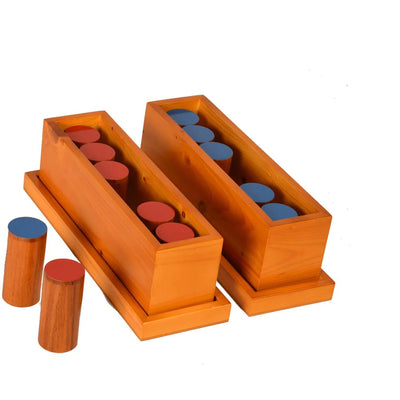
Simple rattles, musical instruments like xylophones, and sound boxes are excellent auditory sensory toys for 0-5 year olds. The Montessori Sound Cylinders, for instance, challenge children to match identical sounds, honing their auditory memory and discrimination. Incorporating rhymes and traditional Indian lullabies alongside these toys creates a rich auditory environment that supports linguistic and cognitive growth.
Tactile Sensory Development: Exploring Through Touch and Texture
Tactile sensory development is central to how children explore and understand the physical world around them, involving touch, temperature, pressure, and pain perception. Educational toys offering a variety of textures are indispensable for developing fine motor skills and tactile discrimination. Research shows that diverse tactile experiences contribute to enhanced brain development.
Textured balls, fabric books, sensory bins filled with rice or pulses, and play-dough are fantastic tactile sensory toys. Montessori materials such as Sandpaper Letters and Numbers or Texture Tablets (for ages 2.5-5 years) allow children to directly associate textures with concepts, preparing them for writing and fostering a deep understanding through touch. These activities also provide calming sensory input, crucial for self-regulation.
Proprioceptive Development: Understanding Body Awareness
Proprioception is the sense that allows children to understand their body's position, movement, and effort without looking, providing vital input about muscles and joints. Educational toys and activities that involve pushing, pulling, lifting, and carrying support this essential sense, fostering body awareness and coordination. Strong proprioceptive input helps children feel grounded and secure in their bodies.
Heavy work activities, such as pushing a small trolley, climbing frames, or carrying buckets of water in a supervised setting, are excellent for proprioceptive toys. In a Montessori environment, practical life activities like carrying trays, scrubbing tables, or gardening provide natural proprioceptive input. These experiences are particularly valuable for building gross motor skills and spatial reasoning, important for navigating the bustling Indian household or school playground.
Vestibular Development: Balance and Spatial Orientation
The vestibular system, located in the inner ear, is responsible for balance, spatial orientation, and coordinating eye and head movements. Educational toys that encourage movement, spinning, rocking, and swinging are vital for developing a strong vestibular sense. A well-developed vestibular system impacts a child's coordination, focus, and sense of security.
Swings, rocking horses, balance beams, and ride-on toys are excellent vestibular toys for children aged 0-5 years. Even simple activities like spinning in circles (under supervision) or being gently rocked help integrate this sense. These experiences improve balance, enhance spatial awareness, and contribute to better attention and organizational skills, which are beneficial for children preparing for school.
Oral Sensory Development: Safe Exploration with the Mouth
Oral sensory development involves the use of the mouth for exploration, feeding, and speech, helping children understand textures, tastes, and their environment. Providing safe, textured oral sensory toys allows infants and toddlers to explore their world appropriately, which is crucial for self-regulation and language development. It’s also vital for developing jaw strength and preparing for varied food textures.
Teethers with different shapes and textures, safe chew toys, and activities like blowing bubbles or sipping through straws are effective. While food exploration is critical, specific oral sensory toys can provide the necessary input for children who seek oral stimulation, helping them to focus and self-soothe. Always ensure that any oral toy is age-appropriate, non-toxic, and free from choking hazards.
Olfactory Development: The Sense of Smell and Memory
The olfactory sense, or sense of smell, is closely linked to memory and emotion, playing a significant role in how children perceive their environment. Educational toys and activities that introduce a variety of natural scents help children develop their ability to identify and differentiate smells. This sense often triggers strong recollections and can be incredibly calming or stimulating.
Introducing natural scents through play, such as smelling flowers in the garden, playing with scented play-dough, or exploring safe, diluted spices (like cardamom or cinnamon) in a supervised activity kit, can be highly beneficial. Montessori's smelling bottles are designed for this very purpose, helping children develop their sense of smell and vocabulary. Engaging this often-overlooked sense can enhance a child's connection to their surroundings and cultural experiences, like the aromas of festive cooking.
Interoception Development: Connecting with Inner Body Signals
Interoception is the eighth sense, referring to a child's ability to understand and interpret internal body signals like hunger, thirst, pain, and emotions. Developing this sense is crucial for emotional regulation, self-awareness, and overall well-being. Educational toys and mindful activities can help children tune into these internal cues.
While not traditionally toy-based, activities like quiet time with emotion cards, simple yoga poses, or guided breathing exercises can be considered interoception toys for young children. Encouraging children to verbalise how their body feels after energetic play or before a meal helps them build this vital connection. For Indian parents, storytelling that incorporates feelings and bodily sensations can also be a wonderful way to foster interoceptive awareness.
Integrating Sensory Play into Indian Daily Life
Incorporating multi-sensory experiences doesn't always require elaborate setups; it can be seamlessly woven into the rhythm of Indian daily life. Grandparents, with their wealth of traditional knowledge, often naturally engage children's senses through storytelling, cooking activities, or outdoor play. Simple tasks like kneading dough for rotis, arranging puja flowers, or playing traditional games like Gilli-Danda (for older toddlers) are rich in sensory input.
SkilloToys.com offers a range of activity kits that bring structured sensory play right into your home, perfect for busy parents navigating school pressure and joint family dynamics. Remember, the goal is not perfection, but consistent, joyful engagement that supports your child's innate curiosity and development.
Empowering children through multi-sensory play is one of the most impactful gifts Indian parents can offer for their holistic development. By consciously selecting and using educational toys that stimulate all eight senses, you are not just providing entertainment, but laying a robust foundation for their cognitive, emotional, and physical growth. Embrace this journey with your child, and watch them flourish in a world full of sensory wonders.
- Educational toys are crucial for stimulating all eight senses, supporting holistic child development from 0-5 years.
- Research confirms that rich sensory experiences during early childhood build essential neural pathways for future learning.
- Multi-sensory play enhances cognitive function, memory, and a child's ability to process environmental information.
- Montessori sensory toys are specifically designed to isolate and refine individual senses, fostering independence and focused learning.
- The eight senses include sight, hearing, touch, taste, smell, proprioception, vestibular, and interoception.
- Integrating diverse sensory activities through educational toys and daily tasks strengthens a child's foundational skills for school and life.
What are the 8 senses in child development?
Beyond the traditional five, children develop through proprioception (body awareness), vestibular (balance and movement), and interoception (internal body signals). Understanding all eight senses allows for a comprehensive approach to sensory integration and development in young children.
How do educational toys support visual development?
Educational toys support visual development by offering varied colours, shapes, patterns, and contrasts, stimulating ocular muscles and visual discrimination. Montessori materials like colour tablets and geometric solids are specifically designed to refine a child's visual perception and understanding.
At what age should I introduce multi-sensory educational toys?
Multi-sensory educational toys can be introduced from birth, starting with simple items like soft rattles and textured cloths. As children grow, the complexity of toys can increase to match their developmental stages, ensuring continuous sensory engagement and learning.
Are Montessori sensory toys different from regular educational toys?
Montessori sensory toys are specifically designed to isolate one sense at a time, allowing for focused development and self-correction, fostering independence. While many educational toys offer sensory input, Montessori materials like the Pink Tower or Sound Cylinders follow a precise pedagogical approach for targeted learning.
How can Indian parents incorporate sensory play daily?
Indian parents can incorporate sensory play daily by using educational toys and everyday items like spices for scent exploration, different fabric textures, or traditional activities involving dough and water. Grandparents can also contribute by sharing traditional games and tasks that naturally engage multiple senses.