Evolving Preschool Education India: Montessori Sensory Play Beyond ABCs
Evolving preschool education in India is definitively shifting focus from rote memorisation to holistic development, making Montessori sensory play crucial for children aged 0-5 years. This modern approach moves beyond traditional ABCs and 123s, enabling young learners to construct knowledge through direct, multi-sensory experiences, fostering critical thinking, and essential socio-emotional skills vital for a child's overall well-being and future success.
As contemporary discussions highlight how 'preschool education is evolving beyond ABCs and 123s', it’s clear that early learning is no longer just about reciting alphabets or counting numbers. Today’s parents, often navigating the pressures of school admissions and a competitive future for their children, are seeking truly foundational learning. Montessori sensory play offers a robust framework for this transformation, ensuring a comprehensive developmental journey for every child.
What is Montessori Sensory Education and Why Does it Matter Now?
Montessori sensory education involves hands-on activities meticulously designed to refine a child's five senses, building a profound foundational understanding of their world. This approach matters intensely because it directly supports cognitive growth, problem-solving abilities, and burgeoning independence. Indian parents can seamlessly integrate this at home with simple, engaging materials, encouraging self-directed exploration and deeper learning.
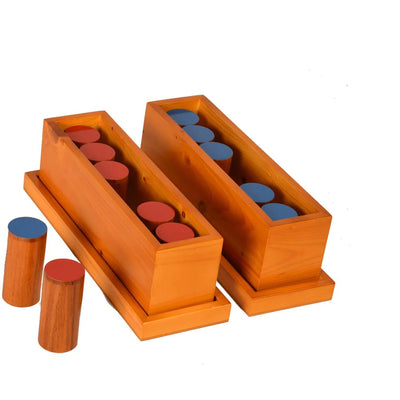
Unlike traditional methods that often rely on repetition and passive instruction, Montessori's approach, championed by Dr. Maria Montessori, focuses on active engagement. For instance, children using Montessori method learning materials and toys like the Pink Tower learn about dimension and sequence not by being told, but by carefully stacking graduated cubes. This direct experience builds neurological pathways for understanding complex concepts far more effectively than abstract lessons.
Modern Preschool Curriculum: Building Stronger Foundations with Play
The shift towards a modern preschool curriculum in India signifies a recognition that play-based learning is paramount for robust development. As reported by MSN, 'When learning is play: How play-based education creates stronger foundations.' This approach moves away from rigid academic drills, embracing instead the child's natural curiosity and intrinsic motivation to learn.
Child development experts agree that unstructured, self-directed play significantly enhances creativity, problem-solving, and social skills in children aged 3-5 years. A study published in the journal 'Pediatrics' indicates that play-based learning environments foster superior executive function skills compared to highly didactic settings. This means children develop better self-regulation, working memory, and cognitive flexibility, preparing them for higher-order thinking rather than just memorisation.
Fostering Holistic Early Childhood Development Through Senses
Holistic early childhood development addresses every facet of a child's growth—cognitive, emotional, social, physical, and creative. Montessori sensory education is inherently designed to nurture all these areas simultaneously. For example, manipulating activityKits involving textures or sorting objects refines fine motor skills (physical), encourages classification (cognitive), and promotes concentration (emotional).
In the Indian context, where grandparents often value academic rigour, it's crucial to understand that a holistic approach ensures a well-rounded individual, not just a good student. UNICEF's efforts in 'Nurturing Beginnings: Frontline Workers Promote Early Childhood Development in Bihar' underscore the universal importance of comprehensive early stimulation. Sensory materials like sandpaper letters not only introduce phonics but also engage tactile senses, making learning multi-dimensional and memorable for children across diverse backgrounds.
Integrating Montessori Sensory Education at Home: Bengaluru Parents' Guide
Parents in Bengaluru and across India can actively support this evolving educational philosophy by creating a sensory-rich environment at home. Simple everyday activities, from kneading dough with grandmothers during festival preparations to sorting spices in the kitchen, offer valuable sensory experiences. Providing a safe, dedicated space for exploration, much like the ‘Umang Vatika’ at Safdarjung Hospital lets children play freely and safely, empowers children to learn at their own pace.
Consider setting up a 'discovery basket' for toddlers (18-24 months) filled with safe, varied textures like silk, wooden blocks, and metal spoons. For preschoolers (3-5 years), introduce practical life activities such as pouring water, buttoning clothes, or polishing shoes. These activities, often found in Montessori environments, build concentration, coordination, and a sense of responsibility. SkilloToys offers a wide range of age-appropriate Montessori method learning materials and toys that support this home-based learning journey, making it easier for parents to provide quality educational experiences.
Recognising Quality in Preschool Trends India
As you evaluate preschool options for your child, look for programmes that clearly align with modern preschool curriculum principles. Prioritise environments that encourage child-led exploration, offer a rich array of sensory experiences, and have educators trained in observation and guidance rather than direct instruction. An ideal setting fosters independence, respects individual learning paces, and values the process of discovery over mere outcomes.
Ask about the daily schedule – is there ample time for free play, outdoor exploration, and hands-on activities? Does the environment feel calm and purposeful? These indicators point towards a preschool truly committed to holistic development, preparing children for a future that demands adaptability, critical thinking, and emotional intelligence, far beyond the confines of traditional rote learning.
The landscape of early childhood education in India is transforming, placing a premium on comprehensive, experience-based learning. Montessori sensory play is not just a trend; it is a proven methodology that perfectly aligns with the needs of our children today, fostering their inherent potential for discovery and growth. By embracing this approach, both in preschools and at home, we empower the next generation to thrive as confident, capable, and well-rounded individuals.
- Evolving preschool education in India prioritises holistic development over rote learning for children aged 0-5 years.
- Montessori sensory play is a definitive modern approach that builds critical thinking and socio-emotional skills through direct experience.
- Research indicates play-based learning environments foster superior executive function skills in young children.
- Integrating Montessori principles at home, with activities like practical life exercises, significantly supports child development.
- Modern preschool curricula in India should focus on child-led exploration and sensory-rich environments for optimal growth.
- Parents in Bengaluru should look for preschools that encourage independence and provide hands-on, purposeful activities.
Why is Montessori sensory play crucial for early development?
Montessori sensory play engages all five senses, helping children construct knowledge, refine motor skills, and develop critical thinking abilities essential for future learning, far beyond basic rote memorisation.
How do modern preschools in India approach learning beyond ABCs and 123s?
Modern preschools are shifting towards play-based, experiential learning models that prioritise holistic development over traditional rote memorisation. This includes fostering social-emotional skills, problem-solving, and creativity through hands-on activities.
What is holistic early childhood development?
Holistic early childhood development encompasses a child's cognitive, emotional, social, physical, and creative growth. It focuses on nurturing all aspects of a child's being, ensuring they are well-rounded and prepared for life's challenges, not just academic success.
How can parents in India incorporate Montessori sensory play at home?
Parents can create a rich sensory environment at home using everyday items like spices, fabrics, or water, alongside purposeful materials. Providing opportunities for child-led exploration and hands-on activities significantly supports their development.
What should Indian parents look for in an evolving preschool curriculum?
Parents should seek preschools that offer a play-based curriculum, focus on sensory exploration, encourage child-led learning, and demonstrate a commitment to social-emotional development. Look for environments that foster curiosity and independence.