Play-Based Learning Sensory Development for 0-5 Year Olds
Play-based learning, deeply enriched by sensory development, builds robust early foundations for children aged 0-5 years. Research shows that engaging a child's senses through purposeful play is not merely entertainment but a critical pedagogical approach that shapes their cognitive, social, and emotional growth from the earliest stages.
Play-based learning is an educational approach where children learn through play. This matters immensely because it capitalizes on a child's natural curiosity and innate drive to explore, making learning joyful and deeply ingrained. Indian parents can actively foster this by providing rich sensory environments at home.
The Science Behind Play-Based Learning Sensory Development
Child development experts agree that the first five years are a period of rapid brain development, with trillions of neural connections forming. Play-based learning, especially when infused with diverse sensory experiences, directly stimulates these connections, enhancing brain architecture. For instance, engaging with varied textures or sounds strengthens pathways related to touch and hearing, crucial for later academic and life skills.
Studies indicate that children who regularly participate in rich sensory play exhibit better problem-solving skills and higher creativity. This approach aligns perfectly with insights like 'When learning is play: How play-based education creates stronger foundations,' a concept gaining traction globally and proving vital for our little learners in India.
Building Strong Foundations: Benefits of Play-Based Learning 0-5
Focusing on sensory play early foundations is paramount for holistic child development. For infants and toddlers aged 0-5, every sensory experience—touching a soft cloth, listening to a rustling leaf, tasting a new fruit—contributes to their understanding of the world. This active exploration supports their cognitive abilities, fine and gross motor skills, and even language acquisition.
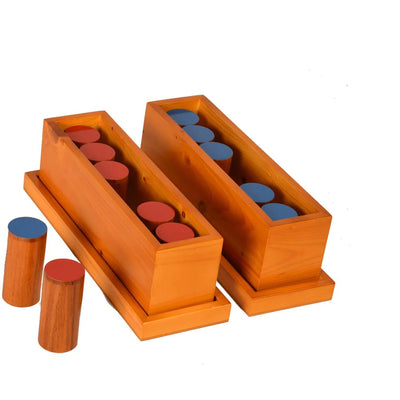
Montessori play-based learning, in particular, emphasizes hands-on, self-directed engagement with materials designed to stimulate the senses. For example, the Pink Tower helps children discern varying dimensions through touch and sight, building foundational mathematical concepts. Such experiences not only develop specific skills but also foster independence and concentration, preparing them for the structured environment of a traditional Indian school.
Beyond cognitive growth, the benefits of play-based learning 0-5 extend to crucial social-emotional development. Playing alongside siblings or cousins during festivals, or simply sharing a story with a grandparent, teaches empathy, negotiation, and cooperation. These interactions are the bedrock of strong family bonds and successful social integration, echoing the community focus seen in initiatives like UNICEF's efforts to promote early childhood development in Bihar.
SkilloToys.com offers a curated range of Montessori Method Learning Materials specifically designed to support these foundational stages of development. Each material encourages purposeful exploration, ensuring that learning through sensory play is both effective and enjoyable.
Practical Sensory Experiences for Indian Homes
Integrating learning through sensory play into daily routines in an Indian home is simpler than you might think. Many common household items offer fantastic sensory opportunities. Think about letting your toddler help in the kitchen, feeling the texture of atta (dough) or various spices, stimulating their touch and smell senses.
Water play in a bucket on the balcony, with various sized cups and spoons, can introduce concepts of volume and cause-and-effect. For older preschoolers, creating simple rangoli patterns with natural colours or flower petals engages visual, tactile, and even olfactory senses. These everyday moments, often shared with joint families, become powerful learning opportunities.
SkilloToys.com also provides innovative activityKits that are perfect for bringing structured sensory experiences into your home. These kits offer a convenient way to introduce new textures, sounds, and visual stimuli, making it easy for parents and grandparents to facilitate meaningful play without extensive preparation.
Integrating Play into Daily Routines for Busy Parents
For busy Indian parents navigating work, household chores, and social commitments, intentionally carving out time for play-based learning might seem daunting. However, it doesn't require elaborate setups. Simply observing your child's interests and providing opportunities to explore those naturally is key.
A walk in the park (bagicha) becomes a sensory exploration when you point out the chirping birds, the rough bark of a tree, or the soft grass. Bath time offers opportunities for water play and exploring different temperatures. Even listening to traditional lullabies (lori) or bhajans stimulates auditory development. These small, consistent efforts significantly contribute to a child's robust early development, making every moment a chance to learn.
Just as 'Umang Vatika' at Safdarjung Hospital creates safe play spaces for children with disabilities, every Indian home can become a safe, stimulating 'vatika' for sensory play. This mindful approach to daily activities supports healthy development, alleviating some of the pressure on young children as they grow.
- Play-based learning, powered by sensory experiences, is fundamental for children aged 0-5 years.
- The first five years are critical for brain development, with sensory play directly fostering neural connections.
- Montessori principles emphasize hands-on, self-directed sensory exploration for holistic growth.
- Everyday Indian household items and activities offer rich, accessible sensory learning opportunities.
- Integrating sensory play into daily routines supports cognitive, social, emotional, and motor skill development.
- Consistent engagement in play-based learning helps build strong foundations, preparing children for future academic success and life.
What is play-based learning for infants and toddlers?
Play-based learning for infants and toddlers involves children engaging in self-directed or guided play activities that naturally foster their cognitive, physical, social, and emotional development. It is an approach where learning happens organically through exploration and discovery.
How do sensory experiences help a child's brain development?
Sensory experiences are crucial for brain development as they stimulate neural pathways, strengthen connections, and improve the brain's ability to process information. Engaging multiple senses through play enhances memory, problem-solving skills, and overall cognitive function.
What are some easy sensory play ideas for Indian homes?
Simple sensory play ideas for Indian homes include playing with atta (dough) or various pulses, exploring water in a tub with cups and spoons, making rangoli with natural colours, or identifying spices by smell and touch. These activities use readily available materials to stimulate senses.
At what age should I introduce Montessori play-based learning?
Montessori play-based learning can be introduced from birth, adapting materials and activities to suit the child's developmental stage. Even newborns benefit from sensory rich environments, and structured Montessori activities become increasingly valuable from around 6 months onwards.
How does play-based learning prepare children for school in India?
Play-based learning prepares children for school in India by fostering essential pre-literacy, pre-numeracy, and social-emotional skills like problem-solving, concentration, cooperation, and self-regulation. These foundational abilities ensure a smoother transition and greater success in formal schooling.