Sensory Play at Home: Creating Enriching Spaces
Creating a robust environment for sensory play at home is an essential strategy for parents in India, particularly given the recent ETV Bharat report highlighting inadequate public sensory facilities for Divyang children. Child development experts agree that even when public resources are limited, parents can definitively foster crucial sensory development through accessible, engaging activities within their own living spaces, ensuring every child, including those with unique needs, thrives.
The increasing concern among Indian parents about their child's holistic development, sometimes amplified by reports of crumbling public infrastructure like the Odisha sensory park, underscores the urgency of home-based solutions. This guide empowers families to confidently build enriching, stimulating environments tailored to their child's unique needs, right in the comfort of their own home.
What is Sensory Play and Why is it Crucial?
Sensory play is any activity that stimulates a child's senses: touch, sight, sound, smell, and taste, as well as proprioception and the vestibular sense. This matters because it builds crucial neural pathways, supporting cognitive growth, language skills, and emotional regulation. Indian parents can easily integrate these activities using common household items and purpose-built materials.
Research shows that the first five years of a child's life are a period of rapid brain development, with approximately 90% of brain growth occurring by age five. High-quality sensory experiences during this window are foundational for learning, problem-solving, and developing both fine and gross motor skills. Ignoring sensory input can lead to developmental challenges, emphasizing the need for consistent, enriching experiences.
Addressing Sensory Development Challenges in India
The vision of inclusive public spaces for children with disabilities, as seen with initiatives like Safdarjung Hospital’s ‘Umang Vatika,’ offers hope. However, the stark reality highlighted by ETV Bharat’s "The Last Playground 5" series reminds us that such ideal environments are not universally available. This disparity presents a significant challenge for parents, who then become the primary architects of their child's developmental landscape.
Studies indicate that children thrive in environments that offer varied and stimulating sensory input. When public facilities for sensory development are lacking or poorly maintained, as is unfortunately the case in many parts of India, the responsibility falls on parents to bridge this gap. Creating an engaging home environment is not just a substitute, but a powerful, personalized solution to ensure no child misses out on vital developmental opportunities.
DIY Sensory Park India: Simple Setups for Every Home
Building a stimulating DIY sensory park India-style doesn't require vast resources; it demands creativity and an understanding of what excites your child's senses. Utilise everyday items found in Indian homes, from kitchen ingredients to natural elements, to craft engaging play zones. This approach is not only economical but also highly adaptable.
Consider a simple 'Grains & Spices' corner: bowls of rice, lentils, semolina, or even fragrant whole spices like star anise and cardamom, accompanied by scoops, cups, and small toy animals. This encourages tactile exploration, pouring, and scooping, while introducing children to familiar Indian aromas. For outdoor spaces, a sand pit or a small water table offers endless opportunities for exploration.
Creating an Inclusive Home Play Space
An inclusive home play space ensures that every child, regardless of their developmental stage or physical abilities, can engage meaningfully. This means thinking about accessibility, varying textures, and offering activities that cater to different sensory preferences. For children with special needs, a predictable setup with options for both calming and stimulating experiences is vital.
For example, a 'calm corner' with soft blankets, cushions, and perhaps a weighted lap pad can provide comfort for children seeking quiet. Conversely, a 'discovery wall' with various textures like sandpaper, felt, corrugated cardboard, and even a piece of jute fabric encourages tactile exploration. Remember, an inclusive space is designed with empathy and understanding for all developmental trajectories.
Montessori Sensory Activities Home: Purposeful Play Ideas
Maria Montessori's philosophy profoundly emphasises sensory education as the foundation for intellectual development. Implementing Montessori sensory activities home means providing purposeful, hands-on experiences that isolate and refine specific senses. These activities encourage concentration, independence, and an organised approach to learning.
Consider offering a 'Mystery Bag' filled with various objects for tactile identification without sight. The classic Montessori pouring and scooping exercises, using grains, water, or beads, are excellent for refining fine motor skills and hand-eye coordination. SkilloToys offers a range of activityKits that align with these principles, providing curated sensory experiences ready for your child’s exploration.
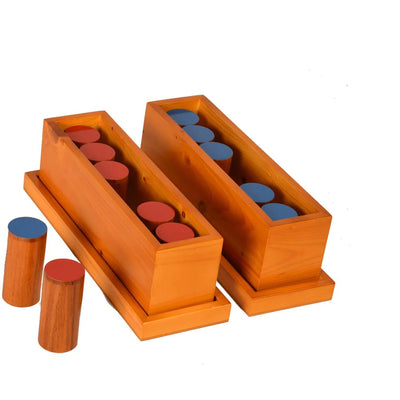
Further, introduce sensorial materials like the Montessori Pink Tower or Cylinder Blocks. These materials are specifically designed to help children aged 2.5-5 years develop visual discrimination of dimensions, preparing them for mathematical concepts. They offer concrete experiences that build abstract understanding, a hallmark of the Montessori method.
The Unseen Benefits and Role of Joint Families
Beyond individual skill development, sensory play fosters crucial social and emotional learning, especially in a joint family setting common across India. Grandparents, aunts, and uncles can become active participants, sharing traditional rhymes, telling stories with expressive gestures, or involving children in simple kitchen tasks like kneading dough or sorting pulses. These interactions naturally integrate sensory experiences with cultural learning.
This communal involvement not only enriches the child's sensory world but also strengthens family bonds. The diverse voices, textures, and activities within a multi-generational household create a naturally abundant sensory environment, often without parents even needing to 'set up' specific stations. This shared experience addresses many sensory development challenges India faces by leveraging existing social structures.
- Sensory play is foundational for early childhood brain development, with 90% of brain growth occurring by age five.
- Creating home-based sensory environments is a vital response to inadequate public sensory facilities in India.
- DIY sensory parks can be easily crafted using common household items and natural materials found in Indian homes.
- An inclusive home play space caters to all children, including those with special needs, offering varied sensory experiences.
- Montessori sensory activities promote concentration, independence, and refinement of senses through purposeful engagement.
- Joint family involvement naturally enhances a child's sensory experiences and strengthens familial ties in India.
What are the core benefits of sensory play for young children?
Sensory play significantly enhances brain development by building neural pathways, improving cognitive skills, fostering problem-solving abilities, and developing fine and gross motor skills. It also aids in emotional regulation and language acquisition.
How can I create a simple DIY sensory bin at home?
A DIY sensory bin can be made with a large container filled with a base like rice, lentils, or sand, then adding various small objects such as scoops, cups, natural elements, or small toys. Ensure all items are age-appropriate and safe for your child.
Is sensory play primarily for children with special needs?
While highly beneficial for children with special needs, sensory play is crucial for the healthy development of all children, regardless of ability. It supports essential learning and exploration for every young mind, forming the foundation for complex skills.
What are some Montessori-inspired sensory activities for toddlers?
Montessori-inspired activities include sorting objects by size, color, or texture, exploring water play with various tools, using sensorial materials like the Pink Tower or Cylinder Blocks, and engaging with natural elements. These activities promote concentration and order.
How often should children engage in sensory play?
Child development experts recommend daily opportunities for sensory exploration, ideally through varied activities. Even short, focused sessions of 15-30 minutes can significantly contribute to a child's sensory integration and overall development.