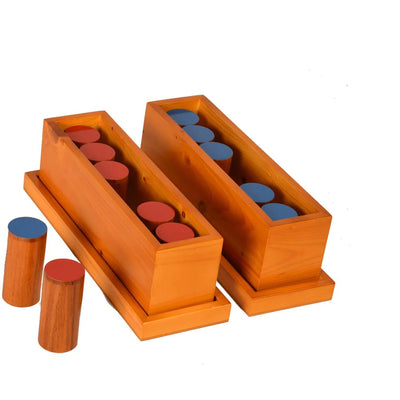
Sensory Play for Preschool Readiness: Beyond ABCs & 123s
Montessori-inspired sensory play for preschool readiness directly prepares children for the evolving preschool curriculum by cultivating essential non-academic skills like critical thinking, problem-solving, self-regulation, and creativity. These hands-on experiences move beyond traditional ABCs and 123s, equipping young learners with the foundational abilities needed to thrive in modern, holistic educational environments.
As Indian preschools adapt to a world that values adaptability and innovation, parents are increasingly looking for ways to ensure their children are not just academically prepared, but truly ready for life's challenges. This guide offers practical insights into how specific Montessori-inspired sensory activities build these crucial life skills.
What is Montessori-Inspired Sensory Play?
Montessori-inspired sensory play involves engaging a child's five senses through purposeful, hands-on activities designed to promote independent exploration and discovery. This matters because it builds crucial neural pathways, refines motor skills, and fosters concentration, all vital for a child's comprehensive development. Indian parents can integrate simple, engaging materials at home to support this learning.
The concept that "learning is play" is gaining significant traction, as highlighted by reports from sources like MSN, emphasizing how play-based education creates stronger foundations. This approach aligns perfectly with Montessori principles, which advocate for children learning through direct experience.
Fostering Critical Thinking & Problem-Solving Through Sensory Exploration
Child development experts agree that exposing children to diverse sensory experiences from an early age is paramount for cognitive development. Montessori-inspired activities specifically cultivate critical thinking and problem-solving, key components of an evolving preschool curriculum.
For instance, activities involving sorting objects by size, shape, or texture require children to observe, categorize, and make decisions. Think about a toddler trying to fit different shaped blocks into corresponding holes – this isn't just play; it's an exercise in spatial reasoning and problem-solving. Research consistently shows that play-based learning enhances cognitive flexibility and problem-solving abilities in young children, laying a strong groundwork for future academic success.
Developing Self-Regulation & Concentration through "Beyond Academics" Sensory Play
In the bustling environment of an Indian joint family or a busy preschool, the ability to self-regulate and concentrate is invaluable. Montessori-inspired sensory play, often quiet and focused, directly addresses these preschool life skills.
Activities like pouring water from one jug to another, scooping lentils, or transferring small beads with tongs demand precision and focus. These tasks, while seemingly simple, train a child's attention span and develop fine motor control. The calm, purposeful nature of these activities helps children learn to manage their impulses and engage deeply, skills that are increasingly valued in modern classrooms. This mirrors initiatives like ‘Umang Vatika’ at Safdarjung Hospital, where creating free and safe play environments helps children with disabilities develop focus and self-control.
Cultivating Creativity & Imagination for Holistic Early Learning
The modern preschool curriculum moves beyond rote memorization, valuing children's capacity for creativity and imaginative thought. Sensory play is a powerful catalyst for this holistic early learning approach.
Open-ended materials like playdough, sand, or water, when combined with natural elements or simple tools, invite children to invent, build, and explore without predefined outcomes. This unstructured exploration allows their imaginations to soar, encouraging them to tell stories, create scenarios, and experiment with different textures and forms. Such activities are vital for fostering adaptability and innovation, preparing them for a world that demands creative solutions.
The Power of Practical Life Skills in Sensory Play
Maria Montessori emphasized practical life activities as a cornerstone of early education, directly translating into essential Montessori skills for preschool readiness. These activities integrate sensory experiences with real-world tasks, preparing children for independence.
Think about dressing frames with buttons or zippers, preparing simple snacks, or even sweeping a small area. These tasks not only refine fine motor skills and hand-eye coordination but also build a child's sense of competence and responsibility. They teach sequence, order, and the satisfaction of completing a task, skills that significantly ease the transition into a structured preschool environment.
Enhancing Social Interaction & Communication
While often perceived as individual activities, Montessori-inspired sensory play also provides rich opportunities for social development and communication, crucial aspects of an evolving preschool curriculum.
When children engage in sensory play alongside peers or family members, they naturally learn to share materials, take turns, and communicate their discoveries. A group water play session or a collaborative effort with a large sensory bin encourages verbal and non-verbal communication, conflict resolution, and empathy. These interactions, whether with siblings, cousins, or grandparents in a traditional Indian home, build vital social intelligence. Initiatives like "Nurturing Beginnings" by UNICEF in Bihar underscore the profound impact of early childhood development programs, which often include social play, on a child's overall well-being and readiness for school.
Child development experts agree that the first five years are crucial for developing 90% of brain architecture, underscoring the importance of rich sensory experiences for fostering robust social and communication skills.
- Montessori-inspired sensory play cultivates essential non-academic skills vital for modern preschool readiness.
- Activities like sorting and building directly enhance critical thinking and problem-solving abilities in young children.
- Focused sensory tasks, such as pouring and scooping, significantly develop self-regulation and concentration.
- Open-ended sensory materials like playdough foster creativity and imaginative thought, crucial for holistic development.
- Practical life activities, integrated with sensory experiences, build independence and a sense of responsibility.
- Group sensory play naturally promotes social interaction, communication, and empathy among children.
How young can I start sensory play for preschool readiness?
You can introduce simple sensory play from infancy, adapting activities to your child's developmental stage. Even babies benefit from exploring textures and sounds, building foundational skills for later learning and preschool readiness.
What are some simple sensory play activities I can do at home?
Easy home activities include playing with rice or lentils in a bin, water pouring and scooping, playdough exploration, or creating a 'treasure basket' with various safe household items. These low-cost options provide rich sensory experiences.
How does sensory play help with a child's emotional regulation?
Sensory play provides a calming outlet for children, allowing them to process emotions and self-regulate through focused engagement. Activities like exploring textured materials or engaging in water play can reduce stress and improve concentration.
Is screen time considered sensory play?
No, traditional screen time is not considered true sensory play as it primarily engages sight and sound in a passive, two-dimensional manner. Authentic sensory play requires active, multi-sensory engagement and manipulation of real-world materials.
How does SkilloToys support this evolving approach to preschool readiness?
SkilloToys offers a curated selection of Montessori-inspired materials specifically designed to promote holistic development, from fine motor skills to critical thinking. Our toys align with the evolving preschool curriculum by fostering independent learning and crucial life skills.