Wooden Toys for Kids: Fueling Creativity & Imagination
When we talk about shaping bright futures for our children in India, fostering creativity and imagination is paramount. Research consistently shows that engaging with wooden toys for kids profoundly stimulates these essential developmental areas, offering a rich, tactile experience that electronic gadgets simply cannot replicate. These classic playthings empower children to be the architects of their own worlds, building vital cognitive skills one block at a time.
Wooden toys are non-prescriptive objects, free from blinking lights or pre-recorded sounds, that demand children to invent the play scenario, characters, and narrative. This matters immensely because it shifts the locus of control from the toy to the child, cultivating intrinsic motivation and deeper engagement. Indian parents can leverage these simple tools to unlock a universe of creative potential in their little ones, moving beyond rote learning to genuine exploration.
The Open-Ended Magic of Montessori Wooden Toys
The beauty of Montessori wooden toys lies in their deliberate simplicity. Maria Montessori herself advocated for natural, open-ended materials that allow children to explore and discover at their own pace. Unlike a battery-operated toy that performs actions for a child, a smooth wooden block, a set of stacking rings, or a plain wooden animal invites the child to imbue it with purpose, a voice, and a story.
Consider a child, perhaps a 3-year-old Aarya in a bustling Bengaluru home, with a simple set of wooden blocks. She isn't just stacking them; she's building a home for her favourite stuffed teddy, a towering fort to protect her kingdom, or even a 'puja mandir' for her imaginary deities. The satisfying 'clunk' as one block lands on another, the distinct grain under her fingertips, the challenge of balance – these sensory inputs ground her in the present moment, sharpening her focus and refining her fine motor skills as she translates her inner vision into a tangible creation.
Building Blocks for Imagination and Problem-Solving
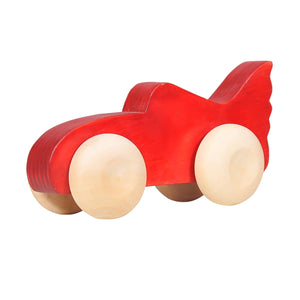
The very lack of predetermined function in creative wooden toys is their greatest strength. When children play with items like wooden puzzles or building sets, they are constantly engaging in problem-solving. They strategize how to make a tower stand taller, how to fit pieces together, or how to create a ramp for a wooden car. This iterative process of trial and error is fundamental to cognitive development.
Studies indicate that children who engage in less structured, open-ended play demonstrate higher levels of creativity and divergent thinking. Instead of following instructions, they're generating ideas, adapting to challenges, and discovering multiple solutions. This empowers them to approach real-world problems with flexibility and innovation, skills that are invaluable in today's rapidly changing world.
Durability & Legacy: A Sustainable Choice for Indian Homes
In many Indian households, particularly joint families, toys often get passed down through generations, becoming cherished heirlooms. Wooden toys are perfect for this tradition. Their robust construction and timeless appeal ensure they can withstand years of enthusiastic play, from a toddler's teething phase to a school-aged child's elaborate role-playing games.
This durability also makes them an environmentally conscious choice, aligning with a growing awareness of sustainability in urban India. Investing in quality wooden activity kits or building sets means fewer plastic items ending up in landfills, and more resources directed towards products that truly last. Grandparents often appreciate these classic toys, reminiscent of their own childhoods, making them a beautiful bridge between generations and a staple for festivals like Diwali or Children's Day.
Weaving Creativity into Daily Life with Wooden Toys
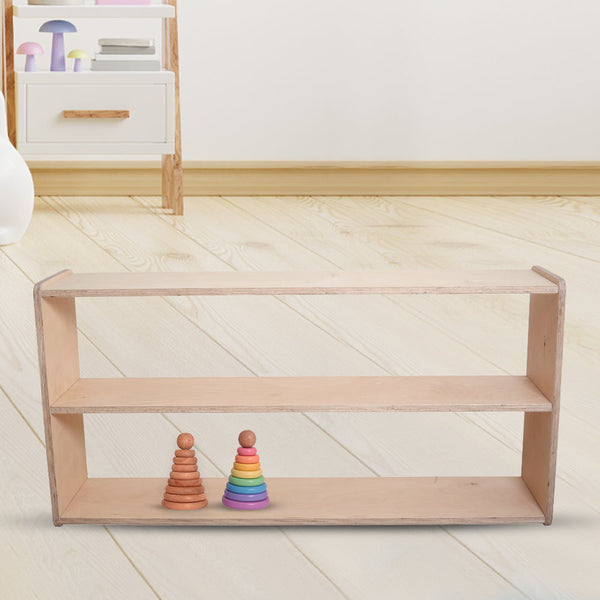
Encouraging imaginative play with wooden toys doesn't require elaborate setups. Simple changes can make a world of difference. Dedicate a small, accessible space in your home – perhaps a corner in the living room or a low shelf in the child's room – for their wooden treasures. Present them neatly, inviting exploration, much like the organised 'prepared environment' Maria Montessori envisioned.
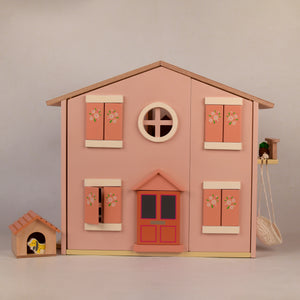
Parents can participate by asking open-ended questions like, 'What adventure is this train going on?' or 'Who lives in that amazing house you built?' You might even connect it to current discussions about creativity, similar to how The Times of India suggests activities to help children open up emotionally. Allowing children the freedom to direct their play, even if it seems 'messy' to us, is key to nurturing that inner spark. The child who is absorbed in creating a little 'village' with wooden blocks is building far more than just structures; they are building their future self, imaginative and resilient.
The choice to include wooden toys for kids in your child's play arsenal is a profound investment in their future. It's an affirmation that their inner world, their unique imagination, is the most powerful plaything they possess. Observe them, provide the tools, and watch their creativity blossom, ready to tackle the world with innovative thought and joyful curiosity.