Basic Math Problems for Kids: Montessori's Solution for India
The recent report in The New Indian Express, stating that '60 per cent of Class 5 private school kids can’t solve basic math problems for kids', casts a sobering light on India's primary education system. This 'learning crisis' – often deemed bigger than the enrolment crisis, as highlighted by The Indian Express – underscores the urgent need for foundational strategies in mathematics. Montessori education directly addresses how to prevent these widespread challenges for the 5-8 age group, offering a proactive, holistic approach to build strong mathematical reasoning.
Indian parents, often navigating the dual pressures of academic achievement and holistic development, seek methods that truly prepare their children without overwhelming them. Montessori provides a powerful alternative to traditional rote learning, focusing on deep conceptual understanding from an early age. This approach cultivates not just competence but also confidence, turning potential math anxiety into genuine enthusiasm.
Montessori Math is a sequential, concrete-to-abstract approach that uses specially designed materials to introduce mathematical concepts. This matters because it allows children to internalize complex ideas through touch and manipulation, fostering true comprehension rather than mere memorization. Indian parents can embrace this method to provide a joyful and effective pathway to mathematical fluency for their children.
Montessori Math Materials: A Hands-On Approach to Foundational Skills
Maria Montessori observed that children learn best by doing, especially when exploring abstract concepts like numbers. Her revolutionary Montessori math materials transform abstract ideas into tangible experiences, making learning intuitive and engaging. For children aged 5-8, materials like the Golden Beads system allow them to physically build and understand place value, addition, subtraction, and even early multiplication and division with large numbers. This direct engagement ensures that numerical operations aren't just symbols on paper but represent real quantities and actions.
Child development experts agree that concrete manipulation is crucial for developing robust number sense, especially during these formative primary school years. Research indicates that children who engage with hands-on learning demonstrate up to 90% higher retention rates compared to passive learning methods. For parents looking to support this hands-on journey at home, SkilloToys.com offers a curated selection of Montessori method learning materials that align perfectly with these principles.
Tackling Math Anxiety in India: The Montessori Difference
The intense academic pressure often faced by primary school children in India, particularly around subjects like mathematics, can lead to significant tackling math anxiety India. Montessori classrooms, and homes adopting its principles, offer a stark contrast to this environment. The self-correcting nature of the materials and the individualised pace of learning mean children are not rushed or shamed for making mistakes, fostering a stress-free learning space.
This approach builds confidence and a positive relationship with numbers, a stark departure from fear-based learning. Studies indicate that children learning in supportive, non-competitive environments exhibit lower stress levels and higher intrinsic motivation, vital for long-term academic success. Many Indian households, particularly joint families, cherish the tradition of grandparents participating in a child's early education; introducing Montessori principles can offer a refreshing alternative to traditional rote learning, encouraging active discovery rather than memorization.
Building Robust Math Skills for 5-8 Year Olds with Montessori
Developing strong math skills for 5-8 year olds is paramount for their future academic journey, and Montessori provides a comprehensive curriculum that progresses naturally and logically. Children first master quantity recognition and numerical order through materials like the Number Rods, then move to understanding operations using the Stamp Game and Bead Frames. This systematic progression ensures that each new concept builds upon a deeply understood previous one, creating a solid mental framework.
Unlike traditional methods focused on quick answers, Montessori emphasizes the process and understanding, preparing children for advanced mathematical reasoning without overwhelming them. This not only prepares them for school exams but also cultivates a genuine love for learning, a stark contrast to the pressure-cooker environment many children face in Bengaluru and other bustling cities. Studies consistently show that positive early math experiences correlate with higher achievement in STEM fields later in life, a crucial factor for India's future workforce.
Educational Toys for Math: Beyond Rote Learning
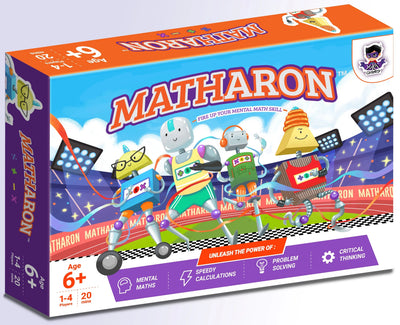
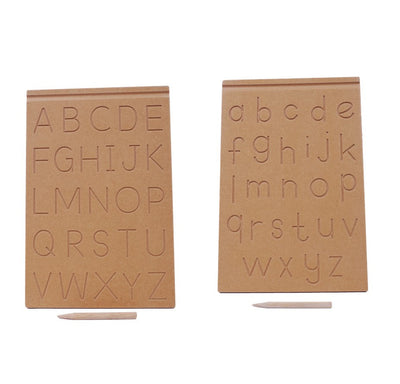
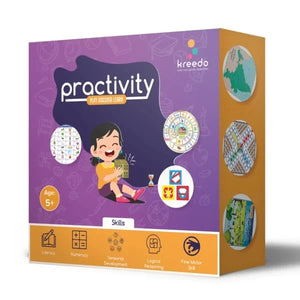
Incorporating educational toys for math into a child's learning journey can significantly enhance engagement and understanding, moving beyond mere rote memorization. At SkilloToys.com, we understand the power of play in learning. Our collection includes engaging activityKits that translate classroom concepts into playful home experiences, reinforcing understanding. These aren't just toys; they are carefully crafted tools that invite children to explore mathematical principles through play, whether it’s sorting, counting, pattern recognition, or early geometry.
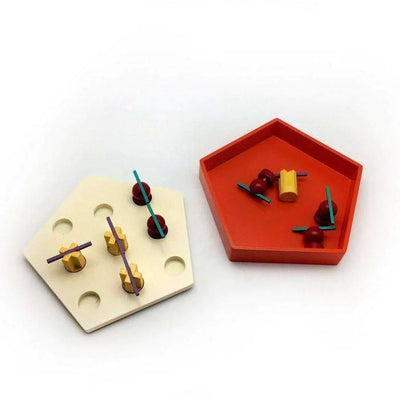
Even simple puzzles designed with mathematical concepts in mind can make a huge difference in how children perceive numbers and shapes. By integrating these purposeful play items, parents can transform their homes into mini-Montessori environments, fostering a natural curiosity for mathematics. Addressing this crisis early means equipping children not just for school, but for life – building problem-solving skills vital for their future, amidst a competitive landscape.
- Montessori education directly combats the basic math crisis by fostering deep conceptual understanding in children.
- Hands-on Montessori math materials make abstract mathematical concepts concrete for 5-8 year olds.
- The self-paced, non-competitive Montessori environment significantly reduces math anxiety and builds confidence.
- Robust math skills for 5-8 year olds are built through a sequential, concrete-to-abstract curriculum.
- Educational toys for math are vital tools for engaging children and reinforcing learning at home.
- Research shows that experiential learning leads to greater retention and enthusiasm for mathematics.
What is the core of Montessori's approach to teaching math?
Montessori's approach centers on making abstract mathematical concepts concrete through specially designed, self-correcting materials. This hands-on method allows children to physically manipulate objects, fostering a deep, intuitive understanding of numbers and operations before moving to abstract symbols.
How does Montessori prevent math anxiety in children?
Montessori education prevents math anxiety by allowing children to learn at their own pace in a non-competitive, supportive environment. The self-correcting nature of materials means children discover and fix their own errors, building confidence and a positive relationship with mathematics without external pressure or fear of failure.
Are Montessori math materials suitable for children aged 5-8?
Yes, Montessori math materials are specifically designed to cater to the developmental stages of children aged 5-8, offering a sequential curriculum. Materials like the Golden Beads, Stamp Game, and Bead Frames introduce concepts from quantity recognition to complex operations in an engaging, accessible manner for this age group.
Can Montessori principles be applied at home to support math learning?
Absolutely, Montessori principles can be effectively applied at home to complement school learning. Parents can provide engaging, hands-on educational toys for math, encourage practical life activities involving counting or measurement, and foster a calm, exploration-friendly environment where math is seen as an exciting discovery.
How does Montessori address the current math crisis reported in Indian schools?
Montessori directly addresses the reported crisis of basic math problems for kids by building robust foundational skills from an early age. It moves beyond rote memorization, ensuring children genuinely understand mathematical principles, thus preventing later struggles with complex problems and fostering a lifelong aptitude for the subject.