Why Indian Parents Choose Montessori Homeschooling
Why Indian Parents Are Choosing Homeschooling for their children stems from a deep desire for personalized learning, flexible schedules, and a holistic approach to education often missing in traditional schools. This growing trend reflects a conscious decision to foster a child's natural curiosity and individual pace of development within the comfort and cultural richness of their home environment. Child development experts agree that a personalized environment supports deeper engagement and stronger foundational skills.
Montessori homeschooling is an educational approach centered on child-led learning within a prepared home environment, utilizing specialized, self-correcting materials. This method matters because it nurtures a child's innate drive for independence, concentration, and practical life skills. Indian parents can implement this by creating inviting learning spaces and observing their child's unique developmental needs, often adapting traditional home routines to embrace purposeful work.
Personalized Learning & Pacing: A Core Montessori Advantage
One of the primary reasons more Indian parents are embracing Montessori homeschooling is the profound benefit of personalized learning. Unlike rigid classroom settings where children must conform to a single pace, the Montessori method respects each child's unique developmental timeline and learning style. Research from the American Academy of Pediatrics consistently highlights the benefits of individualized attention in early childhood, leading to deeper understanding and greater academic confidence.
Consider Aarav, a 4-year-old in Bengaluru, who previously struggled with the rote memorization common in some pre-schools. With Montessori homeschooling, his mother observed his intense interest in numbers and introduced concrete math materials like the number rods. Aarav now grasps complex mathematical concepts at his own pace, enjoying the process without the pressure of comparison. This individualized approach is particularly appealing to Indian families who want their children to truly understand, rather than just pass exams.
Nurturing Independence and Practical Life Skills at Home
The Montessori philosophy, championed by Dr. Maria Montessori, places a strong emphasis on fostering independence and practical life skills from a young age. In an Indian home, this translates beautifully into children actively participating in daily routines, from helping prepare meals for a family festival to sorting clothes for the laundry. These activities, often dismissed as chores, are rich learning opportunities that build concentration, coordination, and a sense of responsibility.
For instance, a 2-year-old might learn to pour water from a small jug, or a 3-year-old might use tongs to transfer lentils. These practical life exercises are foundational for fine motor development and executive functions. Studies, including those cited by the Harvard Center on the Developing Child, indicate that such purposeful activities are critical for building neural pathways that support future learning. Exploring a range of activity kits designed for these skills can transform everyday tasks into engaging learning experiences.
Flexible Education India: Adapting to Family Life and Values
The desire for flexible education in India is a significant driver for families choosing homeschooling. Traditional school schedules can be incredibly restrictive, often clashing with joint family commitments, cultural festivals, and the desire for extended family travel. Montessori homeschooling offers the unparalleled freedom to design a learning day that harmonizes with a family's unique rhythm and values.
Imagine celebrating Diwali or Eid with extended family without the worry of missed school days, or spending a month in your ancestral village truly immersed in local culture and language. This flexibility allows parents to integrate traditional values, mother-tongue education, and spiritual practices seamlessly into their child's learning journey. Grandparents, too, can play a more active and meaningful role in a child's education, sharing stories and wisdom that transcend textbooks.
Fostering Holistic Development with Montessori Materials
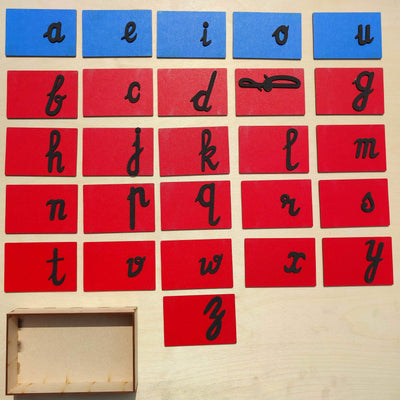
Montessori education is renowned for its commitment to holistic development, addressing not just cognitive growth but also emotional, social, and physical well-being. The specialized Montessori materials are meticulously designed to engage multiple senses and introduce concepts in a concrete, hands-on manner. For example, the Pink Tower indirectly teaches mathematical progression and visual discrimination, while sandpaper letters offer a tactile experience for learning phonetics.
Child development experts emphasize that children learn best through active exploration and self-discovery. Unlike electronic toys that dictate play, Montessori materials invite the child to experiment, make mistakes, and self-correct, fostering genuine problem-solving skills. The satisfying clunk of one wooden block landing on another, or the focused silence of a child engrossed in a sorting activity, signifies deeper engagement than passive screen time. This approach ensures that educational toys for holistic development truly empower the child's mind and body.
Building Stronger Family Bonds and Community Connections
Homeschooling, especially with a Montessori approach, provides an incredible opportunity to strengthen family bonds. Parents become intimately aware of their child's strengths, challenges, and passions, fostering a deeper, more trusting relationship. This shared learning journey often leads to a more harmonious family environment where curiosity is celebrated and questions are encouraged.
Far from isolating children, Montessori homeschooling families in India often report rich community connections. They actively seek out and participate in local homeschooling groups, community sports, art classes, and volunteer opportunities. This intentional approach to socialization means children interact with a diverse range of ages and backgrounds, developing strong social skills and empathy within contexts that align with their family's values and beliefs.