DIY Potato Stamp Game for Early Math Skills
In many Indian homes, where creativity often blossoms from everyday items, the joy of learning doesn't always need elaborate setups. For parents exploring Montessori at home in India, finding engaging, budget-friendly activities is key. Today, we're diving into a delightful and effective way to introduce early mathematical concepts: creating a DIY stamp game using potatoes and paint for children. This simple activity transforms humble kitchen ingredients into powerful learning tools, perfect for little hands eager to explore numbers.
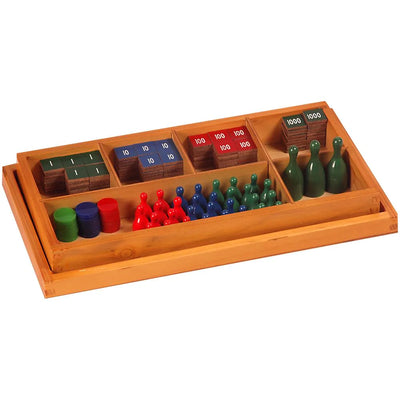
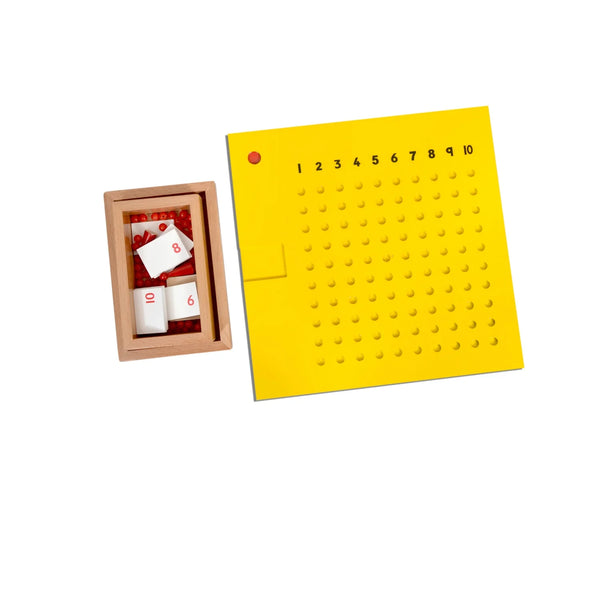
The Montessori Stamp Game is a classic mathematics material designed to introduce children to the decimal system and the operations of addition, subtraction, multiplication, and division. This works because it provides a concrete, hands-on representation of abstract number concepts, allowing children to physically manipulate quantities. Parents can introduce this game to build a strong foundation in understanding place value and numerical operations before moving to more abstract representations.
Why a DIY Potato Stamp Game?
Why choose a humble potato for such an important Montessori concept? Firstly, it's wonderfully accessible. Potatoes are a staple in every Indian household, making this an incredibly cost-effective and sustainable activity kit you can whip up in minutes. For families living in smaller apartments or those with grandparents eager to join in, a DIY project like this requires minimal space and encourages intergenerational bonding. It's a fantastic way to develop fine motor skills as children grip the potato stamps, dip them in paint, and press them onto paper, all while exploring fundamental math ideas. This hands-on approach is vital for child development in India, where tactile learning is deeply ingrained in our cultural traditions, from making rangoli to kneading atta.
Crafting Your Own Montessori Stamp Game
Preparing your own version of the Montessori Stamp Game is a joyful process that can even involve older children. This is one of those Montessori learning activities that bridges practical life with abstract learning.
Materials You'll Need:
Gathering your materials is the first step towards this enriching experience. You'll need a few medium-sized potatoes, some child-safe tempera or poster paints in different colours (traditionally green for units, blue for tens, red for hundreds, and green for thousands, but feel free to adapt!), thick paper or cardstock, a small knife (for adult use only!), and a permanent marker. A small paint tray or old plates will be useful for dipping.
Step-by-Step Guide:
Here's how to bring your DIY stamp game to life, fostering a love for numbers in your child:
First, an adult should carefully cut each potato in half. On the flat surface of one potato half, use the permanent marker to draw a clear '1'. Repeat this for several halves, making enough '1' stamps. On other potato halves, draw a '10', '100', and '1000'. You might want to make about 5-6 stamps for each value initially. If you're feeling adventurous, you can gently carve out the numbers with the knife for a clearer print, but simply drawing them works just as well. This process of preparing materials, akin to a Montessori 'preparation of the environment', sets the stage for focused learning.
Next, set up your child's workspace. Lay out a large sheet of paper, the prepared potato stamps, and the paints. Encourage your child to choose a colour for each value (e.g., green for '1' stamps, blue for '10' stamps). This simple choice gives them agency and ownership over the activity.
Introduce the stamps one by one. Hold up a '1' stamp and say, 'This is one.' Show them how to gently dip it into the paint and press it onto the paper. Emphasise stamping neatly. Start with simple tasks like 'Stamp five ones' or 'Stamp two tens and three ones'. This concrete representation is crucial for children aged 3-6 years to grasp the value of numbers before moving on to more abstract Montessori mathematics materials.
Engaging Your Child with the Potato Stamp Game
The beauty of this DIY stamp game lies in its versatility. Begin with one-to-one correspondence, asking your child to stamp 'one' for each item counted. This builds a foundational understanding of quantity. As they gain confidence, introduce the concept of place value. For instance, you can say, 'Let's stamp 23.' Your child would then stamp two '10's and three '1's. This visual and tactile experience is far more impactful than rote memorisation for developing number sense.
Observe your child's interest and follow their lead. There's no rush to introduce complex operations. Focus on the joy of discovery. You can even integrate this activity with Indian festivals; for Diwali, perhaps stamp patterns using the '1' stamp, or create 'rangoli' designs with numerical elements. This makes the learning experience culturally relevant and adds a layer of fun.
Beyond the Basics: Expanding the Learning
Once your child is comfortable with basic stamping, you can slowly introduce more complex ideas. For example, lay out three '10' stamps and ask them to count the total. Then, demonstrate how three '10' stamps equal one '100' stamp, if you've made one. This helps in understanding the transition from units to tens to hundreds, a cornerstone of the decimal system. As they grow, these early experiences will naturally pave the way for understanding more advanced Montessori mathematics materials.
For parents looking for further enriching activities, SkilloToys.com offers a wide range of activity kits that complement home-based Montessori learning, providing structured ways to explore various subjects. Remember, the goal is to cultivate a love for learning through hands-on exploration and joyful discovery, making education an integral part of everyday life in your Indian home.
Bringing Montessori principles into your home doesn't require a fully equipped classroom. Simple, creative Montessori learning materials like a DIY potato stamp game can ignite curiosity and build crucial foundational skills. Explore more ideas and authentic Montessori educational toys at SkilloToys.com, your partner in nurturing young minds in India.