Toddlers Learn Maths with Objects, Not Just Numbers
Every parent in India dreams of giving their child the best start, and often that means thinking about 'academics' early on. But when it comes to early mathematics, do you know that toddlers learn maths through physical objects, not numbers alone? It's a fascinating truth often overlooked in our rush to teach counting. In bustling Indian homes, from joint families to nuclear setups in small apartments, children are naturally wired to explore their world through touch and interaction. This hands-on approach is exactly how they build a solid foundation for mathematical understanding.
What does 'learning maths through objects' actually mean? It means that before a child understands that '3' represents a quantity, they need to have experienced 'three' distinct items. This is called concrete learning, where abstract concepts are made tangible. This works because a toddler's brain is wired for sensory input and direct experience. Parents can facilitate this by providing opportunities for their child to sort, stack, compare, and count real, touchable items, laying the groundwork for later abstract mathematical concepts.
Why Concrete Experiences Matter for Toddlers
Maria Montessori observed that young children possess an absorbent mind, soaking up information from their environment. For maths, this means they don't naturally grasp symbols like '1, 2, 3' without first experiencing the quantities these symbols represent. Imagine a toddler helping their dadi arrange five colourful bangles – they're not just playing; they're learning 'fiveness' by handling each bangle individually, seeing the collection grow.
Montessori at Home India: Everyday Maths
You don't need a dedicated classroom to foster early maths skills. Your home, whether it's a spacious bungalow or a cosy apartment, is full of learning opportunities for Montessori at home India. Think about involving your child in daily activities:
- Counting: 'Beta, how many rotis do we need for dinner?' or 'Let's count the marigold flowers for the puja.'
- Sorting: Ask them to sort out the red dal from the yellow dal, or group wooden blocks by colour. This develops classification skills.
- Matching: Matching pairs of socks after laundry or matching lids to containers builds one-to-one correspondence.
These simple, everyday interactions transform chores into meaningful Montessori learning activities.
The Role of Educational Toys for Toddlers
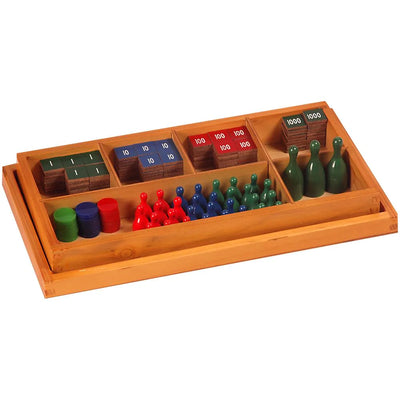
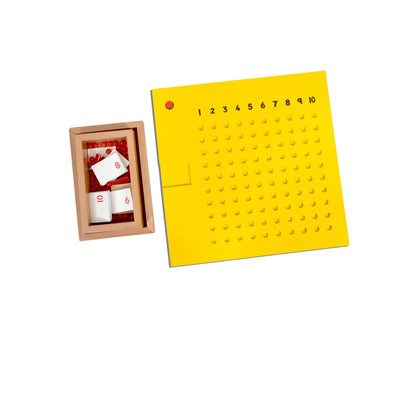
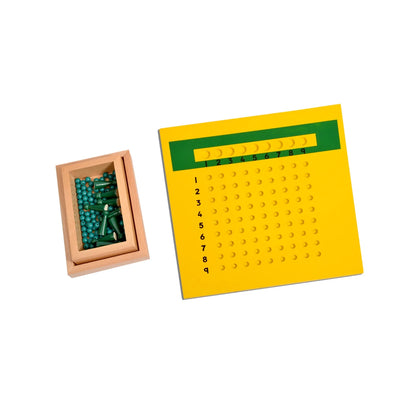
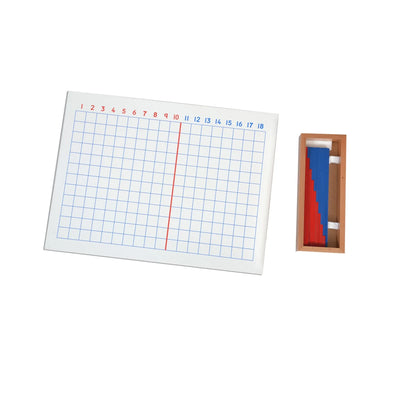
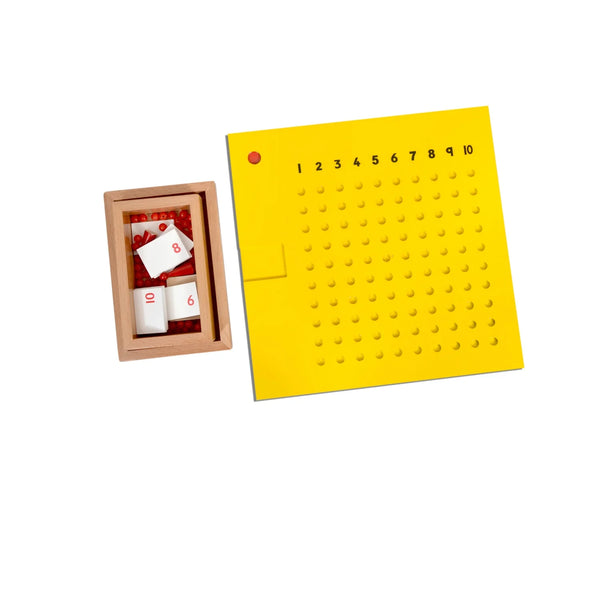
While everyday items are fantastic, specially designed educational toys for toddlers can deepen these mathematical understandings. Consider the power of Montessori mathematics materials. Tools like the Montessori Number Rods or the Pink Tower aren't just playthings; they are precise instruments that teach concepts like sequence, size, and quantity. The child physically interacts with 'one' unit, 'two' units, and so on, building a tangible understanding before seeing the written numeral.
Building Early Maths Skills Through Hands-On Play
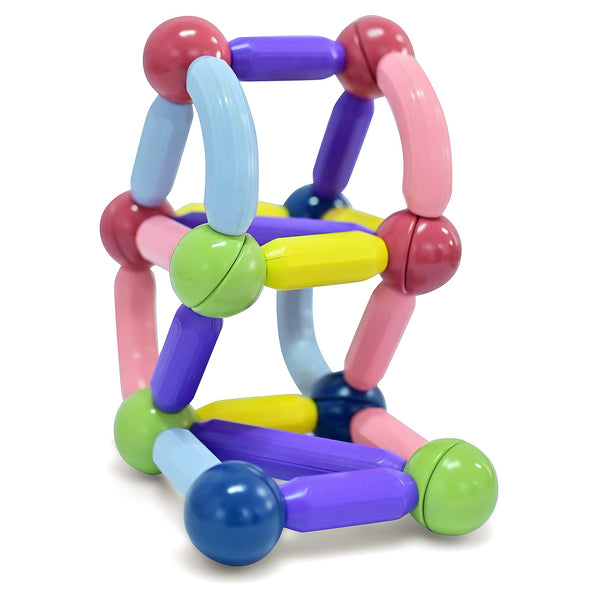
Early child development in maths isn't about rote memorisation; it's about building conceptual understanding. When a toddler stacks blocks, they're not just playing; they're exploring concepts of size, balance, and spatial relationships – precursors to geometry. When they fill and empty containers with water or sand, they're experimenting with volume. These experiences are far more impactful than trying to force abstract number recognition too early.
From Concrete to Abstract: The Montessori Path
The Montessori method systematically guides children from concrete experiences to abstract understanding. For instance, after mastering the physical manipulation of the Number Rods, a child is introduced to the Sandpaper Numbers, where they trace the numeral while associating it with the quantity they already know. This multi-sensory approach ensures a deep, lasting comprehension of mathematical concepts, rather than superficial memorisation. Montessori learning materials are designed for this exact progression, respecting the child's natural learning pace.