Toddlers Learn Maths with Objects, Not Just Numbers
As Indian parents, we often think of mathematics as numbers, equations, and textbooks. But have you ever noticed your little one instinctively sorting colourful beads, stacking blocks, or lining up their toy cars from smallest to largest? These seemingly simple acts are actually profound introductions to mathematical concepts. It's true: toddlers learn maths through physical objects, not abstract symbols, a core tenet of the Montessori method.
Early mathematical understanding, especially for children aged 0-6 years, is rooted in sensory experiences. This approach is precisely why Montessori learning activities are so effective. It is about allowing children to explore quantity, sequence, and proportion with their hands and minds, building a robust foundation before they ever encounter a numeral on paper.
Why Physical Objects Matter for Toddler Math Development
Maria Montessori, a pioneer in child development, observed that young children are concrete thinkers. They learn best by doing, touching, and experiencing. For them, a number like 'three' isn't an abstract symbol; it's the feeling of holding three distinct objects, seeing three mangoes on the kitchen counter, or having three family members for dinner.
This method works because it aligns with a toddler's natural way of interacting with the world. When they manipulate physical objects, they are engaging multiple senses – touch, sight, and even hearing – which deepens their understanding. Parents can support this by offering a rich environment where exploration is encouraged, making it a cornerstone of Montessori at home India.
Bringing Montessori Maths Home: Simple Activities for Indian Families
You don't need elaborate setups to foster early math skills. Look around your Indian home, and you'll find a treasure trove of materials. Perhaps your toddler helps your grandmother sort different types of dal (lentils) for cooking, or counts the number of chapatis on the plate. These everyday moments are rich mathematical experiences.
Consider using beads from an old necklace, small puja bells, or even colourful bangles for sorting by colour or size. Stacking a tower of different-sized bowls or arranging spoons from smallest to largest teaches grading and sequencing. In many Indian joint families, older cousins or grandparents naturally engage children in these practical life activities, laying a strong groundwork for Montessori Mathematics Materials later on.
Beyond Counting: Understanding Quantity and Sequence
While rote counting is common, true mathematical understanding for toddlers goes beyond reciting numbers. It's about grasping the concept of quantity – what 'two' truly means versus 'five'. For instance, offering two ladoos versus five for a festival treat provides a tangible comparison.
Activities like pairing socks after laundry, setting the table with one plate and one spoon per person, or distributing biscuits equally among siblings naturally introduce one-to-one correspondence and division concepts. These hands-on interactions are vital for building a robust sense of number, size, and spatial awareness, key components of child development in India.
Choosing the Right Educational Toys for Early Maths
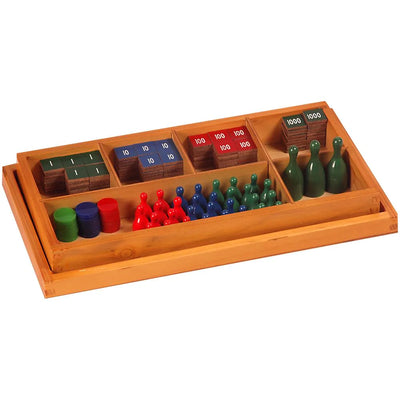
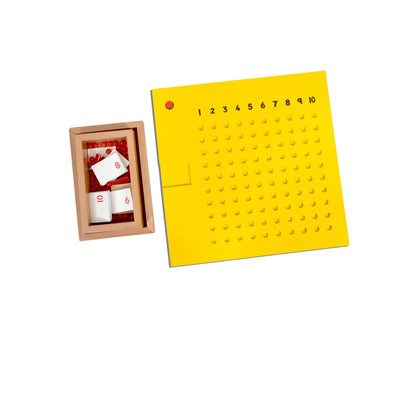
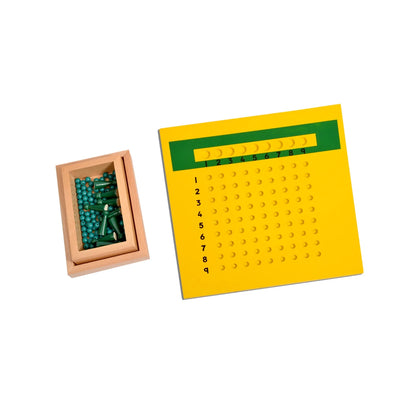
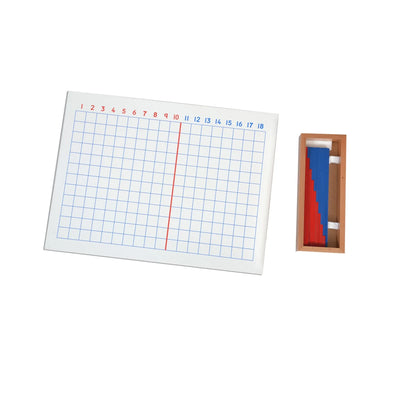
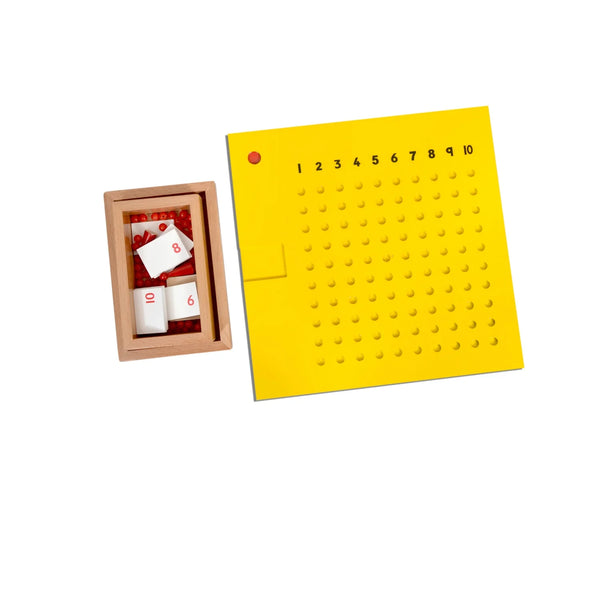
While everyday objects are fantastic, specifically designed educational toys for toddlers can enhance these learning experiences. Montessori materials are often self-correcting, allowing children to learn through discovery without constant adult intervention. Think of materials like stacking rings, counting rods, or even simple geometric sorters.
These toys provide concrete representations of abstract mathematical ideas. They help children develop an intrinsic understanding of numerical order, spatial relationships, and problem-solving skills, which are crucial for later academic success. Even in small apartments, a few carefully chosen wooden toys can make a big difference in a child's early mathematical journey.
At SkilloToys.com, we believe in empowering Indian parents with the knowledge and tools to nurture their child's innate potential. By understanding how toddlers truly learn maths – through tangible objects and hands-on exploration – you can create a joyful and effective learning environment right at home.