Evolving Preschool Education: Holistic Motor Skills
Evolving preschool education in India is fundamentally shifting its focus from traditional rote learning, like mere ABCs and 123s, to embrace holistic child development, with a strong emphasis on critical motor skills. This modern approach, highlighted by recent news, ensures children are prepared not just academically, but also physically and emotionally for their schooling journey.
Modern preschool learning is an integrated approach prioritizing cognitive, social, emotional, and physical growth, moving beyond rote academics. This matters because early childhood experiences are crucial for laying lifelong foundational skills. Indian parents can actively support this by understanding these evolving methods and providing enriching environments.
Beyond ABCs and 123s: The Shift in Indian Preschool Education
The landscape of early childhood education in India is undergoing a significant transformation. This transition, widely discussed in national dialogues like 'The Hans India' reports, acknowledges that true learning extends far beyond memorising alphabets and numbers. It recognizes that children learn best through active engagement and hands-on exploration, rather than passive instruction.
Modern preschools are now designing curricula that integrate various developmental domains, moving away from a narrow focus on academic drills. The goal has expanded to foster curious, confident, and capable individuals ready for the complexities of a dynamic world. This aligns with national initiatives like 'Viksit Bharat 2047', emphasizing the need to close the school-readiness gap and build a generation equipped with foundational competencies, not just academic knowledge.
Holistic Child Development Preschool: Nurturing Every Facet
A truly holistic child development preschool understands that a child's growth is interconnected, where progress in one area supports development in others. This means nurturing cognitive abilities, emotional intelligence, social skills, and crucially, physical (motor) development simultaneously. Research consistently indicates that strong motor skills directly correlate with improved cognitive function and academic readiness.
This comprehensive approach is rooted in pedagogical philosophies pioneered by educators like Maria Montessori, who championed the idea of “education for life.” Montessori preschools in India, for example, inherently incorporate practical life exercises that naturally refine both fine and gross motor skills, from pouring water to buttoning clothes, fostering independence alongside physical dexterity.
Montessori Preschool India: A Pioneer in Integrated Learning
Montessori education in India exemplifies how modern learning transcends traditional boundaries, proving to be a highly effective model for fostering comprehensive development. Maria Montessori’s method, introduced over a century ago, is inherently designed to develop motor skills through purposeful activities and specially designed materials. Children engage with tools like the Pink Tower, cylinders, and sandpaper letters, which are not only sensory but also demand precise hand-eye coordination and manipulation.
These experiences build a robust foundation for future academic tasks like writing and problem-solving, aligning perfectly with the call for evolving preschool education. Parents often observe their children developing remarkable concentration and dexterity when interacting with these engaging Montessori learning materials at home or in a school setting.
Modern Preschool Learning and Practical Motor Skills
The emphasis in modern preschool learning is on providing rich, stimulating environments where children can explore and develop motor skills naturally. This includes structured play and open-ended activities designed to strengthen muscles, improve coordination, and enhance spatial awareness. Child development experts agree that children need ample opportunities for both large-scale and small-scale movements to ensure balanced physical growth.
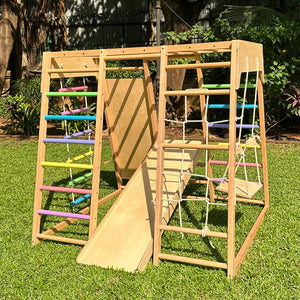
Gross motor skills involve the large muscles in the arms, legs, and torso, crucial for activities like running, jumping, and balancing. Many Indian homes, especially in joint families, naturally encourage these through outdoor play in courtyards or parks, and during festivals with active games. SkilloToys offers a wide range of gross motor skill toys that support this vital development, from balance beams to active play sets.
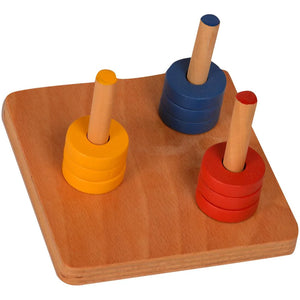
Fine motor skills, on the other hand, involve the smaller muscles, especially in the hands and wrists, essential for tasks like writing, drawing, and using utensils. These skills are critical for school readiness, impacting a child's ability to engage with classroom materials. Modern classrooms integrate activities such as bead stringing, puzzles, and manipulating small objects to hone these precise movements. You can find excellent resources to boost these skills in our fine motor skill collection.
Preschool Activities Motor Skills: Engaging Your Child at Home
Parents play a pivotal role in complementing preschool efforts by integrating motor skill development into daily life. For gross motor skills, encourage active play like running around the park, climbing on safe structures, or helping with simple household chores like carrying light groceries from the market. During Indian festivals, traditional games like kho-kho or gilli-danda also provide fantastic opportunities for active movement and coordination.
For fine motor skills, simple activities around the home are invaluable. Encourage your child to help knead dough for rotis, sort dals, string beads for rangoli decorations, or button their own kurtas and shirts. Grandparents, with their wealth of traditional games and crafts, can be wonderful allies in this process, often engaging children in activities that naturally hone dexterity and coordination.
Studies indicate that children who consistently engage in diverse motor activities demonstrate enhanced problem-solving abilities and improved self-regulation, as seen in initiatives like AP's 'Navachetana'. For instance, brands like Funskool, with their 'Blazetrix' range, are providing made-in-India toys that support active play and imaginative engagement, further bridging the gap between learning and play.
The evolution of preschool education in India is a positive stride towards nurturing well-rounded individuals. By moving beyond a narrow academic focus to embrace holistic development, including robust motor skill acquisition, we empower our children for a future of learning, creativity, and independence. SkilloToys.com remains committed to providing resources that align with this progressive educational philosophy.
- Evolving preschool education in India prioritizes holistic child development, moving beyond traditional rote memorization.
- Motor skill development (both fine and gross) is a critical component of this holistic approach, impacting cognitive and academic success.
- Montessori education serves as a pioneering model for integrating motor skill refinement through practical life and sensory activities.
- Modern preschools design environments and activities to naturally foster motor coordination and dexterity through play-based learning.
- Parents can significantly enhance their child's motor skills through daily activities, traditional Indian games, and engaging educational toys at home.
- Research confirms a strong correlation between early motor skill proficiency and overall school readiness and improved academic performance.
What is holistic child development in preschools?
Holistic child development in preschools means nurturing a child's cognitive, social, emotional, and physical growth simultaneously, rather than focusing solely on academics. This integrated approach ensures balanced development, preparing children for life's challenges.
How does Montessori education specifically help with motor skills?
Montessori education inherently integrates motor skill development through specially designed practical life activities and sensorial materials. Children refine fine motor skills by buttoning, pouring, and manipulating small objects, while gross motor skills are honed through movement and structured activities within the classroom.
What are simple home activities for developing gross motor skills in Indian children?
Indian parents can encourage gross motor skills through activities like playing traditional games such as hopscotch or kabaddi in the courtyard, helping water plants, dancing during festivals, or simply running and climbing safely in local parks. Active outdoor play is paramount.
Why are fine motor skills crucial for school readiness?
Fine motor skills are crucial for school readiness as they enable a child to hold a pencil, use scissors, turn pages, and manage self-care tasks like buttoning uniforms. These abilities are foundational for academic tasks and developing independence in the classroom.
How can parents identify a modern preschool that focuses on motor skills?
Parents should look for preschools that emphasize play-based learning, have ample indoor and outdoor space for physical activities, offer a variety of hands-on materials, and discuss their approach to physical development during admissions. Observing children engaged in diverse activities can also be insightful.