Early Childhood Education: Unicef's View on Play
The critical foundation for a child’s future begins in their earliest years, a period global organisations now champion. Early childhood education is not just about academics; it's about nurturing every facet of a child's being. Unicef's recent insights reinforce that play-based learning is fundamental, a philosophy SkilloToys.com has always championed, and one that resonates deeply with the wisdom of Indian households.
As India Today and The Hindu highlight, the crucial role of play-based learning deserves equal footing with nutrition in child development, truly shaping India's future. It's time to understand why this approach, validated by global experts, is the best gift we can give our little ones.
What is Play-Based Learning, According to Experts?
Play-based learning is an educational approach where children learn through voluntary, intrinsically motivated activities. This matters because it allows children to construct their understanding of the world at their own pace, fostering deep engagement and critical thinking. Indian parents can empower their children by embracing this natural method, moving beyond rigid academic expectations.
Child development experts agree that this method isn't merely about 'playing around'; it's a sophisticated process where children experiment, solve problems, and express themselves creatively. It's a structured yet flexible environment that respects the child's innate drive to learn and explore.
Unicef's Stance: Elevating Early Childhood Education for Global Standards
Unicef, a leading global advocate for children's rights, unequivocally champions the profound impact of high-quality early childhood education (ECE). Their research consistently shows that ECE is one of the best investments a country can make, yielding long-term benefits for individuals and societies. Unicef emphasizes that early experiences literally shape the brain's architecture, impacting learning, behaviour, and health throughout life.
According to Unicef, investing in ECE is not just a social imperative but an economic one, with studies indicating a return of up to $17 for every $1 invested. This perspective aligns perfectly with the burgeoning recognition in India that strong early foundations are key to national progress and the well-being of its youngest citizens.
The Undeniable Play-Based Learning Benefits for Young Minds
Research shows that play-based learning offers a wealth of benefits, far surpassing traditional rote memorization methods. It cultivates essential life skills that children will carry with them for decades. Through play, children develop robust problem-solving abilities, learn to negotiate, share, and collaborate effectively.
Furthermore, this approach significantly boosts a child's creativity and imagination, skills increasingly vital in our rapidly evolving world. Studies indicate that children engaged in play-based learning demonstrate superior language development, emotional regulation, and cognitive flexibility compared to their peers in more structured environments.
Montessori: A Play-Based Approach for India's Children
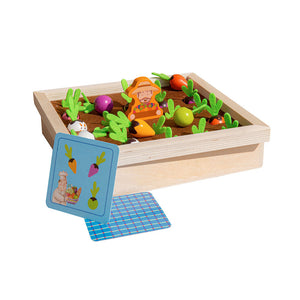
The Montessori method, pioneered by Dr. Maria Montessori, perfectly embodies the principles of play-based learning. It's a child-centered educational approach emphasizing self-directed activity, hands-on learning, and collaborative play. In a Montessori environment, children choose their activities from a carefully prepared range of materials, such as the Montessori learning materials, fostering independence and concentration.
For Indian families, particularly those with a focus on holistic development, Montessori offers a nurturing alternative to conventional schooling. It provides a joyous learning journey that respects the child's pace, moving away from the often-intense academic pressure faced by young children here. Children from 18-24 months and older thrive on the freedom to explore practical life skills through engaging activity kits and develop spatial reasoning with beautifully crafted puzzles.
Why Early Education Matters Beyond Academics: A Holistic View
The importance of early education extends far beyond early literacy and numeracy. It encompasses social-emotional development, fostering empathy, resilience, and confidence. These are the soft skills that truly prepare a child for life's challenges, from navigating school friendships to future professional success.
When children engage in play, they practice communication, learn about cause and effect, and develop a sense of agency. This holistic development is crucial for children growing up in Indian joint families, where social interaction and adaptability are highly valued from a young age, preparing them not just for exams, but for life.
Bringing Play-Based Learning Home in India
Embracing play-based learning doesn't require a dedicated Montessori classroom at home. It’s about creating an environment rich in opportunities for exploration and discovery. Grandparents, with their wealth of stories and traditional games, are often natural facilitators of play-based learning, passing down cultural wisdom through joyous interaction.
Parents can encourage simple, unstructured play: building forts, engaging in imaginative role-playing, or exploring nature during a walk. Providing open-ended materials like blocks, art supplies, or even household items can spark endless creativity. The goal is to allow children to lead their learning, making discoveries at their own pace, much like they would with specialized materials such as sandpaper letters or the pink tower in a Montessori setting.
- Unicef emphasizes that early childhood education, especially play-based learning, is crucial for holistic child development.
- Play-based learning fosters critical cognitive, social, and emotional skills, reducing academic pressure.
- The Montessori method aligns directly with Unicef's advocacy for child-led, experiential learning.
- Quality early education is considered a vital investment for a child's lifelong well-being and societal progress.
- Indian media highlights the essential role of play in shaping the nation's future, placing it on par with nutrition.
- Parents can integrate play-based learning at home by offering open-ended materials and encouraging child-led exploration.
What is the primary goal of early childhood education?
The primary goal of early childhood education is to foster holistic development in young children, encompassing cognitive, social, emotional, and physical growth. It lays a strong foundation for lifelong learning and well-being, moving beyond rote memorization.
How does Unicef define play-based learning?
Unicef emphasizes play-based learning as a child-centered approach where children learn through exploration, discovery, and interaction in a supportive environment. This method leverages children's natural curiosity to build essential skills and understanding.
What are the core benefits of play-based learning for Indian children?
Play-based learning for Indian children nurtures creativity, critical thinking, problem-solving skills, and social-emotional intelligence, which are vital for navigating a dynamic world. It also reduces academic pressure, allowing children to enjoy their learning journey.
How can parents incorporate play-based learning at home?
Parents can incorporate play-based learning at home by providing open-ended materials, encouraging free exploration, engaging in imaginative play, and offering choices that align with the child's interests. Simple activities like storytelling or building with blocks are effective.
Is Montessori a form of play-based learning?
Yes, Montessori is inherently a form of play-based learning, characterized by self-directed activity, hands-on learning, and collaborative play within a prepared environment. It aligns perfectly with the principles of fostering natural development through purposeful engagement.
Why is early childhood education often compared to nutrition in importance?
Early childhood education is compared to nutrition because both are fundamental for optimal child development, impacting brain architecture and future health. Just as good nutrition fuels physical growth, quality early education nurtures cognitive and emotional capacities for life.