First Five Years Learning: Play's Critical Role
The first five years learning and development journey is profoundly critical for every child, laying the immutable groundwork for all future growth. Research shows that during this period, a child’s brain develops at an astonishing rate, forming over a million new neural connections every single second, as highlighted by recent insights from The Hans India and other child development experts. This intense developmental window underscores why purposeful, play-based learning is not just beneficial, but absolutely indispensable.
Play-based learning is an educational philosophy where children acquire knowledge and skills through self-directed exploration and imaginative engagement. This matters immensely because it aligns with a child’s natural instincts to discover, fostering cognitive, emotional, and social growth in a joyful, pressure-free environment. Indian parents can empower their children by embracing this approach, turning everyday interactions into powerful learning opportunities.
Brain Architecture: The Golden Window for Growth
Child development experts agree that the early years, specifically from birth to five, represent a 'golden window' for brain development. Studies indicate that during this foundational stage, a child’s brain is highly plastic, meaning it is incredibly adaptable and responsive to experiences. Rich, stimulating environments directly contribute to the formation of strong neural pathways, impacting everything from language acquisition to problem-solving abilities.
This rapid period of neural construction is significantly influenced by active engagement with the world. Without adequate stimulation through play, critical developmental milestones might be delayed, impacting long-term learning outcomes. The sheer volume of connections made at this age means that quality early childhood development experiences are non-negotiable for building a robust cognitive framework.
Montessori's Wisdom: Nurturing Natural Curiosity
The principles of play-based learning are deeply embedded in the Montessori philosophy, a method championed by Dr. Maria Montessori over a century ago. Her observations confirmed that children from 0-5 years possess an innate drive to learn and explore, which is best supported through a prepared environment and self-directed activities. This aligns perfectly with the joyous, anti-academic-pressure tone we advocate.
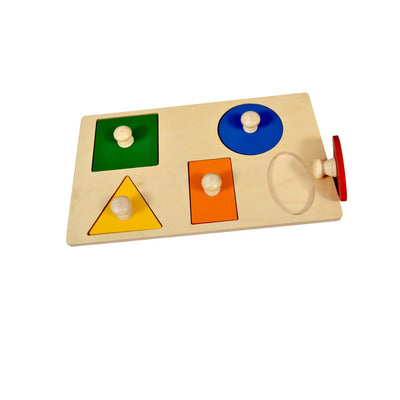
In an Indian context, where grandparents often play a pivotal role, the Montessori approach resonates with the wisdom of allowing children to discover at their own pace. Specific materials, like the Pink Tower or Sandpaper Letters, are designed not just as toys, but as tools for exploration that scientifically aid cognitive and sensory development. These are not about rote learning, but about hands-on understanding, making Montessori 0-5 years an ideal framework for foundational learning.
The Science Behind Joyful Exploration
Research consistently shows that play is the brain’s preferred way of learning, especially for children. When children engage in play, their brains release neurotransmitters like dopamine, which enhance memory and motivation. This is why the importance of play in early years cannot be overstated; it’s a biological imperative for holistic growth.
Cognitive development thrives through play as children engage in problem-solving with puzzles, develop spatial reasoning through building blocks, and understand cause-and-effect. Social and emotional skills are honed as they navigate interactions, share, and negotiate roles in pretend play. Even recent initiatives, such as Maharashtra's First Play-Based Learning Roundtable, underscore a growing national recognition of play's scientific impact on education.
From Home to School: Building Foundational Skills
The foundational skills cultivated through play-based learning are essential for navigating India's diverse educational landscape, from playschools to formal primary education. Critical learning stages demand more than just memorisation; they require children to develop executive functions like focus, self-regulation, and critical thinking. Play provides the perfect arena for this.
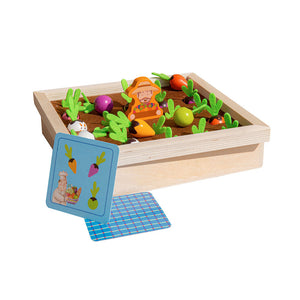
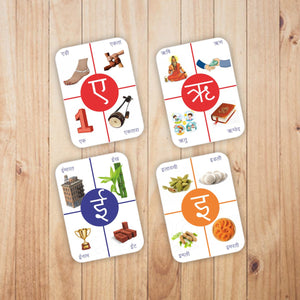
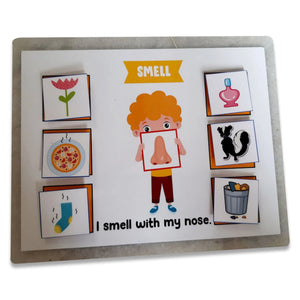
Whether it's an Indian child learning to organise their colourful beads during a festival-themed activity or collaborating with cousins on a new activity kit, these experiences build resilience and adaptability. Parents in joint families often witness the organic learning that occurs when children of different ages play together, reinforcing the value of these early, unstructured learning moments. SkilloToys offers a wide range of Montessori method learning materials designed to support this natural developmental process.
- The first five years are the most rapid period of brain development, forming over a million neural connections per second.
- Play-based learning is an essential, scientifically validated method for fostering holistic child development.
- Montessori principles inherently support play-based learning by encouraging self-directed exploration with purposeful materials.
- Engaging in joyful exploration through play enhances cognitive function, problem-solving skills, and emotional regulation.
- Foundational skills acquired during these critical learning stages through play prepare children for academic success and lifelong learning.
- Indian parents and educators can leverage play to create enriching, pressure-free learning environments at home and in schools.
What is play-based learning?
Play-based learning is an educational approach where children learn through exploration, experimentation, and problem-solving in a playful environment. This method fosters natural curiosity and intrinsic motivation, allowing children to develop skills at their own pace without academic pressure.
Why are the first five years so critical for a child's development?
The first five years are critical because this period marks the most rapid phase of brain development, forming over a million new neural connections every second. These foundational years establish cognitive, social, emotional, and physical capabilities that influence all future learning and well-being.
How does play impact brain development in early childhood?
Play significantly impacts brain development by stimulating neural pathways responsible for language, memory, problem-solving, and emotional regulation. Engaging in diverse play experiences, especially with hands-on materials, builds complex brain architecture essential for higher-level thinking and creativity.
Can Montessori toys enhance play-based learning?
Yes, Montessori toys are specifically designed to enhance play-based learning by offering purposeful, self-correcting activities that encourage independence and concentration. Materials like the Pink Tower or Sandpaper Letters align perfectly with the principles of hands-on exploration and scientific observation crucial during early childhood.
What is the role of parents and educators in facilitating play-based learning?
Parents and educators play a vital role in creating enriching, supportive environments that encourage children to explore freely and safely. This involves providing open-ended materials, observing without constantly intervening, and offering gentle guidance when needed, fostering a love for learning rather than pushing for rote memorisation.