Game-Based Learning at Home: India Parent's Guide
Implementing game-based learning at home for Indian children means transforming everyday activities and dedicated playtimes into structured, engaging opportunities that foster cognitive, social, and emotional growth. This approach provides a joyful alternative to rote learning, empowering parents to make education deeply relevant and fun within the family unit.
As classrooms across India embrace game-based learning, the opportunity for parents to extend this dynamic approach into their homes has never been more relevant. Following our exploration of 'The Rise of Game-Based Learning in Indian Classrooms,' this guide shifts focus to practical, actionable strategies for families. It aligns with growing recognition for early childhood education, highlighted by UNICEF and the recent Maharashtra Play-Based Learning Roundtable, affirming play's essential role alongside nutrition in child development, as noted by India Today.
What is Game-Based Learning and Why Does it Matter?
Game-based learning integrates educational objectives directly into game activities, where learning happens as a natural outcome of play. This matters because it enhances motivation, problem-solving skills, and retention far more effectively than traditional methods. Indian parents can leverage this by consciously selecting and facilitating games that align with developmental milestones, making learning an enjoyable part of their child's day.
Why Game-Based Learning Thrives in Indian Homes
Game-based learning is uniquely suited for the vibrant, often multi-generational Indian home environment. It moves beyond conventional academic pressure, offering a refreshing way to learn through games for children that taps into their innate curiosity. Studies confirm that children who engage in play-based learning demonstrate significantly higher levels of creativity, critical thinking, and social skills.
In Indian joint families, grandparents often play a pivotal role, bringing traditional storytelling and indigenous games to the learning process. This cultural richness naturally fosters an environment where learning feels less like a chore and more like a shared family experience. It provides a strong foundation for holistic development, integrating cognitive growth with cultural values and intergenerational bonding.
Practical Strategies for Game-Based Learning at Home
Integrating game-based learning into your daily routine doesn't require elaborate setups; it's about conscious choices and playful interactions. Parents can transform mundane tasks into engaging play-based learning games, fostering curiosity and skill development naturally.
Integrate Play into Daily Routines: The Indian Home Context
Indian homes are bustling hubs of activity, offering countless organic opportunities for learning. For instance, involving children in kitchen activities like sorting lentils by colour or counting ingredients during meal preparation becomes an exercise in mathematics and classification. During festivals like Diwali, crafting diyas or rangoli patterns can teach about symmetry, colours, and cultural heritage, making learning a joyful part of family traditions.
Curate a Stimulating Environment: Montessori Principles at Play
Inspired by Maria Montessori's philosophy, creating a prepared environment is crucial. This means providing accessible, age-appropriate materials that invite exploration and independent discovery. Child development experts agree that a thoughtfully organised space encourages children to engage with educational games for kids India, fostering self-direction and concentration without constant adult intervention.
Encourage Free Play with Purpose: Building Core Skills
While structured games have their place, allowing ample time for free play is equally vital. Children learn problem-solving, negotiation, and creativity when they lead their own play scenarios. Observing their play helps parents understand their interests and provides cues for introducing new concepts or materials that naturally extend their learning journey.
Choosing the Best Educational Games & Toys for Your Child
Selecting the right materials is key to successful game-based learning. The best game-based learning toys are those that are open-ended, allow for self-correction, and align with a child's developmental stage, encouraging active engagement rather than passive reception.
Montessori Game-Based Learning: A Path to Deep Understanding
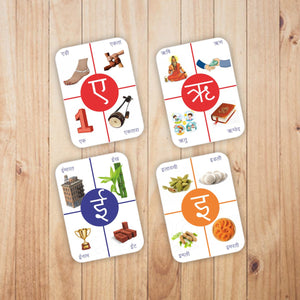
Montessori materials are inherently game-based, designed to engage children through sensorial exploration and hands-on discovery. Items like the Pink Tower for understanding dimensions or Sandpaper Letters for tactile literacy provide concrete experiences that build abstract concepts. This approach supports Montessori game-based learning by allowing children to master skills through repeated, self-directed play.
Top Picks for Game-Based Learning at SkilloToys.com
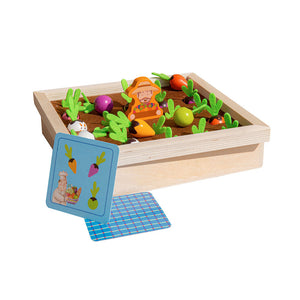
SkilloToys.com offers a curated selection of toys perfectly suited for game-based learning at home. Our diverse range of skill-building activity kits promotes hands-on exploration and critical thinking, covering everything from science experiments to art projects. For developing logic and fine motor skills, our collection of cognitive puzzles offers challenges for every age group, from simple knob puzzles for toddlers to complex jigsaw puzzles for older children.
Explore our full range of Montessori learning materials, which embody the principles of game-based learning by allowing children to learn through direct experience and self-correction. These meticulously designed materials are proven to foster independence, concentration, and a genuine love for learning.
The Role of Parents & Grandparents: Facilitators, Not Dictators
In game-based learning, adults serve as facilitators rather than instructors. This means observing, offering gentle guidance, and stepping back to allow children to lead their own discoveries. Research indicates that children thrive when given autonomy in their learning, developing greater confidence and intrinsic motivation. Grandparents, with their wealth of stories and traditional wisdom, can be wonderful partners in this, sharing cultural games and narratives that enrich a child's understanding of the world.
Embrace the joy of discovery and let your child's natural curiosity lead the way. By integrating game-based learning into your home, you're not just teaching facts; you're nurturing a lifelong love for learning, free from the pressures of traditional academics.
- Game-based learning at home transforms daily activities into structured, engaging educational opportunities.
- This approach aligns with growing national emphasis on play-based learning in early childhood education.
- Integrating games into routines, like cooking or festival preparations, enhances cognitive and cultural learning.
- Montessori materials are ideal for game-based learning, fostering independent discovery and deep understanding.
- Parents and grandparents act as facilitators, supporting a child's self-directed exploration and development.
- Game-based learning reduces academic pressure by promoting joyful, intrinsic motivation for learning.
What is game-based learning for young children?
Game-based learning for young children is an educational approach that integrates learning objectives directly into play activities. It harnesses a child's natural inclination to play, making learning an engaging and intrinsically motivating experience rather than a separate, formal task.
How can I start game-based learning with my toddler at home?
Begin by observing your toddler's interests and integrating simple games into daily routines, such as counting during snack time or sorting clothes by colour. Introduce age-appropriate educational games for kids India, like shape sorters or stacking blocks, which naturally foster skill development through exploration.
Are Montessori toys effective for game-based learning?
Yes, Montessori toys are highly effective for Montessori game-based learning because they are designed with specific learning objectives, allowing children to discover concepts independently through hands-on engagement. Materials like the Pink Tower or Sandpaper Letters are inherently game-like in their exploratory nature, promoting concentration and problem-solving.
How does game-based learning help reduce academic pressure?
Game-based learning reduces academic pressure by shifting the focus from rote memorisation and test scores to joyful discovery and understanding. It allows children to learn through games for children at their own pace, fostering a love for learning rather than fear of failure, which is crucial in the Indian educational context.
What kind of educational games are best for developing critical thinking in Indian children?
For developing critical thinking, best game-based learning toys include open-ended puzzles, construction sets, and activity kits that require planning, problem-solving, and spatial reasoning. Games that encourage children to ask 'why' and 'how,' such as science experiment kits or strategy board games, are also excellent choices.