Play-Based Learning: Building Cognitive Skills for Life
Play-based learning fundamentally shapes cognitive development by engaging children in active, self-directed exploration that builds critical neural pathways. This approach nurtures problem-solving, executive functions, and creativity, laying robust groundwork for lifelong learning and academic success in a joyful, stress-free manner. It prepares young minds not just for school, but for a dynamic world where adaptability is key.
In India, where academic excellence is highly valued, the insight from the Hindustan Times – 'Play. It prepares us for learning and life' – resonates deeply. While we often focus on scores, the real foundation for a child's future lies in how their brain develops during early years. This post explores the science behind how play, a seemingly simple activity, profoundly impacts a child's cognitive architecture, fostering foundational skills that last a lifetime.
The recent 'Maharashtra's First Play-Based Learning Roundtable Held In Ahilyanagar' by NDTV and reports of 'Game-based learning gains ground across classrooms, platforms' in The New Indian Express highlight a growing recognition in India: play is not trivial. It is a powerful pedagogical tool. SkilloToys, as India's leading Montessori educational toys store, believes in empowering parents and educators with this understanding.
Play-based learning is an educational approach where children learn through voluntary, self-initiated activities. This matters because it naturally stimulates curiosity and intrinsic motivation, crucial for deep understanding. Indian parents can integrate this by providing open-ended materials and encouraging exploration at home, away from rote memorisation pressure.
Brain Development Through Play: The Science Behind It
Research shows that an astonishing 85% of a child's brain development occurs by age five, making early childhood a critical window for learning. During this period, the brain forms trillions of connections, or synapses, which are strengthened or pruned based on experiences. Play acts as the ultimate brain gym, actively stimulating these connections across various neural networks.
When a child stacks blocks or engages in pretend play with their siblings or grandparents, their brain is firing on multiple cylinders. They are not just having fun; they are building spatial awareness, language skills, and emotional intelligence. Child development experts agree that rich, varied play experiences are essential for optimal brain architecture, far more impactful than early formal instruction.
Cultivating Executive Functions: Play's Role in Self-Regulation and Focus
Executive functions are the mental skills that help us get things done – planning, focusing attention, remembering instructions, and juggling multiple tasks successfully. These are crucial for school readiness and adult success. Studies consistently indicate that play, especially imaginative and rule-based games, is a powerful incubator for these vital skills.
When a child builds a tall tower, they exercise working memory to remember which blocks fit where and inhibitory control to resist knocking it down too soon. Engaging with Montessori materials, such as the Pink Tower from our main collection, helps children develop sequence, order, and concentration. This disciplined play prepares children to follow multi-step instructions and manage their impulses, skills invaluable in a classroom and beyond.
Problem-Solving Play for Kids: Fostering Critical Thinking
Life is a series of problems to solve, and play is where children begin to hone their problem-solving abilities. Whether it's figuring out how to make a puzzle piece fit, designing a fort with blankets, or negotiating roles in a make-believe scenario, children are constantly experimenting, testing hypotheses, and learning from trial and error. This iterative process builds resilience and logical reasoning.
Montessori-inspired puzzles and construction toys are excellent for this. They present challenges that are just right for a child's developmental stage, encouraging them to think critically and persist. This hands-on problem-solving, often done collaboratively in a joint family setting, strengthens cognitive flexibility and analytical thinking – essential traits for navigating complex academic subjects and real-world challenges.
Nurturing Creativity and Learning Through Play
Creativity is not just about art; it's about innovative thinking and finding new solutions. Play is the fertile ground where creativity blossoms. When children engage in open-ended play, such as building an imaginary world or creating stories, they are using divergent thinking – generating multiple unique ideas.
In Indian homes, where storytelling is a cherished tradition, children can weave narratives inspired by festivals or family anecdotes. Providing a variety of materials, like those found in our activity kits, encourages children to explore different forms of expression. This freedom to imagine and create enhances cognitive flexibility and innovation, skills that will be invaluable in a rapidly changing global landscape.
Early Learning Skills Through Play: Preparing for Academic Success
The journey to academic success begins long before formal schooling, with play as the primary vehicle for acquiring early learning skills. From developing fine motor skills necessary for writing to understanding pre-reading and pre-math concepts, play offers a natural, joyful pathway.
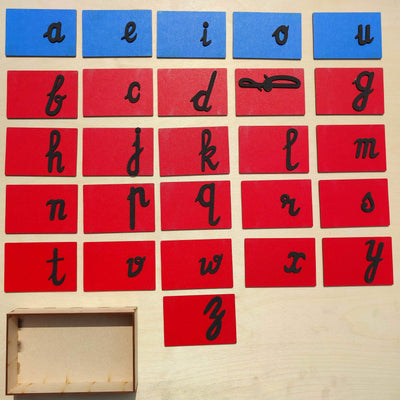
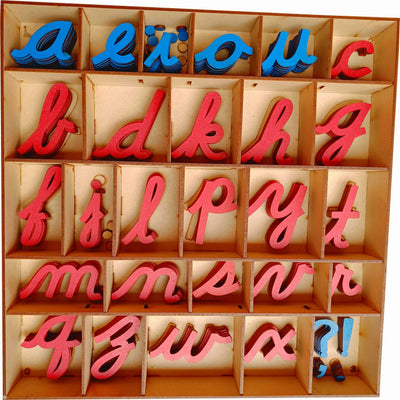
Maria Montessori, the pioneer of the Montessori method, observed that children naturally absorb knowledge when actively engaged with their environment. Materials like sandpaper letters and number rods introduce abstract concepts concretely, allowing children to manipulate and internalise them at their own pace. This approach to early learning through play builds a robust foundation, ensuring children are not only ready for school but also enthusiastic learners who view challenges as exciting opportunities, a refreshing alternative to the pressure of rote learning.
Play-based learning is not a luxury; it is a fundamental necessity for holistic cognitive development. It equips children with the intrinsic motivation, resilience, and adaptable thinking required for a lifetime of learning and genuine success, far beyond just academic grades. By embracing play, Indian parents and educators are investing in the comprehensive intellectual and emotional well-being of the next generation.
- Play-based learning is crucial for comprehensive cognitive development, building neural pathways for lifelong learning.
- The majority of brain development (85%) occurs by age five, making early play experiences critical.
- Play significantly enhances executive functions, including working memory, inhibitory control, and cognitive flexibility.
- Engaging in problem-solving play fosters critical thinking and resilience in children.
- Creative and imaginative play stimulates divergent thinking and innovation, essential for future success.
- Maria Montessori's philosophy aligns with play-based learning, using purposeful activities to build early academic skills naturally.
What is the core difference between free play and play-based learning?
Free play is entirely child-initiated and undirected, fostering spontaneity and imagination. Play-based learning, while child-centric, involves a thoughtful environment and educator guidance to achieve specific learning objectives, though it still feels like play to the child.
How does play-based learning specifically prepare Indian children for academic success?
Play-based learning cultivates essential cognitive skills like problem-solving, focus, and critical thinking, which are foundational for all subjects. It builds a strong internal motivation for learning, counteracting the pressure often associated with rote memorisation in traditional Indian schooling and making academic challenges more approachable.
Which specific cognitive skills are most enhanced by play?
Play significantly enhances executive functions (working memory, inhibitory control, cognitive flexibility), problem-solving abilities, creativity, language development, and early mathematical reasoning. These skills are crucial for adapting to new situations and complex tasks throughout life.
How can I implement play-based learning at home?
Parents can offer open-ended materials like building blocks, encourage imaginative role-play, engage in storytelling, and involve children in daily tasks like cooking or sorting. Providing dedicated time and space for unstructured play, perhaps even with grandparents, is also invaluable.
Is the Montessori approach considered a form of play-based learning?
Yes, the Montessori approach is deeply rooted in play-based learning principles, emphasizing self-directed activity, hands-on exploration, and collaborative play. Maria Montessori designed materials and environments that allow children to learn naturally through purposeful engagement, fostering cognitive development and independence.