Play-Based Learning: Equal to Nutrition for Child Development
Play-based learning child development deserves equal footing with nutrition for your child's holistic development because it is a foundational pillar for cognitive, emotional, social, and physical growth, just as vital as physical nourishment. Research unequivocally shows that engaging in purposeful play builds essential neural pathways, problem-solving skills, and resilience, setting the stage for lifelong learning and well-being. This perspective, increasingly highlighted by Indian news outlets like India Today, underscores play as a critical input for healthy growth, not merely an activity.
In bustling Indian homes, ensuring children receive nutritious meals is a top priority, a tradition deeply rooted in our culture. Yet, a crucial component for complete child development often gets overlooked or relegated to a secondary role: play. A recent India Today story, "Why play-based learning deserves equal footing with nutrition in child development," brings this vital topic to the forefront, echoing sentiments from events like Maharashtra's First Play-Based Learning Roundtable in Ahilyanagar. Child development experts globally, including UNICEF, emphasize that the first five years are the most critical stage of learning, as highlighted by The Hans India. This isn't just about fun; it's about the scientific process through which children understand the world, develop critical skills, and build emotional intelligence.
What is Play-Based Learning?
Play-based learning is an educational approach where children learn through engaging in self-directed and guided play activities. This matters because it fosters creativity, problem-solving, and social skills in a natural, developmentally appropriate manner. Indian parents can integrate this by providing open-ended materials and space for exploration, recognizing play as a powerful learning tool.
The Scientific Basis: Why Play is Non-Negotiable for Holistic Child Development
Child development experts agree that the human brain undergoes approximately 90% of its development by age five. During this critical window, play-based learning is fundamentally responsible for wiring the brain, akin to how nutrition fuels physical growth. Just as a child needs roti-dal and vegetables for strong bones and energy, their brain needs rich, varied play experiences to form robust neural connections essential for cognitive functions like memory, attention, and language acquisition. Studies indicate that children who engage in regular, purposeful play demonstrate better executive function skills – crucial for planning, focus, and self-control. This isn't about rote memorization but about constructing knowledge actively.
Beyond Academics: Nurturing a Resilient Child through the Importance of Play in Early Childhood
The academic pressure on young children in India can be immense, often pushing out time for unstructured play. However, the importance of play in early childhood extends far beyond academic readiness. It is the primary vehicle for social and emotional development. Through play, children learn to negotiate, share, empathize, resolve conflicts – vital skills for navigating relationships within a joint family or school environment. Pretend play, whether it's cooking a pretend samosa feast or building a grand temple with blocks, allows children to process emotions, understand different perspectives, and develop resilience. This joyful exploration cultivates an intrinsic love for learning, reducing anxiety often associated with early academic hurdles.
Montessori Principles in Action: Foundational Learning for Kids
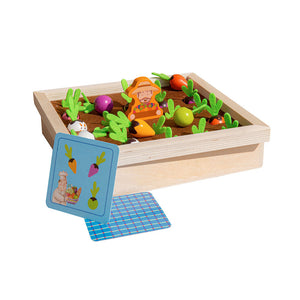
The Montessori philosophy, pioneered by Dr. Maria Montessori, perfectly exemplifies the power of play-based learning, emphasizing foundational learning for kids through hands-on engagement. In a Montessori environment, children are not just playing; they are actively working with purpose. Materials like the Pink Tower help children develop spatial awareness and sequencing, while Sandpaper Letters introduce phonetics through touch. These aren't mere toys; they are tools designed for specific developmental goals, allowing children from 18-24 months and beyond to self-correct and learn at their own pace. This structured freedom empowers children to become independent thinkers and problem-solvers, embodying the essence of play as serious work. SkilloToys offers a range of authentic Montessori materials designed to support this deep, experiential learning.
Bridging the Gap: Integrating Play-Based Learning in Indian Homes
Incorporating play-based learning into daily life doesn't require a dedicated Montessori school setup; it can flourish right in our homes. Indian parents can create stimulating environments by offering open-ended materials like simple blocks, natural elements from the garden, or even household items for imaginative play. Grandparents, with their treasure trove of stories and traditional games, can become invaluable partners in this journey, fostering intergenerational bonds through play. Consider introducing enriching activityKits that encourage exploration and discovery, or engaging puzzles that build problem-solving skills. The goal is to provide opportunities for child-led exploration, where mistakes are seen as learning opportunities, not failures, echoing the joy of festivals and community learning.
Play-based learning is undeniably a fundamental requirement for a child's complete development, standing shoulder-to-shoulder with good nutrition. It's not a luxury but a biological imperative for fostering intelligent, empathetic, and resilient individuals. By recognizing and actively promoting purposeful play, Indian families can ensure their children are not just fed physically, but nourished holistically for a bright and thriving future.
- Play-based learning is as critical as nutrition for a child's holistic development, fostering cognitive, emotional, social, and physical growth.
- Research indicates that 90% of brain development occurs by age five, with play being essential for forming vital neural connections.
- Purposeful play enhances executive function skills like planning, focus, and self-control, crucial for lifelong learning.
- Play is the primary mechanism for social-emotional development, teaching children empathy, negotiation, and resilience.
- Montessori principles exemplify effective play-based learning, utilizing specific materials to support self-directed, foundational learning.
- Integrating play-based learning in Indian homes involves providing open-ended materials and valuing child-led exploration.
What exactly is play-based learning for child development?
Play-based learning for child development is an educational approach where children gain knowledge and skills through self-initiated or guided play activities. It harnesses a child's natural curiosity and engagement to facilitate cognitive, social, emotional, and physical growth in an integrated manner.
Why is play-based learning compared to nutrition?
Play-based learning is compared to nutrition because both are fundamental, non-negotiable inputs for a child's complete development. Just as food provides essential nutrients for physical growth, play provides the sensory and cognitive experiences necessary for brain development, skill acquisition, and emotional well-being.
How does play-based learning benefit brain development in young children?
Play-based learning significantly benefits brain development by stimulating neural pathway formation and strengthening connections vital for cognitive functions. It enhances executive functions, problem-solving abilities, and creativity, laying a strong foundation for future academic success and adaptability.
Can Montessori principles be applied in a typical Indian home for play-based learning?
Yes, Montessori principles are highly adaptable to Indian homes for play-based learning. Parents can foster independence, provide child-sized tools, create a prepared environment with accessible materials, and allow children freedom within limits to explore and learn at their own pace.
What specific skills do children develop through play in early childhood?
Through play in early childhood, children develop a wide array of skills including critical thinking, creativity, problem-solving, and fine motor coordination. Crucially, they also build essential social-emotional skills like empathy, negotiation, communication, and resilience, which are vital for life.