Play-Based Learning for STEM Skills in India's Future
Play-Based Learning for STEM Skills in India involves hands-on, child-led exploration using educational toys and activities to naturally develop scientific, technological, engineering, and mathematical aptitudes from an early age. This approach cultivates critical thinking and problem-solving, crucial for preparing Indian children for the nation's future innovation needs, as highlighted by recent educational reforms and national conversations. The recent discourse in The Hindu about 'Play-based learning for India's future' underscores this vital connection between joyful exploration and national progress.
What is Play-Based Learning for STEM?
Play-based learning is an educational approach where children learn through self-initiated, guided play experiences, often with purpose-built materials. This matters because it allows for natural skill development, fostering curiosity and intrinsic motivation rather than external pressure. Indian parents can integrate this by providing open-ended toys and opportunities for free exploration, transforming everyday interactions into meaningful learning moments.
The Science of Play: Building India's Future Innovators
Child development experts agree that the brain builds crucial neural pathways during early childhood through active, sensory engagement. When a 3-year-old in a Bengaluru apartment carefully stacks educational toys like wooden blocks or sorts colourful beads, they aren't just passing time; they are conducting miniature physics experiments and developing pattern recognition. This hands-on method, championed by Maria Montessori, is foundational for advanced scientific thinking.
Research from UNICEF highlights the profound impact of quality early childhood education, emphasizing play as a key driver for holistic development, especially for developing countries like India. It's about equipping children with the tools to understand their world, not just memorize facts about it. This builds a robust foundation for STEM education India needs to thrive globally.
Montessori STEM Activities: Cultivating Curiosity and Logic
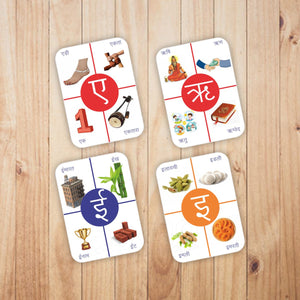
Montessori STEM activities are designed to allow children to discover scientific principles through direct interaction with materials. Imagine a child working with the iconic Pink Tower, observing how size and weight affect stability – that's an early lesson in engineering and spatial reasoning. Or manipulating sandpaper letters, building a tactile understanding of language which is a crucial part of scientific communication and literacy.
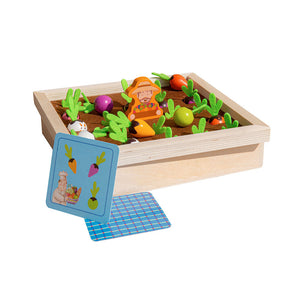
These experiences cultivate problem-solving skills that are vital for India's burgeoning tech and innovation sectors. For a young child like little Rohan in a joint family in Pune, learning to fit pieces of a wooden puzzle for kids isn't just a game. It's an exercise in geometry, perseverance, and fine motor skills – key ingredients for any future engineer or scientist. The satisfaction of a puzzle piece clicking into place provides an immediate, tangible reward, reinforcing the learning loop. You can explore a variety of engaging puzzles designed for this very purpose.
Beyond Rote: Fostering Critical Thinking for a Dynamic India
Indian education has historically faced pressure towards rote learning, especially with competitive exams looming. However, for India to truly lead in innovation, children need to think critically, question, and experiment, not just recall. Play-based learning offers an anti-academic-pressure antidote, creating an environment where curiosity is celebrated.
Studies indicate that children engaged in sustained, self-directed play demonstrate higher levels of cognitive flexibility and creativity. This is crucial for developing future-ready skills India needs, moving beyond just memorisation to genuine understanding and application. The concept of “Can play improve learning in India’s classrooms?” raised by the India Development Review resonates deeply with our philosophy.
It's about shifting from passive reception to active construction of knowledge. Grandparents, who often play a significant role in Indian homes, can unknowingly facilitate this by simply joining their grandchildren in building with blocks or exploring an activity kit, fostering intergenerational learning and bonding while nurturing young minds.
The Productive Struggle: Nurturing Resilience in STEM
Here's a crucial, often overlooked insight: The occasional frustration a child experiences when a tower collapses, a puzzle piece doesn't fit, or an experiment doesn't yield the expected result, is not a setback – it's a vital part of learning. This “productive struggle” teaches resilience, iterative problem-solving, and the scientific method of trial and error. Rather than swooping in to fix it immediately, allowing children to grapple with these small challenges, and gently encouraging them to try different approaches, builds the mental fortitude required for complex STEM challenges later in life. It's the silent foundation of innovation.
Bringing STEM Play Home: Practical Tips for Indian Parents
Integrating Play-Based Learning for STEM Skills in India into your home doesn't require a dedicated lab; it starts with observation. Watch what fascinates your child – is it shadows, water, how things move? Provide open-ended educational toys that encourage exploration rather than dictating play. Simple items like building blocks, sorting trays, or even a basic measuring tape can become powerful tools for exploration, fostering a love for science at home.
Encourage questions, even the silly ones. Instead of providing immediate answers, gently guide them to experiment and discover on their own. For instance, if your child asks why a ball rolls down a ramp faster than a toy car, you could suggest they try it with different slopes and see what happens. This cultivates the spirit of inquiry, turning your home into a vibrant, joyful learning space.
By embracing play-based learning, we equip our children with more than just academic knowledge; we foster a lifelong love for discovery, critical thinking, and the resilience essential for India's future. Investing in quality educational toys is an investment in their capacity to innovate, solve challenges, and contribute meaningfully to a rapidly evolving world. Let's champion a childhood filled with joyous exploration, building the scientists, engineers, and thinkers India needs.