Telugu Letters with Pictures: Fun Play-Based Learning Guide
Teaching Telugu letters with pictures through play is undeniably the most effective method for young children to grasp the foundational alphabet. Research consistently demonstrates that incorporating joyful, hands-on activities significantly boosts retention and develops a lifelong love for learning, especially crucial for regional languages in India. SkilloToys, India's leading Montessori educational toys store in Bengaluru, champions this approach.
Play-based Telugu learning integrates the Telugu alphabet, vowels, and consonants into fun, interactive experiences. This approach leverages a child's natural curiosity and enthusiasm for play, making the learning process engaging and free from academic pressure. Indian parents can nurture their child's mother tongue effortlessly through such methods.
The Power of Play in Learning Regional Languages
Research indicates that children who learn in their mother tongue in early years develop stronger cognitive abilities and a deeper connection to their culture. In the context of Viksit Bharat, nurturing regional language proficiency through play becomes a cornerstone of holistic development, as highlighted by recent discussions at the Made in Play Summit and by the CII Blog.
Moving beyond traditional rote learning, which often creates academic pressure, play-based methods allow children to explore, experiment, and internalize language naturally. This aligns with modern educational philosophies emphasizing engagement over memorization, ensuring that children view Telugu learning as an exciting journey.
Why Play-Based Learning Works for Telugu Alphabet for Kids
Child development experts agree that multisensory engagement through play activates multiple brain regions, solidifying memory and understanding. It transforms abstract symbols into tangible experiences, making learning the "telugu alphabet for kids" an adventure rather than a chore. Studies show that playful learning environments lead to 70% higher engagement rates in early literacy compared to conventional classroom settings.
When children engage with Telugu letters through touch, sight, and sound, they form robust neural connections. This approach caters to different learning styles, ensuring that every child can find their unique path to understanding the beautiful script and sounds of Telugu.
Engaging Activities to Learn Telugu Through Play
To truly learn Telugu through play, parents can integrate simple yet effective activities into daily routines. These activities don't require elaborate setups but focus on interaction and discovery, making the learning process natural and fun.
- Sound and Seek Games: Create or purchase flashcards with Telugu letters and corresponding pictures. Hide them around the house and have your child find them, calling out the letter sound or name upon discovery. This reinforces recognition and listening skills.
- Telugu Sand Tracing: Fill a shallow tray with sand or coloured rice. Encourage your child to trace Telugu letters using their finger, enhancing tactile learning and fine motor skills. This sensory experience helps children internalize the form of each letter.
- Story Time with Telugu Letters: Read Telugu storybooks aloud, pausing to point out and discuss specific letters as they appear. Ask your child to find familiar letters on the page, fostering visual recognition in a narrative context.
- DIY Letter Crafts: Use playdough, clay, or natural materials like leaves and twigs to form Telugu letters. This hands-on creative activity makes learning tangible and allows children to manipulate the shapes themselves. Explore our wide range of activityKits that foster fine motor skills essential for early writing and language development.
Montessori Telugu Learning: Tools and Techniques
Maria Montessori's philosophy champions hands-on, self-directed learning, which is particularly effective for introducing the Telugu alphabet. Her method emphasizes a prepared environment where children can explore and learn at their own pace, fostering independence and a love for discovery.
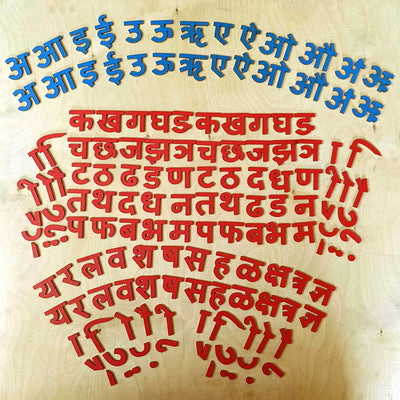
Materials like Telugu sandpaper letters allow children from 3-6 years to trace and feel the form of each Telugu letter, linking tactile sensation with visual recognition. The Movable Alphabet, another Montessori staple, enables children to construct words phonetically before they can write, solidifying their understanding of letter sounds and combinations.
Incorporating these principles into Montessori Telugu learning means providing clear, inviting materials and allowing the child freedom within limits to engage with them. Our collection of educational puzzles offers engaging ways to match Telugu letters with corresponding pictures and words, promoting self-correction and cognitive development.
Choosing Educational Toys for Telugu Language Acquisition
When selecting educational toys for Telugu, Indian parents should prioritize materials that encourage interaction, durability, and open-ended play. The best toys facilitate discovery rather than dictating learning, allowing children to engage repeatedly and creatively.
Look for high-quality wooden letter puzzles featuring Telugu script, bilingual matching games, and cultural story puppets that encourage role-play in Telugu. Toys that allow children to sort, match, and build with Telugu letters not only teach the alphabet but also develop critical thinking and problem-solving skills. Discover SkilloToys' comprehensive range of Montessori-inspired learning materials designed to support every aspect of your child's developmental journey.
Prioritizing quality over quantity ensures that toys remain engaging and effective learning tools for years, standing up to the energetic play of children in Indian homes, perhaps even passed down through a joint family.
Supporting Your Child's Telugu Journey at Home
The home environment plays a pivotal role in language acquisition. Grandparents, with their wealth of stories and songs in Telugu, become invaluable assets in this journey, transforming language learning into cherished family moments. Integrating Telugu into daily routines, from counting vegetables to narrating simple events, reinforces learning organically.
Celebrate Telugu festivals by discussing their significance in Telugu, singing traditional songs, and involving children in related activities. Creating a designated "Telugu corner" with books, charts, and educational toys can also make the language a natural and inviting part of your child's world, fostering a sense of pride in their cultural heritage without any school pressure.
- Play-based methods significantly enhance Telugu letter retention in young children.
- Multisensory engagement is crucial for effective regional language acquisition.
- Maria Montessori's approach provides proven frameworks for Telugu literacy.
- Quality educational toys foster self-directed and joyful Telugu learning experiences.
- Integrating Telugu into daily home life strengthens cultural identity and language skills.
- Early regional language learning boosts cognitive development and cultural connection.
Why is learning Telugu letters through play better than traditional methods?
Learning Telugu letters through play leverages a child's natural curiosity and engagement, making the process joyful and memorable. This method reduces academic pressure, promotes multisensory learning, and builds a stronger foundation for lifelong language acquisition compared to rote memorization.
At what age should I start teaching my child Telugu letters?
Child development experts suggest that exposure to Telugu sounds and simple words can begin as early as 18-24 months through songs and stories. More structured, play-based introduction to Telugu letters, especially with pictures, is ideal for children aged 3-6 years, aligning with their readiness for symbolic thinking.
How can I make learning Telugu fun if I'm not fluent myself?
You can make learning Telugu fun by integrating resources like bilingual storybooks, Telugu rhymes, and educational apps. Involve grandparents or other fluent family members in storytelling sessions, and use SkilloToys' educational toys designed for Telugu language acquisition, focusing on joint discovery rather than perfect pronunciation from your end.
Are there specific Montessori materials for learning Telugu?
Yes, the Montessori method can be adapted for Telugu learning using materials like Telugu sandpaper letters and a Telugu movable alphabet. These tactile tools allow children to trace and manipulate letters, connecting the visual form with the phonetic sound, which is a highly effective multisensory approach.
What role do educational toys play in Telugu language development?
Educational toys are crucial for Telugu language development as they provide concrete, interactive experiences with abstract concepts like letters and words. Toys like Telugu letter puzzles, alphabet sorting games, and creative activityKits transform learning into hands-on play, fostering engagement and deeper understanding of the language.