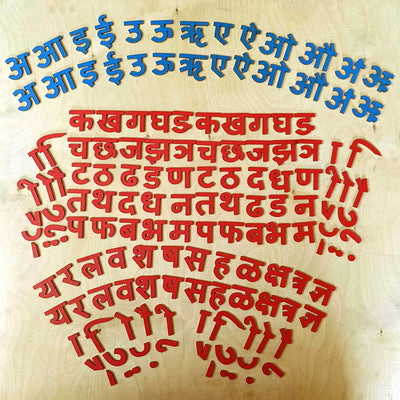
Hindi Alphabets: Screen-Free Montessori for Deep Literacy
For Indian parents seeking truly effective methods to teach their children hindi alphabets and beyond, screen-free Montessori offers a scientifically superior path to deep foundational literacy. Research definitively shows that engaging multiple senses through hands-on experiences creates more robust neural connections than passive screen interaction, leading to lasting comprehension and genuine language mastery.
In today's digital age, many Indian households grapple with the allure of screens for early learning, often turning to apps to introduce the beautiful nuances of malayalam alphabets or Hindi vowels. However, child development experts agree that while screens might offer quick recognition, they often fall short in building the profound cognitive pathways essential for true foundational literacy and comprehensive language development.
Foundational Literacy: Beyond Rote Recognition
Foundational literacy is the ability to understand and use spoken and written language effectively, including phonological awareness, phonics, vocabulary, fluency, and comprehension. This matters because it forms the bedrock for all future learning and critical thinking. Indian parents can empower their children by focusing on holistic, screen-free methods that cultivate this deep understanding, rather than relying solely on superficial rote memorization.
This comprehensive approach ensures children don't just 'know' letters but understand their sounds, how they combine to form words, and ultimately, how to read and express themselves meaningfully. It's about nurturing a genuine love for language, mirroring the rich oral traditions of storytelling passed down through generations in our Indian homes.
The Science of Screen-Free Montessori for Hindi Alphabets
The Montessori method, developed by Dr. Maria Montessori, is grounded in scientific observation of child development, emphasizing multi-sensory, hands-on learning. When a child learns hindi alphabets using sandpaper letters, they are not just seeing the letter; they are touching its texture, feeling its shape, hearing its sound from the educator, and simultaneously saying it aloud.
This 'tri-modal' engagement – visual, auditory, and tactile – activates multiple areas of the brain, creating a richer, more durable memory trace. Studies indicate that multi-sensory learning significantly enhances learning outcomes, especially for abstract concepts like letter sounds and shapes. Unlike a screen, which primarily engages sight and sound, Montessori materials offer a concrete experience that builds strong neural networks for language acquisition.
Why Montessori Outperforms Screens for Malayalam Alphabets and Beyond
While screen apps promise rapid learning for malayalam alphabets, they often promote passive consumption and superficial recognition. Research shows a worrying link between increased screen time and rising rates of myopia in Indian children, as well as contributing to childhood obesity. Furthermore, the Times of India recently highlighted parental concerns about children's emotional reactions after screen exposure, underscoring the potential downsides.
Montessori, in contrast, promotes active engagement, fine motor skill development, and self-correction. Children manipulate objects, problem-solve independently, and build concentration. This physical interaction with materials like movable alphabets allows them to internalize language structures, develop fine motor skills essential for writing, and foster the critical thinking that screens often bypass.
Building Cognitive Pathways with Montessori Language Development
Screen-free Montessori language development focuses on a progression from concrete experiences to abstract understanding. Children first work with tangible objects, developing phonological awareness by identifying sounds in their environment and within words. They then move to sandpaper letters, connecting sound to symbol through touch and sight.
This structured, hands-on approach ensures that children build robust cognitive pathways, understanding not just 'what' a letter is, but 'how' it feels, 'how' it sounds, and 'how' it connects to form words. This deep foundational learning is crucial for developing strong reading comprehension and writing skills, allowing them to engage with complex texts and express their thoughts articulately later in life.
Practical Steps for Indian Parents: Embracing Screen-Free Literacy
Embracing screen-free literacy doesn't mean reverting to outdated methods; it means choosing scientifically proven approaches that nurture holistic development. Start by creating a language-rich home environment, full of conversations, stories from grandparents, and real-world interactions. Introduce a variety of books in both English and regional languages like Hindi and Malayalam.
Invest in quality activity kits and Montessori learning materials that encourage hands-on exploration of letters and sounds. Engage your child in practical life activities that strengthen fine motor skills – squeezing lemons, peeling vegetables – which are prerequisites for writing. Remember, the goal is to foster a genuine curiosity and joy for learning, making literacy an adventure, not a chore.
The Long-Term Impact on Foundational Learning in India
By prioritizing screen-free Montessori for foundational learning, Indian parents are not just teaching alphabets; they are investing in their child's long-term cognitive health and academic success. Children who develop deep literacy skills early are better equipped to handle the demands of school, excel in problem-solving, and adapt to new challenges.
The emphasis on independence, concentration, and self-directed learning inherent in Montessori prepares children to become lifelong learners, a vital attribute in India's competitive educational landscape. Choosing hands-on, multi-sensory experiences over passive screen time provides a powerful foundation that supports a child's entire educational journey.
- Screen-free Montessori fosters deeper foundational literacy than screen-based apps through multi-sensory engagement.
- Learning hindi alphabets and malayalam alphabets with concrete Montessori materials activates multiple brain regions, enhancing memory and comprehension.
- The Montessori method addresses concerns about rising screen-time linked issues like myopia and sedentary lifestyles in Indian children.
- Foundational literacy extends beyond rote recognition, building comprehensive language understanding for future academic success.
- Montessori language development progresses from concrete to abstract, cultivating critical thinking and fine motor skills essential for writing.
- Indian parents can implement screen-free literacy by creating rich language environments and utilizing hands-on educational materials.
Why is screen-free learning superior for Hindi alphabets?
Screen-free learning for Hindi alphabets engages multiple senses simultaneously—touch, sight, and sound—creating stronger neural pathways for memory and comprehension. This multi-sensory approach builds a deep, embodied understanding, unlike the passive observation often associated with screens.
What is 'foundational literacy' in the Montessori context?
Foundational literacy in Montessori refers to a comprehensive understanding of language, encompassing phonological awareness, phonics, vocabulary, comprehension, and the ability to express oneself effectively. It goes beyond mere recognition of letters to developing a true love for language and communication.
How do Montessori materials help with Malayalam alphabets?
Montessori materials, such as sandpaper letters, provide a concrete, tactile experience for learning Malayalam alphabets. Children trace the letter shapes, internalizing their form and sound through muscle memory and sensory input, which is far more effective than abstract screen-based visuals.
Can screen-free Montessori truly prepare my child for school in India?
Yes, screen-free Montessori provides a robust foundation for school readiness in India by fostering concentration, independence, fine motor skills, and a genuine curiosity for learning. Children develop self-discipline and problem-solving abilities that are invaluable in any academic setting.
At what age should I introduce screen-free Montessori language activities?
Introducing screen-free Montessori language activities can begin as early as 18-24 months with rich language exposure through conversations and stories. Formal introduction to letter sounds and shapes with materials like sandpaper letters typically starts around 3-4 years, following the child's readiness.